


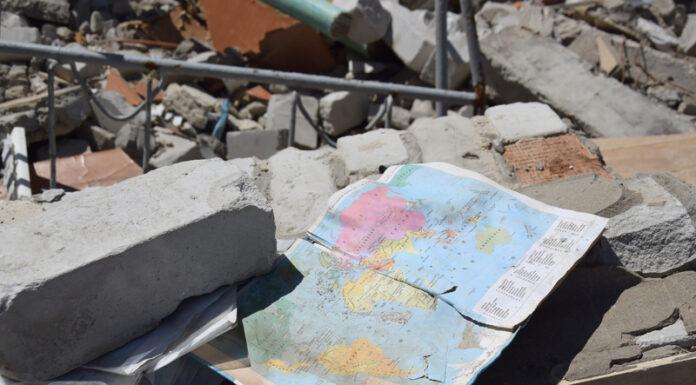
Seven children were killed and at least 28 others were injured when a school roof collapsed in Rajasthan, India, on Friday morning, July 25, 2025, at approximately 8:00 a.m. local time. The incident occurred at the Government Primary School in Piplodi village in Jhalawar district as students gathered for their morning assembly.
Around 60 children and teachers were present in the single-story building when the roof collapsed, burying students under debris. The victims were variously described by different publications as being between the ages of seven or eight and 13-14 years, with two children reported in critical condition. Area residents immediately rushed to the scene and managed to rescue dozens of students, while police and government workers joined the rescue efforts.
According to witness accounts, students had noticed warning signs before the collapse. One surviving student reported that pebbles were falling from the ceiling, and when students alerted teachers, they were dismissed. One teacher was reportedly eating breakfast when the roof came crashing down.
The school building was reportedly in a run-down condition, and persistent heavy rainfall over recent weeks may have contributed to the deadly collapse. However, Jhalawar district official Ajay Singh indicated that the school building had not been flagged as unsafe after a recent survey.
Indian Prime Minister Narendra Modi called the incident deeply saddening and expressed his thoughts with the affected students and their families. He indicated that authorities were providing all possible assistance to those affected and prayed for the speedy recovery of the injured.
Rajasthan’s state education minister, Madan Dilawar, reported that experts were examining the stability of other buildings on the school campus. He instructed officials to oversee the medical treatment of the injured and ensure families receive support.
The incident highlights broader infrastructure challenges in India’s education system. According to recent data, over 6,000 schools across India lack proper buildings, and only 57.2% of the country’s schools have functional computers. The Piplodi school primarily served marginalized children, with 78 out of 94 students belonging to Scheduled Tribes, five from Scheduled Castes, and 11 from Other Backward Classes.
Building collapses during the monsoon season are not uncommon in India due to weak enforcement of building safety codes, leaving structures particularly vulnerable to heavy rains.
Following the incident, the Union Education Ministry wrote to Chief Secretaries of all states and Union Territories, directing them to undertake safety audits of all schools. The ministry specified that structural integrity, fire safety, emergency exits, and electrical wiring must be thoroughly assessed in accordance with national safety codes and disaster management guidelines.
The Rajasthan government announced various measures to prevent similar incidents, including the constitution of special committees to review the safety of government schools, colleges, and government buildings. These committees are tasked with ensuring repair work is completed before June 15 each year.
The collapse occurred during India’s monsoon season, which brought significant challenges to the eastern part of the country, with dozens of people killed by lightning strikes.
In a related incident just three days later, another child died when a school gate collapsed at the Government Girls’ Senior Secondary School in Jaisalmer, Rajasthan. The Class 1 student, identified as Arbaaz Khan, was killed while waiting to pick up his sister when the main gate and its supporting column fell on him and two others on Monday afternoon. This second incident prompted renewed calls for comprehensive safety measures in educational institutions across the state.
The rescue operation at the Piplodi school concluded within hours, with many students pulled out alive. Local media reported that 32 students had been rescued, though some suffered severe injuries. The injured students were treated at local hospitals, with the most critical cases transferred to district medical facilities for specialized care.
By early September, families of the victims had received ₹12–13 lakh (approximately $15,000) each in relief, with an additional ₹1 lakh ($1,200) pending from insurance.
The Union Education Ministry ordered a nationwide safety audit of schools, covering structural integrity, fire safety, wiring, and emergency preparedness.
A 60-year-old farmer, Mor Singh, donated his two-room house to keep classes running. The state later declared Piplodi a “model village” and sanctioned ₹1.8 crore (approximately $216,000) for a new school and facilities.