


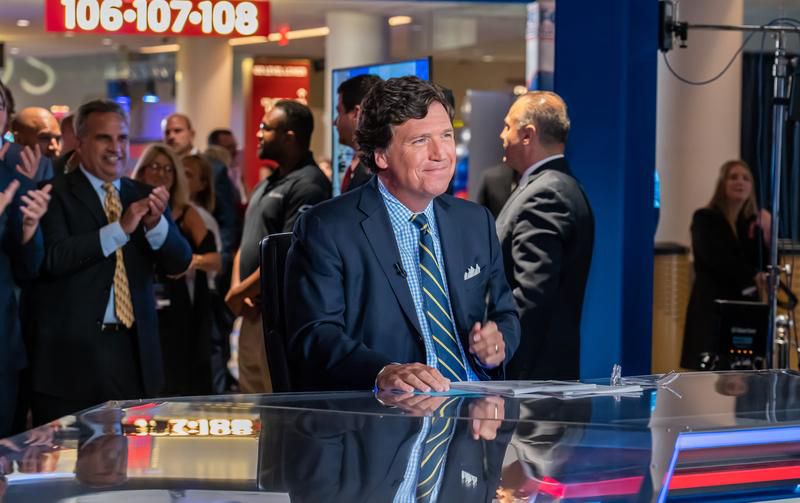
Tucker Carlson appeared on podcaster Shawn Ryan’s show this week in a three-hour conversation that culminated in a scorched-earth attack on the Republican Party. The November 24 episode featured wide-ranging discussions on spiritual warfare, government corruption, and quality-of-life issues before Carlson leveled his harshest criticism yet against GOP leadership.
As the conversation wound down, the former Fox News host declared his frustration with the party had reached a breaking point. “On the Republican Party, which is almost to the point where it’s just useless, and I’m going to have to oppose it because I hate them too much, because they’re such betrayers,” Carlson told Ryan. He continued attacking what he called the GOP donor and political class: “They’re corrupt. They don’t care that much or enough or at all about you. And they have an obligation to.”
The conversation turned to strip malls and development issues, where Carlson expressed contempt for what he sees as unchecked commercial development destroying American communities. “Is there anyone who makes your life worse than a developer?” he asked. “For a smaller benefit to a tinier group of people, who actually benefits from more Dollar Stores?”
Carlson’s frustration extended beyond aesthetics to what he characterized as government failure to address basic safety concerns.
His critique escalated further when discussing developers and local government corruption. “No, I’m not a socialist. I just don’t want any more dollar stores. I don’t want high-density housing in my neighborhood. I don’t want any more strip malls that nobody goes to, more karate studios and vape shops,” Carlson said.
When Ryan asked what Carlson thought the Republican Party would become, the former cable news host acknowledged the party’s current power while expressing deep personal reluctance to engage with it. Carlson said he was unsure, noting that the party currently in power holds an extraordinary amount of authority and wealth, with much at stake.
Carlson said that political parties hold significant power in America and, despite personal dislike for them and their members, it may be unwise to ignore them. Also, he questioned whether the Republican Party exists to serve its voters and all citizens, or whether it serves some other corrupt purpose, such as aiding a foreign government or catering to donors.
The tensions between Carlson and Republican establishment figures have been building throughout 2025. Earlier in June, Cruz appeared on Carlson’s podcast for what the senator later described as a contentious discussion during a rift within MAGA circles over the Israel-Iran conflict.
Carlson has also engaged in public feuds with other conservative media figures over foreign policy positions. He clashed with Fox News hosts Mark Levin and Sean Hannity over their support for U.S. strikes in Iran. Both sides claimed to represent the authentic “America First” MAGA movement, highlighting divisions within conservative circles over interventionist foreign policy.
During the Ryan interview, Carlson discussed whether voting still matters in America. When Ryan noted, “Nothing I voted for happened,” Carlson expressed his typical pessimism, stating that he did not know whether voting mattered and affirming that it did not, describing the world as a nightmare of depravity and corruption.
The appearance revealed deeper fissures within the Republican Party regarding its core mission and whether it truly serves ordinary Americans or special interests. Carlson positioned himself as someone who believes the party has betrayed its original Trump-era “America First” message in favor of developers, donors, and what he characterized as corrupt local officials.
Senator Ted Cruz, who is reportedly planning a 2028 presidential bid, has positioned himself as a traditional Republican in contrast to Carlson’s populist isolationist stance. The senator has used growing controversies to distinguish himself from other potential candidates as the next election cycle approaches.
Carlson’s willingness to break from Republican consensus and attack party leadership from the right has made him both a controversial figure and a draw for audiences seeking alternatives to establishment conservative positions. His podcast continues to attract significant viewership, suggesting his message resonates with segments of the conservative base dissatisfied with GOP priorities.
The episode has intensified debates within Republican circles about the party’s direction and whether it should prioritize quality-of-life issues like development and public safety over traditional conservative economic orthodoxy. As the 2028 election approaches, these internal conflicts are likely to shape how candidates define their vision for American conservatism.