


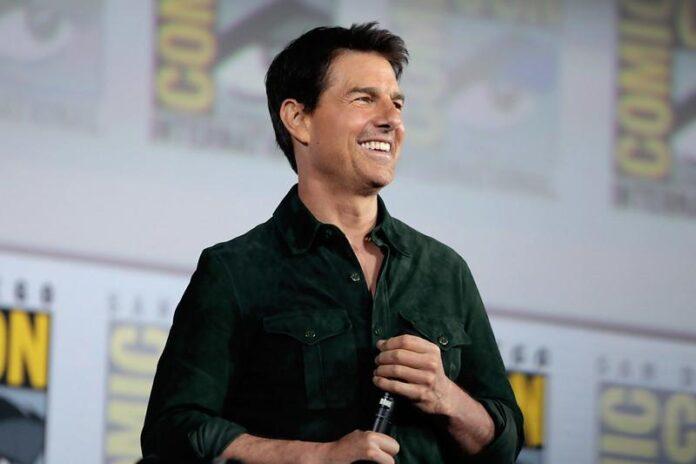
Tom Cruise stands to pocket well over $100 million from “Top Gun: Maverick,” making it one of the most lucrative single-film paydays in Hollywood history — and signaling even bigger numbers could be on the horizon as Top Gun 3 moves forward.
The 63-year-old star’s deal with Paramount for the 2022 blockbuster included a base salary of $12.5 million plus a percentage of the film’s first-dollar gross — meaning Cruise earns a cut of every dollar the studio takes in after theaters get their share. According to industry insiders, the deal starts at 10 percent and includes escalators that increase his percentage at certain box office milestones, a structure that quickly became enormously profitable as the film shattered expectations.
“Top Gun: Maverick” pulled in nearly $1.5 billion worldwide and became the highest-grossing domestic release of 2022, topping every competitor at the North American box office. The film earned $160.5 million over its four-day Memorial Day weekend opening and maintained remarkable staying power, never dropping out of the top five on domestic charts during its first 10 weeks of release. Its second-weekend decline of just 29 percent set a record as the smallest drop ever for a film that opened above $100 million.
Sources estimate Paramount pulled in roughly $600 million after theaters took their customary cut — typically close to a 50/50 split between studio and exhibitors. At 10 percent of first-dollar gross, that alone would net Cruise around $60 million from theatrical revenue. But his percentage likely climbed higher as escalators kicked in at key benchmarks. Once home video, digital sales, and streaming revenue enter the equation, industry observers project his total compensation surpassed $100 million — with some estimates running considerably higher.
The windfall represents a dramatic reversal of fortune for Cruise, who spent years struggling to replicate box office success outside the Mission: Impossible franchise. His 2014 film “Edge of Tomorrow” with Emily Blunt scored well with audiences, but came after several underperforming releases including “Oblivion” (2013), “Rock of Ages” (2012), and “Knight and Day” (2010). The disappointments continued with 2017’s “The Mummy” and “American Made,” released the same year.
Cruise refused to make a Top Gun sequel for many years, reportedly holding out for the right creative approach to justify returning to the role of Pete “Maverick” Mitchell more than three decades after the 1986 original. When he finally committed, he pushed hard to promote the film across the globe, appearing at carefully orchestrated events — including a premiere at the Cannes Film Festival — and leveraging his star power to build anticipation.
The strategy paid off spectacularly. Director Joseph Kosinski delivered a critically acclaimed sequel that helped theaters survive the post-COVID era, becoming the film industry’s most encouraging success story at a time when questions lingered about whether audiences would return to multiplexes. Paramount’s decision to hold the film for theatrical release during the pandemic — despite significant pressure to sell it to a streaming service — proved prescient.
“Top Gun: Maverick” marked Cruise’ first billion-dollar movie, a milestone that had eluded him despite decades of stardom and numerous franchises. The film’s success also reportedly calmed Paramount executives who had grown nervous about the ballooning budget for the Mission: Impossible sequels, which swelled past $290 million for “Dead Reckoning Part One” due in part to COVID-related production shutdowns.
Miles Teller joined the cast as Rooster, the son of Goose from the original film, while Lady Gaga wrote and performed “Hold My Hand” for the soundtrack and contributed to the film’s score. The ensemble cast also included Glen Powell, Jennifer Connelly, Jon Hamm, and Val Kilmer reprising his iconic role as Iceman in what would become the late actor’s final film appearance.
With Top Gun 3 now officially in development — Paramount confirmed the project at CinemaCon on April 16, 2025, announcing that a script is well underway — industry observers are already speculating about what kind of deal Cruise might command. Given the sequel’s performance, his leverage has only increased. No director has been confirmed, but Kosinski — fresh off helming the Brad Pitt racing blockbuster “F1” — remains a strong contender.
The success of “Top Gun: Maverick” arrived at a pivotal moment for theatrical exhibition, demonstrating that certain films — particularly those offering spectacle and emotional resonance that justify the big-screen experience — can still draw massive audiences. The sequel’s financial performance reset expectations for what’s possible in the current marketplace and reinforced Cruise’ status as one of the few true movie stars capable of opening a film on name recognition alone.
For Paramount, the film’s triumph validated the risk of waiting for theatrical release rather than accepting a guaranteed streaming sale during uncertain times. For Cruise, it represented vindication of his insistence on maintaining traditional theatrical windows and his commitment to delivering the kind of practical action sequences and emotional storytelling that streaming competitors struggle to replicate.
As negotiations for Top Gun 3 proceed, all parties enter with vastly strengthened positions. Cruise has proven his continued box office viability, Paramount has a franchise worth nurturing, and audiences have demonstrated their appetite for more high-flying action from Maverick. The question now is not whether the third installment will happen, but rather how much it will cost to get everyone back in the cockpit.