


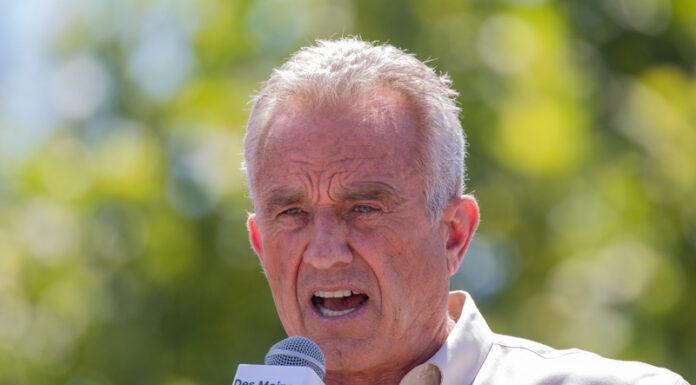
During his contentious divorce proceedings with his second wife, Mary Richardson Kennedy, Robert F. Kennedy Jr. covertly recorded over 60 conversations, according to documents and audio recordings obtained by Mother Jones magazine. Richardson Kennedy died in 2012.
The recordings, which span several years, capture both phone and face-to-face conversations. Many of these discussions were heated and occurred while Kennedy was involved with multiple women, including his current wife, actress Cheryl Hines. In one recorded conversation, Kennedy defended his ten-year history of infidelity by alleging he was “being abused at home.”
These revelations come at a time when Kennedy, a former presidential candidate and nominee for Secretary of Health and Human Services under the Trump administration, is under significant scrutiny. The recordings, potentially violating California’s two-party consent law, reveal Richardson’s emotional turmoil and her numerous attempts to reconcile, which Kennedy rejected while pushing for the finalization of their divorce.
Kennedy reportedly used the recordings to build a 60-page affidavit that detailed his accusations against Richardson. This document outlined various aspects of their acrimonious divorce, including relationship disputes, allegations of misconduct, and supporting evidence for his case.
In response, Richardson prepared a counterclaim refuting Kennedy’s allegations. She accused him of physical abuse, misuse of prescription drugs, and being a “sexual deviant.” She disputed several of Kennedy’s claims, including his assertion that she had talked about suicide in front of their children. Richardson’s document detailed instances of alleged physical altercations and claimed that Kennedy intentionally left evidence of his infidelity around their home.
Richardson’s counterclaim also accused Kennedy of conducting a ruthless campaign against her. Two months after drafting her rebuttal, which was never filed in court, she died by suicide at her home in Bedford, New York, in May 2012.
Throughout their marriage, Kennedy kept what he referred to as a “sex diary” in small notebooks. This private diary became public in 2013, revealing his relationships with 37 women. Kennedy used a coded system to categorize his sexual encounters, assigning each woman a number from 1 to 10 corresponding to specific sexual acts. A rating of 10 signified full sexual intercourse. Kennedy’s personal reflections in the diary acknowledged his struggle with what he referred to as his “lust demons” and his propensity to jeopardize his otherwise successful life.
Kennedy’s cousin, Caroline Kennedy, daughter of President John F. Kennedy, has publicly criticized his nomination as Secretary of Health and Human Services. In a letter to senators, she described Kennedy as a “predator” and a “hypocrite,” citing his history of drug abuse and deceptive behavior.
The release of these recordings coincides with Kennedy’s Senate testimony on January 29, 2025. During the Senate Finance Committee hearing, Sen. Michael Bennet of Colorado questioned Kennedy about his promotion of various conspiracy theories on subjects ranging from COVID-19 to Lyme disease, leading Kennedy to admit to propagating such theories.
The Kennedy family has been linked to several political, personal, and legal controversies over the years. President John F. Kennedy’s time in office was marked by allegations of extramarital affairs, notably with actress Marilyn Monroe. In 1969, Senator Edward “Ted” Kennedy was involved in the Chappaquiddick incident, in which he drove off a bridge, causing the death of his passenger Mary Jo Kopechne. His delay in reporting the accident resulted in widespread criticism and legal repercussions.