


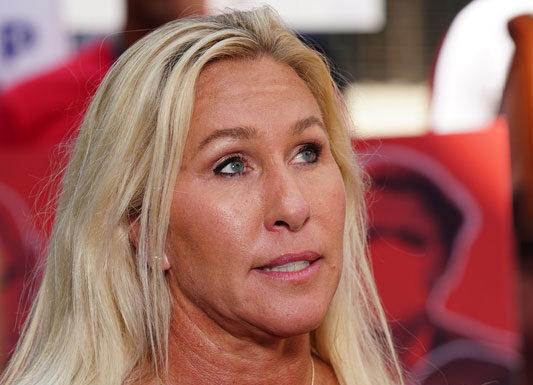
Representative Marjorie Taylor Greene of Georgia has expressed concerns about her safety after receiving threats following a public feud with President Donald Trump, who once counted her among his most vocal supporters in Congress. The breakdown of their political relationship has escalated dramatically in recent weeks, with Trump rescinding his endorsement and suggesting he would back a primary challenger against her. Greene announced on Nov. 21 that she would resign from Congress and will work until Jan. 5, 2026.
Greene revealed on Nov. 15, “I am now being contacted by private security firms with warnings for my safety as a hot bed of threats against me is being fueled and egged on by the most powerful man in the world, the man I supported and helped get elected,” she wrote on X.
The congresswoman’s concerns come after Trump attacked her on social media, calling her “wacky” and “a disgrace” to the Republican Party. In multiple posts on his Truth Social account that morning, the president also labeled Greene a “traitor” and accused her of complaining too much. Trump went further by withdrawing his support for her and indicating he could endorse a challenger in her next primary election.
Greene’s relationship with Trump had deteriorated significantly in recent weeks as she increasingly broke with the president on several key issues. She criticized him for focusing too heavily on foreign affairs rather than domestic concerns, arguing that his “America First” agenda should prioritize issues facing American families. During an appearance on CNN’s “State of the Union” with Dana Bash, she criticized the rising costs of health care and accused Republican leaders of having no solutions for Americans struggling with insurance premiums.
One of the central flashpoints in their dispute involves Greene’s decision to sign a House petition calling for the release of files related to convicted sex offender Jeffrey Epstein. Greene is among just four Republicans who have supported the discharge petition, joining Democrats who are also pushing for the documents to be made public. Capitol Police reported rising threats against members of Congress, with 9,474 threat cases investigated in 2024 alone, reflecting the broader climate of heightened tensions facing lawmakers.
The Georgia representative stood with Epstein survivors and doubled down on her position despite pressure from the White House to remove her name from the petition. Trump initially opposed the release but later reversed his position, stating that Republicans should call for the files’ release. Greene also posted a message declaring she was “not suicidal,” suggesting that powerful people may have it out for her over her advocacy for releasing the Epstein files.
In a surprising turn during her CNN interview, Greene issued a rare apology for her role in divisive politics. When pressed by Bash about why she only spoke out against inflammatory rhetoric when it was directed at her, Greene acknowledged that the criticism was fair. She said she has been working to “put down the knives in politics” and wants to see people “be kind to one another.”
Trump dismissed Greene’s safety concerns when speaking to reporters, stating he didn’t believe her life was in danger and suggesting that nobody cared about her. The president’s harsh response underscored the complete breakdown of their once-close political alliance. Greene had been one of Trump’s most enthusiastic defenders during his 2024 campaign and frequently served as a liaison between the president and other Republicans on Capitol Hill.
Greene’s political history in Congress has been marked by controversy. She was removed from House committees in 2021 and was ejected from the conservative House Freedom Caucus in 2023. Her recent shift away from Trump and toward more moderate rhetoric represents a significant departure from her previous persona as one of the most outspoken voices in the MAGA movement.
The political tensions in America have reached dangerous levels. The assassination of conservative activist Charlie Kirk on September 10, 2025, shocked the nation and highlighted the volatile climate. Utah Governor Spencer Cox and House Speaker Mike Johnson have both called for lowering the political temperature, but many observers doubt Americans will heed such calls. Greene’s situation highlights the broader challenges facing political figures in an era of heightened polarization and online hostility, particularly as social media platforms amplify both support and opposition to controversial figures.