


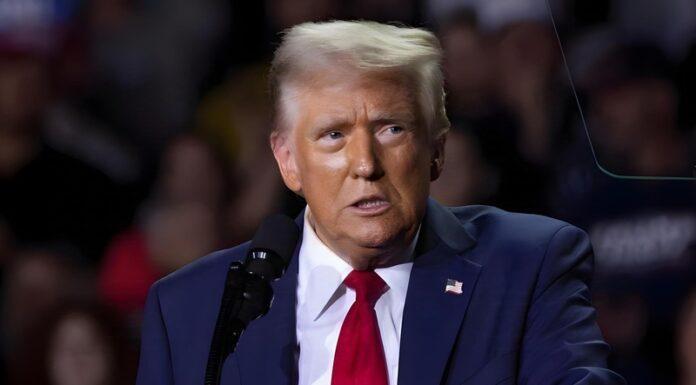
MSNow host Joe Scarborough launched a scathing critique of President Donald Trump’s latest White House decoration project on Thursday, comparing the newly installed plaques beneath presidential portraits to elementary school handiwork. The “Morning Joe” co-host didn’t mince words when discussing Trump’s additions to what the administration has dubbed the “Presidential Walk of Fame” along the White House West Wing Colonnade.
“He’s putting up third-grade plaques in the people’s White House,” Scarborough said during Thursday’s broadcast. “Might as well write it in crayons.”
The controversy centers on plaques recently installed beneath presidential portraits in the historic colonnade, an outdoor corridor connecting the West Wing to the residence. First announced in August, the White House renovation transformed the previously understated walkway into what critics describe as a gaudy display featuring a large “Presidential Walk of Fame” sign and portraits of American presidents.
This week, the administration added descriptive plaques beneath each portrait, with the language written in Trump’s characteristic social media style. The plaques have drawn particular attention for their treatment of recent Democratic presidents, with descriptions The New York Times called inaccurate.
Former President Barack Obama’s plaque identifies him using his full name, Barack Hussein Obama, and labels him “one of the most divisive political figures in American history.” The characterization stands in stark contrast to his standing among living former presidents.
Bill Clinton’s plaque downplays his administration’s accomplishments while noting that “in 2016, President Clinton’s wife, Hillary, lost the Presidency to President Donald J. Trump.” The reference appears designed to highlight Trump’s 2016 electoral victory over Hillary Clinton rather than assess the 42nd president’s legacy.
The most provocative plaque belongs to former President Joe Biden, whose display takes the unusual approach of featuring an autopen image rather than a traditional portrait. The accompanying text declares “Sleepy Joe Biden was, by far, the worst President in American history,” echoing Trump’s frequent campaign trail insults. The plaque further makes references to “severe mental decline” and “the Biden Crime Family.”
White House Press Secretary Karoline Leavitt defended the plaques, characterizing them as eloquently written descriptions of each president and their legacies. More significantly, Leavitt confirmed Trump’s direct involvement in the project, stating that many of the plaques were written directly by the president himself.
The plaques represent yet another break from presidential tradition, transforming a space typically reserved for dignified commemoration into what critics view as a partisan statement. Presidential portraits have long been fixtures in the White House, serving as visual reminders of the office’s continuity across administrations. The addition of commentary written in Trump’s bombastic style marks a departure from the institutional neutrality usually maintained in such displays.
Trump received special treatment in the display, with two separate portraits and plaques commemorating both his 2016 and 2025 electoral victories. One of his plaques boasts that he’s responsible for “the Greatest Economy in the History of the World,” a superlative claim that reflects Trump’s tendency toward hyperbolic self-assessment.
Even some Republican lawmakers expressed reservations about the additions. Senator Lindsey Graham told reporters the plaques might not move the ball, suggesting they may provide personal satisfaction without advancing the administration’s policy objectives.
The installation also includes plaques for historical figures like Abraham Lincoln, though the descriptions of these earlier presidents have generated less controversy than those covering recent officeholders.
Scarborough’s criticism extended beyond the plaques’ prose to question Trump’s fixation on his predecessor. The host suggested Trump maintains an obsessive focus on Biden despite having won the presidency, comparing the behavior to that of a schoolyard bully unable to move past old rivalries.
The “Presidential Walk of Fame” represents one of several aesthetic changes Trump has implemented since returning to office. The project reflects his preference for ostentatious displays and personal branding. Critics argue such modifications prioritize political messaging over historical preservation, while supporters view them as refreshing candor about presidential legacies.
The unveiling of the plaques on December 17, followed by Scarborough’s criticism on Thursday, December 18, ensures the controversy will continue generating headlines as Trump’s second term progresses, adding another chapter to debates about presidential decorum and the appropriate use of White House spaces.