


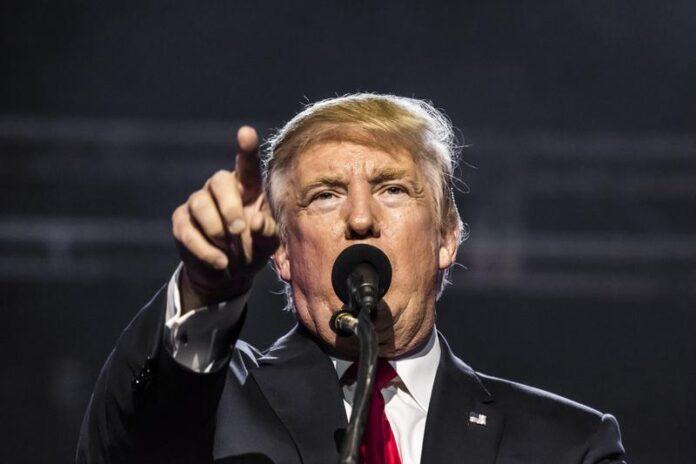
The United States launched airstrikes against ISIS militants in northwest Nigeria on Thursday, December 25, 2025, marking a significant escalation in American military engagement in West Africa. President Donald Trump announced the operation on Christmas Day, stating that the strikes targeted fighters he accused of killing Christians in the region.
US Africa Command confirmed the strikes were conducted in Sokoto State, with initial assessments indicating that multiple ISIS terrorists were killed in the ISIS camps. The operation was coordinated with the Nigerian government, according to military officials.
Nigeria’s Ministry of Foreign Affairs confirmed the strikes were carried out as part of ongoing security cooperation with the United States, which includes the exchange of intelligence and strategic coordination to take out militant groups. Foreign Minister Yusuf Tuggar acknowledged the joint nature of the operation.
The Pentagon released video of a missile launch following Trump’s announcement of the operation. Defense Secretary Pete Hegseth stated that Trump “was clear last month: the killing of innocent Christians in Nigeria (and elsewhere) must end.”
Local residents in Jabo, Sokoto State, reported dramatic scenes during the strikes. Residents described buildings shaking and the sky glowing red during the attacks.
Trump had previously warned Nigeria of potential military action on November 1, 2025, stating the country needed to do more to protect Christians from extremist violence. The president claimed ISIS was targeting Christians in the region.
The Nigerian government has rejected claims of religious persecution, arguing that the security situation is more complex than portrayed. Officials maintain that armed militant groups target both Muslim and Christian communities in the country.
The strikes occurred one day after a mosque bombing in Maiduguri killed five people on December 24, 2025, highlighting the broader security challenges facing Nigeria. The northeastern city has experienced multiple attacks from extremist groups operating in the region.
According to the human rights group Intersociety, over 7,000 Christians have been killed in Nigeria this year. However, the Nigerian government contests this characterization of religiously motivated violence.
President Bola Tinubu has emphasized his commitment to protecting all Nigerians regardless of faith. The Nigerian leader has called for peace between individuals of differing religious beliefs and rejected characterizations of Nigeria as religiously intolerant.
The US military had been conducting intelligence flights over Nigeria in late 2025, according to reports. These reconnaissance missions preceded the Christmas Day strikes and indicated growing American military interest in the region’s security situation.
Nigeria faces security threats from multiple armed groups, including Boko Haram and the Islamic State Sahel Province. These organizations have carried out attacks across northern Nigeria, particularly in Borno and Sokoto states, creating widespread instability in the region.
The United States designated Nigeria as a country of particular concern regarding religious freedom. This designation was first applied in 2020 but was lifted in 2023 before being reinstated under the Trump administration.
Secretary of State Marco Rubio has been involved in discussions with Nigerian officials regarding security cooperation. The coordination between the two governments represents a shift from earlier tensions over Trump’s criticisms of Nigeria’s handling of extremist violence.
Nigeria, Africa’s most populous nation, is divided between Christian and Muslim communities. The country’s complex religious and ethnic dynamics have made addressing security challenges particularly difficult for government authorities.
The Christmas Day operation marks a significant moment in US-Nigeria relations, demonstrating both countries’ willingness to work together against terrorist threats despite previous diplomatic tensions. Nigerian military officials confirmed the strikes were based on credible intelligence and careful operational planning.
Trump’s announcement came while he was spending the holiday in Florida. The president framed the military action as a fulfillment of his earlier warnings to extremist groups operating in northwest Nigeria.
Hegseth expressed gratitude for Nigerian government support and cooperation in the operation. “Merry Christmas!” the defense secretary added in his statement, emphasizing the timing of the strikes on the Christian holiday.
The operation’s long-term impact on security in northwest Nigeria remains to be seen. While the strikes targeted ISIS camps in Sokoto State, the broader challenge of combating multiple armed groups across Nigeria’s vast northern region continues to test both Nigerian and international security efforts.
Nigeria’s Ministry of Foreign Affairs emphasized that terrorist violence targeting any religious community “remains an affront to Nigeria’s values and to international peace and security.” The ministry’s statement sought to frame the cooperation with the United States as part of a broader effort to combat terrorism rather than religious persecution specifically.
The precision strikes in northwest Nigeria demonstrate the evolving nature of US counterterrorism operations in Africa, where American forces increasingly rely on coordination with local governments rather than unilateral action. This approach reflects both the complexity of security challenges in the region and the political sensitivities surrounding foreign military intervention.