


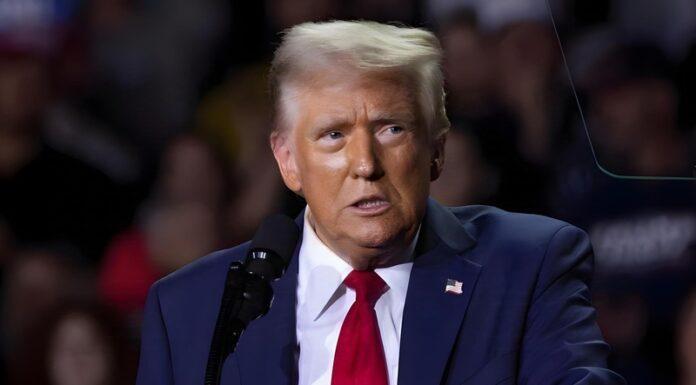
President Donald Trump delivered a prime-time address from the White House on December 18, 2025, that left political observers and viewers questioning the presentation and substance of the widely anticipated speech.
The address, which announced payments to military personnel, drew swift criticism from across the political spectrum. Journalist Matthew Keys responded bluntly to the presentation, stating the speech “could have been a late-night Truth Social post.”
California Governor Gavin Newsom’s office mocked the address, describing it as better than the Gettysburg Address in what appeared to be sarcastic commentary. The Hill White House columnist Niall Stanage described Trump’s performance as notably poor.
Rick Wilson of The Lincoln Project weighed in on the presentation, saying the speech was awkward and would not move the needle. Viewers across social media platforms questioned why Trump was yelling during the address, with multiple posts expressing confusion about the president’s delivery style.
During the speech, Trump claimed the United States is the hottest country in the world, taking credit for the nation’s status. The address broadcast in prime time from the White House touched on various topics but notably omitted any mention of Venezuela, despite widespread speculation.
Former Fox News host Tucker Carlson had suggested before the address that Trump would announce war against Venezuela. The absence of any Venezuela-related content led to confusion among viewers who had tuned in expecting major foreign policy announcements.
Daily Wire host Michael Knowles offered a different perspective on the speech’s content and timing. “He pulled a war-in-Venezuela fake out to make the networks broadcast all his first-year wins in prime time, all in front of cozy Christmas decorations at the White House,” Knowles said, describing Trump as using a war fake out to broadcast first-year wins.
The criticism of Trump’s communication style echoed previous holiday messaging controversies. On December 25, 2024, Trump posted 40 messages on Truth Social over nine hours, a pattern that drew comparisons to the recent presidential address.
In those December 25, 2024, Christmas posts, Trump mentioned the Panama Canal, Canada, and Greenland, demonstrating a history of using holiday periods for political messaging. The comparison between his social media activity and formal presidential addresses became a central point of criticism following the December 18 speech.
Political analysts noted the speech represented a departure from traditional presidential addresses in both tone and content. The decision to broadcast during prime time suggested the administration viewed the address as significant, yet the execution failed to meet expectations for many viewers and commentators.
The announcement of payments to military personnel represented the most concrete policy element of the address. However, this announcement was overshadowed by questions about presentation style and the absence of expected content regarding international affairs.
The response on social media platforms reflected broader confusion about the speech’s purpose and messaging. Users across political affiliations expressed uncertainty about why the president had chosen to deliver a formal address for announcements that many felt could have been communicated through other channels.
Press observers noted the criticism spanned traditional political divides, with voices from progressive organizations like The Lincoln Project joining independent journalists and Democratic officials in questioning the address’s effectiveness. The bipartisan nature of the criticism suggested communication challenges that transcended typical partisan responses.
The White House has not responded to questions about the speech’s reception or addressed the specific criticisms raised by political commentators and media figures. The administration’s communications strategy has frequently relied on direct-to-public messaging through social media platforms rather than traditional press engagement.
As the administration approaches the one-year mark of its term, the December 18 address highlights ongoing tensions between presidential communication expectations and Trump’s preferred messaging style. The disconnect between the formal setting of a White House address and the informal tone critics described as similar to social media posts continues to generate discussion among political observers.
The incident adds to a series of communication controversies that have defined Trump’s approach to presidential messaging, raising questions about how future addresses will be received by both supporters and critics in an increasingly fractured media environment.