


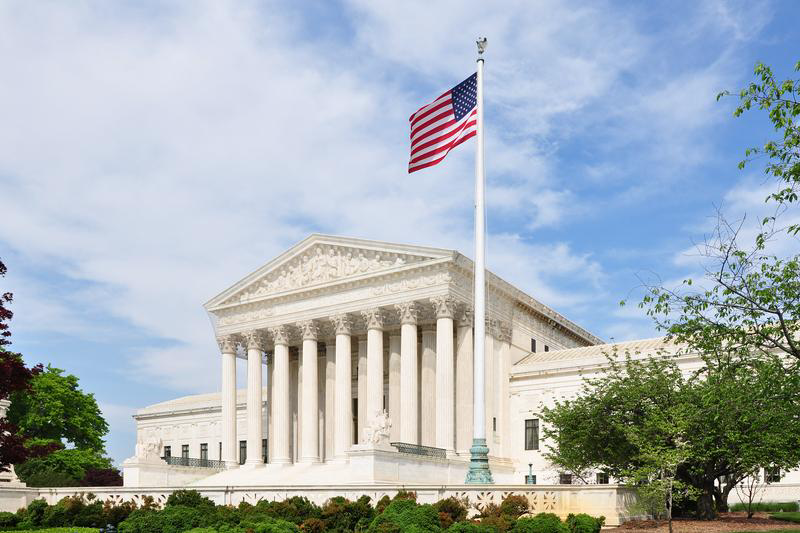
The Supreme Court appears poised to hand President Donald Trump a significant victory in his efforts to reshape the executive branch, with the conservative majority signaling strong support for expanding presidential power over independent federal agencies during oral arguments Monday, Dec. 8, 2025.
At the heart of the case is Trump’s March 2025 firing of Rebecca Slaughter, a Democratic member of the Federal Trade Commission. The president removed her without citing any performance issues, stating only that her continued service would be “inconsistent with Administration priorities.” Slaughter, whom Trump originally appointed in 2018 and President Biden reappointed in 2023, challenged the dismissal in federal court.
The case centers on whether a 90-year-old precedent, Humphrey’s Executor v. United States from 1935, should continue to protect independent agency board members from at-will presidential removal. Current law allows commissioners to be fired only for cause—specifically for “inefficiency, neglect of duty, or malfeasance in office.”
Solicitor General D. John Sauer urged the justices to overturn the precedent entirely, arguing it has created what he called a “headless fourth branch” of government insulated from democratic accountability. Chief Justice John Roberts appeared sympathetic to this view, referring to Humphrey’s Executor as “a dried husk” of its former significance.
Justice Brett Kavanaugh expressed concern about agency accountability, noting that officials directing these agencies “are exercising massive power over individual liberty and billion-dollar industries” without proper oversight. The conservative majority’s questions suggested they view the restrictions on presidential firing power as an unconstitutional limitation on executive authority.
The court’s three liberal justices raised alarm about the implications of such a ruling. Justice Elena Kagan warned it would give the president “massive unchecked, uncontrolled power.” Justice Ketanji Brown Jackson worried about the loss of expertise if presidents could freely replace agency officials with political loyalists.
“So having a President come in and fire all the scientists and the doctors and the economists and the PhDs and replacing them with loyalists and people who don’t know anything is actually not in the best interest of the citizens of the United States,” Jackson said during arguments.
Justice Sonia Sotomayor argued that a ruling in Trump’s favor would fundamentally restructure the government, taking away Congress’ ability to design agencies with independence from political pressure. The debate highlighted a fundamental tension between presidential control and the legislative branch’s authority to structure government operations.
Amit Agarwal, representing Slaughter, contended that the president’s duty to execute the law does not grant authority to violate it. He defended the existing framework that has governed independent agencies for nearly a century, arguing that overturning established precedent would upend long-standing governmental structures.
The stakes extend far beyond the FTC. Trump has already fired members of the National Labor Relations Board, the Merit Systems Protection Board, and the Consumer Product Safety Commission. The Supreme Court previously allowed those firings to proceed while legal challenges continued. About two dozen independent agencies with similar removal protections could be affected by the eventual ruling.
The Federal Trade Commission operates with five commissioners serving seven-year terms, with no more than three from a single political party. This bipartisan structure was designed to ensure balanced oversight of consumer protection and antitrust enforcement. Similar frameworks govern numerous other agencies that Congress established to operate with some distance from direct presidential control.
A separate case involving Federal Reserve Governor Lisa Cook is scheduled for arguments in January. During Monday’s session, Sauer suggested the Fed might warrant different treatment due to its unique structure and historical tradition. Justice Kavanaugh appeared concerned about ensuring any ruling wouldn’t automatically extend to Federal Reserve officials, indicating the justices may seek to carve out exceptions for certain agencies.
Lower courts ruled in favor of Slaughter, ordering her reinstatement. However, the Supreme Court’s September decision to allow her firing to proceed while the case advanced signaled where the conservative majority’s sympathies likely lie. The court has consistently sided with the Trump administration on emergency motions related to these firings.
The justices debated whether completely overturning Humphrey’s Executor was necessary or if they could issue a narrower ruling. Several expressed interest in finding a middle ground that would give Trump the win in this specific case while leaving questions about other agencies for future litigation. However, the liberal justices argued that the logic supporting expanded presidential power would inevitably extend to all independent agencies.
A decision is expected by June 2026. The ruling will likely have profound implications for how the federal government operates, potentially shifting power dramatically toward the White House and away from the independent regulatory structure built up over the past century. It represents another chapter in ongoing efforts to redefine the balance of power within the executive branch and between the branches of government.