


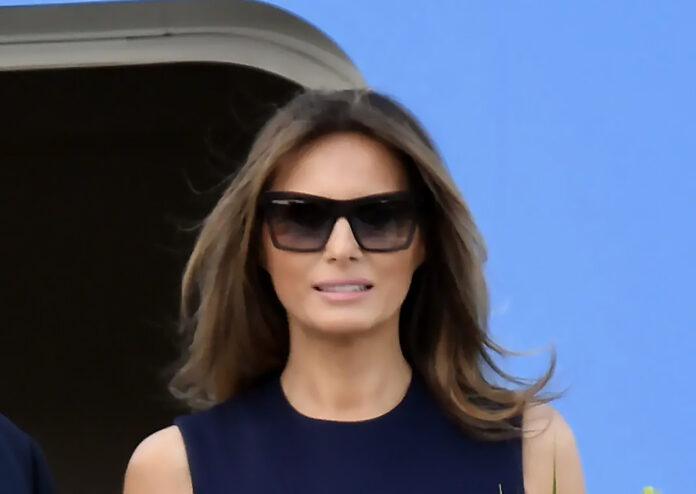
President Donald Trump revealed Tuesday that First Lady Melania Trump strongly disapproves of two signature performance habits he has become known for during public appearances: his spontaneous dance moves and his weightlifting impressions used to mock transgender athletes.
Speaking to House Republicans during a closed-door retreat at the Kennedy Center in Washington, DC, Trump disclosed his wife’s candid criticisms of behaviors she considers beneath the dignity of the presidency. The annual GOP retreat provided the setting for Trump’s remarks about Melania’s objections to his theatrical gestures.
Melania, whom he described as very classy, has repeatedly urged him to abandon the routines. Trump recalled Melania saying his onstage antics are unpresidential. The president pushed back against her concerns, reminding her that he did, in fact, become president while doing exactly those things.
The weightlifting impression particularly draws Melania’s ire. Trump told the Republican lawmakers that his wife finds the gesture terrible. During his address, Trump paused while miming hoisting an imaginary barbell to share his wife’s reaction with the audience.
Trump’s weightlifting routine has become a regular feature at his events, where he mocks transgender athletes competing in women’s sports. At the GOP retreat, held on January 7, 2026, he demonstrated the controversial impression by miming the hoisting of an imaginary barbell while criticizing Democratic policies. After initially offering a brief imitation, he decided to be more dramatic, sticking out his tongue, panting heavily and acting exhausted before pretending to drop the imaginary barbell.
The president’s dance moves have also become a source of marital disagreement. Trump frequently breaks into his signature dance moves to the Village People’s “YMCA” at campaign rallies and public events. The routine features distinctive movements that have become instantly recognizable to his supporters.
Melania’s critique of the dancing extends beyond mere personal preference. She invoked presidential history to make her point. Trump recalled his wife asking about whether anyone could imagine FDR dancing, referring to former President Franklin D. Roosevelt.
Trump responded to Melania’s comparison by noting that Roosevelt, who used a wheelchair after contracting polio, wouldn’t be doing this. He acknowledged Roosevelt was elegant, even describing the Democratic president in complimentary terms while discussing the attack by Japan. However, Trump argued that Roosevelt and many other presidents wouldn’t be doing the kinds of performances he delivers at rallies.
The president insisted that crowd reaction justifies continuing the routines despite his wife’s objections. Trump said he told Melania that everybody wants him to dance. He described enthusiastic responses at his events, saying the place goes crazy when he performs.
Melania remained unconvinced by her husband’s defense. Trump quoted his wife as saying supporters don’t really like it and are just being nice to him about his performances.
Trump flatly rejected that assessment, insisting that crowds are screaming for him to dance at his appearances. The president’s confidence in his performance skills appears unshaken by the first lady’s criticisms.
Republican lawmakers at the retreat cheered enthusiastically for Trump’s demonstrations, seemingly validating his claims about audience appreciation. The performance delighted those assembled at the Kennedy Center, with lawmakers applauding the president’s theatrical gestures.
Despite sharing his wife’s private opinions about his onstage behavior, Trump showed no indication of changing his approach. At the end of his address on Tuesday, he once again broke into his trademark dance moves, performing at the end of his speech to the assembled Republicans.
Trump framed his remarks at the GOP retreat as a roadmap to victory, suggesting his unconventional style serves strategic political purposes. The speech frequently strayed from prepared remarks, but the president presented his approach as deliberate rather than undisciplined.
The president’s willingness to publicly reveal his wife’s private criticisms offered an unusual glimpse into the dynamics between the presidential couple. Melania’s preference for restraint and traditional presidential decorum contrasts sharply with her husband’s instinct for spectacle and audience engagement.
Trump’s dance moves and physical comedy routines have become defining features of his public appearances. The performances generate significant media attention and social media discussion, keeping the president at the center of political conversations even when discussing policy matters.
The first lady’s concerns about presidential dignity reflect traditional views of how presidents should conduct themselves in public. Her invocation of Franklin D. Roosevelt suggests she believes the office demands a certain level of formality and restraint that Trump’s performances violate.
Trump’s response reveals his fundamentally different approach to the presidency. Rather than conforming to historical norms of presidential behavior, he has consistently prioritized direct connection with supporters through unconventional means. His willingness to dance, make exaggerated physical gestures and engage in theatrical performances represents a departure from traditional presidential conduct.
The tension between Melania’s desire for presidential decorum and Trump’s performance-oriented approach highlights broader questions about how modern presidents communicate with the public. Trump’s methods have proven effective at generating enthusiasm among his base, even as they draw criticism from those who prefer more conventional presidential behavior.
By acknowledging Melania’s disapproval while continuing the behaviors anyway, Trump demonstrated his commitment to the approach that has defined his political career. The president’s remarks at the GOP retreat made clear that he values crowd response and political effectiveness over traditional concerns about presidential dignity.