


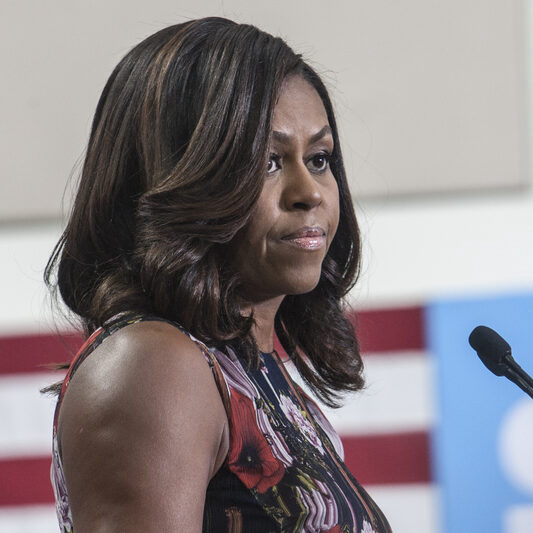
Former first lady Michelle Obama said she would “actively work against” her husband running for a hypothetical third presidential term, even if constitutional restrictions were lifted.
During an interview on the Call Her Daddy podcast, host Alex Cooper asked the former first lady whether former President Barack Obama would consider seeking office again if President Donald Trump changed the law to allow third terms.
“I hope not,” Obama responded. “I would actively work against that.”
She elaborated on her position, stating she would be at home working against it. The former first lady’s emphatic stance came amid ongoing speculation about presidential term limits and their constitutional boundaries.
Obama explained that she believes eight years is enough time for any president to serve. She emphasized the need for new vision and energy in the Oval Office, arguing that the two-term limit exists for reasons beyond simple popularity.
“I do believe in the need for a new vision, right? I mean, the two terms are not just about, ‘We like them, and we want it.’ It’s just like, we’re changing and growing so fast. This is a hard job, and it requires new energy, new vision all the time, new ways of looking at the world, right? So, I do believe that eight years is enough,” Obama said during the conversation.
The former first lady raised concerns about how continuous service by the same leaders prevents younger voices from emerging. She questioned why the same people would keep serving when there are so many talented individuals available to lead. She expressed curiosity about younger perspectives on solving national problems, noting that the young generation travels more and knows more about the world than previous generations.
Obama argued that the job requires new ideas from younger leaders. She also discussed how leaders live a different life when older, suggesting that while there is room for wisdom from experienced politicians, new ideas need space to flourish.
“I would actively work against that,” Obama stated, reinforcing her belief in regular leadership turnover and emphasizing that two terms is enough for everybody.
The 22nd Amendment to the Constitution prohibits presidents from being elected more than twice. This constitutional restriction has governed presidential tenure since its ratification.
Trump has teased running for a third term on multiple occasions throughout his political career. In March, he spoke to NBC News about the possibility of a third term. During an August appearance on CNBC discussing the topic, Trump said he probably would not run for a third term.
In October, Trump claimed there is a way to run for a third term, though he later said the Constitution is pretty clear that he cannot run again, acknowledging the constitutional limitations on presidential service. Despite these acknowledgments, Trump has said he would love to run against Obama in a third term matchup. He floated a potential ticket featuring Vice President JD Vance and Secretary of State Marco Rubio as a future possibility.
The hypothetical question posed by Cooper reflects ongoing political discussions about presidential power and term limits. While the 22nd Amendment stands as a firm constitutional barrier, speculation about third terms periodically surfaces in political discourse, particularly when popular or controversial presidents approach the end of their second terms.
Michelle Obama’s position on presidential term limits extends beyond her personal preference regarding her husband’s political future. Her comments reflect a broader philosophy about democratic renewal and the importance of generational change in leadership. The former first lady’s emphasis on younger leaders gaining opportunities resonates with ongoing debates about age and leadership in American politics.
The Call Her Daddy podcast, hosted by Alex Cooper, has become a significant platform for high-profile interviews. The show’s format allows for candid conversations on topics ranging from personal to political, reaching a predominantly younger audience. Obama’s appearance on the podcast represents part of a broader trend of political figures engaging with non-traditional media platforms to reach diverse demographics.
Obama’s interview touched on themes of democratic norms and institutional limits on power. Her strong stance against even a hypothetical third term for her husband underscores a commitment to constitutional principles and the peaceful transfer of power between different leaders. This position aligns with traditional American values regarding the limitation of executive authority and the importance of regular changes in democratic leadership.
The discussion about term limits comes as the United States continues to grapple with questions about political continuity and change. Obama’s comments suggest a belief that fresh perspectives and new energy are essential for addressing contemporary challenges, rather than relying on familiar figures from previous administrations.