


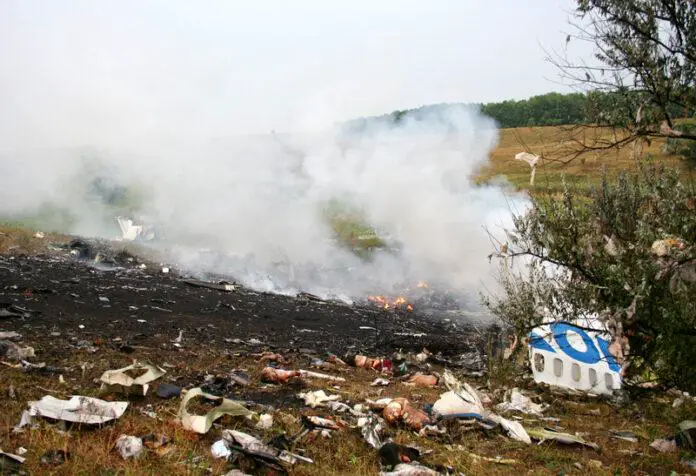
A plane crash on Wednesday claimed the life of Ajit Pawar, the deputy chief minister of Maharashtra, India, along with four other people aboard the aircraft. The Learjet 45 aircraft operated by VSR Ventures went down in flames while attempting an emergency landing at Baramati airport, approximately 254km from the state capital.
The crash occurred at 8:30 a.m. local time as the aircraft was traveling from Mumbai to Baramati. The plane crashed in an open field and burst into flames. Pawar, 66 years old, was traveling with his personal security officer, an assistant and two crew members when the accident occurred.
Aviation authorities reported that poor visibility conditions existed at the time of the crash. The aircraft had been cleared for landing after several attempts to approach the airport. However, after receiving final landing clearance, the plane failed to provide any read-back response to Air Traffic Control before the fatal crash.
The Directorate General of Civil Aviation and the Aircraft Accident Investigation Bureau have launched an investigation into the circumstances surrounding the accident. Teams from both agencies are working to determine what caused the aircraft to go down during its final approach to the runway.
Pawar served as the deputy chief minister of Maharashtra, India’s wealthiest state. His political career spanned more than three decades, during which he became one of the most influential figures in the state’s political landscape. He was a member of the Nationalist Congress Party and had forged a political alliance with the Bharatiya Janata Party.
Born on July 22, 1959, Pawar first entered the Maharashtra Legislative Assembly in 1991. He represented Baramati for eight terms, establishing a strong political base in the constituency that became synonymous with his family’s influence. The region, located 159 miles from the state capital, was his political stronghold and the destination of his final journey.
In 2023, Pawar orchestrated a significant political split from the Nationalist Congress Party. The move reshaped Maharashtra’s political landscape and demonstrated his considerable influence within the state’s political circles. His ability to mobilize support and navigate complex political alliances made him a formidable force in regional politics.
The deputy chief minister’s political journey was closely intertwined with his uncle, Sharad Pawar, a veteran politician and founder of the Nationalist Congress Party. This family connection played a significant role in shaping his early career and political trajectory, though he eventually carved out his own distinct political identity and power base.
Prime Minister Narendra Modi expressed his grief following news of the crash. Modi described Pawar as a “leader of the people” in remarks following the tragedy. The prime minister’s statement reflected the widespread recognition of Pawar’s role in Maharashtra politics and his connections across party lines.
Opposition leader Rahul Gandhi also offered condolences following the accident. Maharashtra Chief Minister Devendra Fadnavis, who worked closely with Pawar in the state government, joined others in mourning the loss. Home Minister Amit Shah expressed his condolences, stating that “Maharashtra has lost a dedicated leader who served the people with unwavering commitment.” The crash sent shockwaves through India’s political establishment, as leaders from across the spectrum acknowledged Pawar’s contributions to public life.
The Maharashtra government has declared three days of mourning in response to the tragedy. During this period, the state will observe official protocols to honor the deputy chief minister’s memory and service. Pawar’s funeral is scheduled for Thursday at 11:00 a.m. local time, providing an opportunity for family members, political colleagues and supporters to pay their final respects.
The crash investigation will examine multiple factors that may have contributed to the accident. Aviation safety experts will analyze the aircraft’s maintenance records, flight data, weather conditions and communications between the pilots and air traffic control. The Learjet 45, a mid-size business jet, is manufactured by Bombardier and typically seats up to nine passengers. The aircraft type has been in service since 1997 and is commonly used for corporate and charter flights throughout the world.
Emergency landing procedures require precise coordination between pilots and ground control, especially under poor visibility conditions. When an aircraft makes multiple approach attempts before receiving clearance, it often indicates challenging weather or technical difficulties. The lack of read-back response from the pilots after receiving final landing clearance raises questions about what occurred in the aircraft’s final moments before impact.
Baramati holds special significance beyond its role as Pawar’s political constituency. The town underwent substantial development during his tenure, with infrastructure improvements and civic projects that transformed the area. His influence extended particularly into Maharashtra’s sugar belt region, where agricultural interests intersect with political power. This economic base provided crucial support for his political operations and helped cement his status as a key figure in state politics.
The investigation by the Directorate General of Civil Aviation and Aircraft Accident Investigation Bureau will follow standard protocols for aviation accidents. Investigators will examine the wreckage, recover flight data recorders if available, interview witnesses and reconstruct the sequence of events leading to the crash. The open field location where the aircraft came down may provide investigators with access to debris that can offer crucial clues about the cause of the accident.
Weather conditions play a critical role in aviation safety, particularly during landing approaches. Poor visibility can result from fog, rain, dust or other atmospheric conditions that reduce a pilot’s ability to see the runway and surrounding terrain. Modern aircraft are equipped with instruments to assist in low-visibility landings, but these systems require proper functioning and skilled operation by flight crews.
The loss of Maharashtra’s deputy chief minister creates both political and administrative challenges for the state government. His role in the coalition between the Nationalist Congress Party and the Bharatiya Janata Party made him a crucial bridge between different political factions. The vacuum left by his death will require political realignment as parties and leaders adjust to the new reality of Maharashtra politics without one of its most experienced operators.