


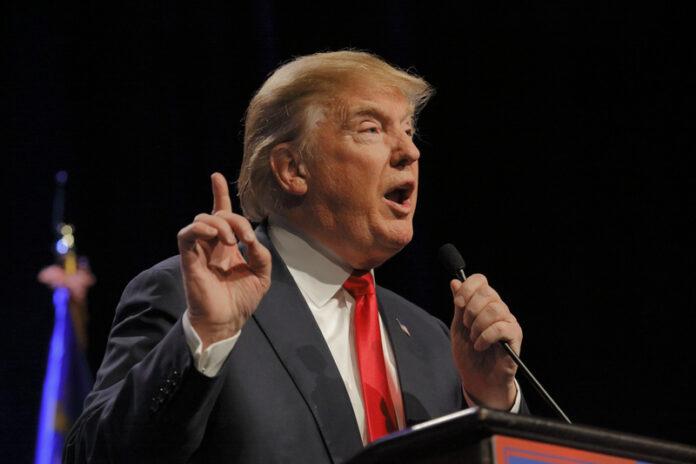
President Donald Trump unleashed a fiery attack on Colorado Governor Jared Polis and Mesa County District Attorney Daniel Rubinstein on Wednesday, December 31, 2025, calling Polis a “scumbag” and instructing both officials to “rot in hell” over their refusal to release imprisoned election clerk Tina Peters.
Trump posted on Truth Social to defend Peters, the former Mesa County clerk now serving a 9-year prison sentence for seven state-level charges related to election interference in 2020. Peters, who is 70 years old, gave unauthorized access to voting machines in connection with MyPillow CEO Mike Lindell, part of her effort to investigate what Trump claimed was “massive voter fraud” in Colorado.
“God Bless Tina Peters, who is now, for two years out of nine, sitting in a Colorado Maximum Security Prison, at the age of 73, and sick, for the ‘crime’ of trying to stop the massive voter fraud that goes on in her State,” Trump wrote, beginning his message. “Hard to wish her a Happy New Year, but to the Scumbag Governor, and the disgusting ‘Republican’ (RINO!) DA, who did this to her (nothing happens to the Dems and their phony Mail In Ballot System that makes it impossible for a Republican to win an otherwise very winnable State!), I wish them only the worst. May they rot in Hell. FREE TINA PETERS!”
The attack on Polis and Rubinstein came weeks after Trump granted what he described as a full pardon to Peters. However, presidential pardons only apply to federal crimes, not state-level convictions. Peters was convicted in 2024 on state charges stemming from her role in orchestrating a criminal scheme to breach voting machine data in Mesa County.
Colorado has denied a federal transfer request that would have moved Peters from state custody to a federal facility, effectively blocking any pathway for Trump’s pardon to take effect. Polis responded to Trump’s latest attack by saying the president has no jurisdiction over state convictions. “I hope the President’s resolution this year is to spend less time online talking about me and more on making America more affordable by stopping his disastrous tariffs and fixing rising health care costs,” Polis said.
The Democratic governor also addressed Trump’s characterization of Peters’ condition, stating that Peters is healthy and doing fine.
Rubinstein, the Republican district attorney whom Trump called “disgusting” and labeled a “RINO” (Republican In Name Only), fired back at the president’s statement. “President Trump has no facts and no law here,” Rubinstein said.
The presidential attacks appear part of a broader retaliation campaign against Colorado for its refusal to release Peters. Trump has taken several actions targeting the state since his pardon was rejected. Trump announced plans to dismantle the National Center for Atmospheric Research in Boulder, Colorado, a world-class climate and weather research institution that provides critical data for predicting severe weather and natural disasters.
The Trump administration has also canceled $109 million in federal grants for Colorado transportation projects, including a $66 million rail safety grant designated for the northern part of the state. Trump vetoed the Arkansas Valley Conduit Act, a bipartisan bill that would have funded a water delivery project serving communities in southeastern Colorado.
Peters’ appeal is being processed through Colorado’s court system. The Colorado attorney general’s office has been asked to respond to Peters’ case by January 8, 2026, with arguments from her lawyers scheduled for January 14, 2026.
The case has become a flashpoint in ongoing debates over presidential power, election security, and the boundaries between federal and state authority. Trump’s continued defense of Peters reflects his broader narrative about the 2020 election, which he has maintained was marred by widespread fraud despite numerous court rulings and investigations finding no evidence to support such claims.
Peters’ conviction rested on her actions as Mesa County clerk, where she held a position of public trust and responsibility for maintaining the security of local election systems. By providing unauthorized access to secure voting equipment, Peters violated her oath of office and committed multiple state crimes that prosecutors argued undermined election integrity rather than protecting it.
The confrontation between Trump and Colorado officials highlights the constitutional limits on presidential clemency power. While presidents have broad authority to pardon federal offenses, the federalist system reserves state criminal justice matters to state governments. This separation means governors, not presidents, hold pardon power over state convictions, a principle that has been upheld consistently throughout American history.
Trump’s escalating conflict with Colorado comes as he continues to champion election fraud claims that have been repeatedly rejected by courts across the country. His characterization of Peters as a patriot fighting voter fraud contrasts sharply with the jury verdict in her case, where she was found guilty after a trial that examined evidence of her deliberate circumvention of election security protocols.
The president’s use of inflammatory language against state officials, including telling them to rot in hell, represents an unusually personal and hostile approach to federal-state relations. Such rhetoric directed at a sitting governor over a matter of state criminal justice reflects the deep political divisions surrounding election-related prosecutions and the ongoing reverberations of the 2020 presidential contest.
As Peters remains incarcerated while her appeal proceeds, the standoff between the White House and Colorado appears likely to continue, with significant implications for other states facing similar conflicts between federal pressure and state sovereignty in criminal justice matters.