


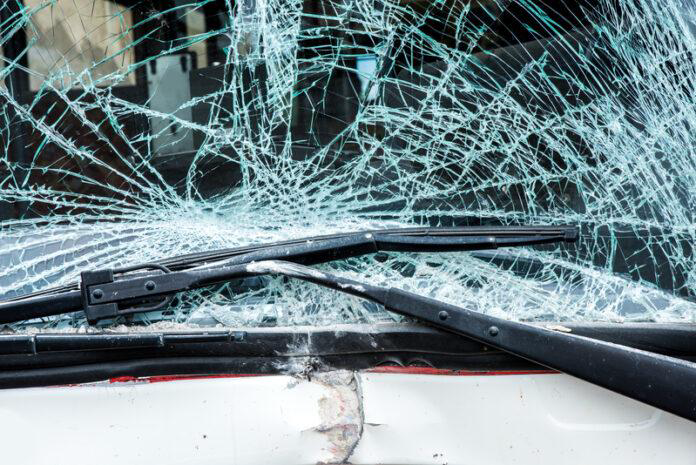
A head-on collision between a bus and a van in Punjab province, Pakistan, on Thursday, January 1, 2026, left 14 people dead and 16 others injured. The accident occurred in Jhang district as the bus was transporting players from the University of Veterinary and Animal Sciences to a sports event in Lahore.
Deputy Commissioner Ali Akbar told the media that nine passengers died at the scene of the collision, while five others succumbed to their injuries later in the hospital. The bus was carrying university players heading to participate in a sports event when it collided with the van.
“The accident occurred due to overspeeding by both vehicles as one attempted to overtake while the other was crossing a tractor,” Akbar said.
The collision took place in Jhang district, a region in Punjab province that has experienced numerous traffic accidents in recent years. The district lies along major transportation routes connecting various cities across the province, making it a high-traffic area where such incidents frequently occur.
The University of Veterinary and Animal Sciences, based in Lahore, is one of Pakistan’s premier institutions for veterinary education and animal sciences. The university regularly sends its athletic teams to participate in inter-university sports competitions across the country, requiring travel on Pakistan’s often congested and poorly maintained roadways.
The involvement of two vehicles attempting complex maneuvers simultaneously—one overtaking and another crossing a tractor—highlights the dangerous conditions on Pakistani roads where agricultural and commercial traffic often mix with passenger vehicles. Tractors and other slow-moving farm equipment are common on rural highways in Punjab, Pakistan’s most populous province and agricultural heartland.
Overspeeding remains one of the primary factors in fatal traffic accidents across Pakistan, where enforcement of speed limits is inconsistent and driver education standards vary widely. The combination of excessive speed with an attempted overtaking maneuver while another vehicle was navigating around a slow-moving tractor created a deadly scenario with little room for error.
Head-on collisions are among the most deadly types of traffic accidents, as the combined speed of both vehicles at impact dramatically increases the force involved. When both vehicles are traveling at high speeds, as authorities indicated in this case, the likelihood of survival decreases significantly, particularly in vehicles that may lack modern safety features such as airbags, crumple zones, and reinforced passenger compartments.
The fact that nine people died instantly at the scene while five others died later in the hospital suggests the collision’s severe impact. Immediate deaths in traffic accidents typically result from massive trauma, while delayed deaths often occur due to internal injuries, hemorrhaging, or complications that develop despite emergency medical intervention.
Pakistan’s road safety record has deteriorated in recent years, with thousands of fatalities annually attributed to traffic accidents. The country’s rapidly growing vehicle population has not been matched by corresponding improvements in road infrastructure, traffic management systems, or driver training programs. Many of Pakistan’s highways were built decades ago and have not been adequately upgraded to handle current traffic volumes.
Punjab province, as Pakistan’s economic and population center, experiences particularly high traffic volumes on its road network. The province contains several major cities including Lahore, Faisalabad, and Multan, along with countless smaller towns and villages connected by a web of highways and rural roads. The movement of agricultural products, commercial goods, and passengers creates constant traffic pressure, especially on key routes.
The transportation of university sports teams by bus is common practice across Pakistan, where institutions often lack the resources for more expensive travel arrangements. Buses provide an economical means of moving groups of students and athletes, but they also concentrate many passengers in a single vehicle, meaning that accidents can result in mass casualties.
Emergency response capabilities in rural and semi-rural areas of Pakistan often lag behind those in major cities, potentially affecting survival rates for accident victims. The time required to transport seriously injured patients to hospitals with adequate trauma care facilities can be critical, particularly for victims with internal injuries or severe bleeding.
This accident in Jhang district represents another tragic example of Pakistan’s ongoing struggle with road safety. Despite awareness campaigns and periodic crackdowns on traffic violations, fundamental problems persist: inadequate driver training, poor vehicle maintenance, insufficient road infrastructure, and a general culture of traffic rule violations that places all road users at risk.
The involvement of university students in this accident adds a particularly tragic dimension, as these young athletes were traveling to represent their institution in sports competition. Such events are important aspects of university life in Pakistan, providing students with opportunities for athletic development and inter-institutional competition.
Authorities in Pakistan have repeatedly identified reckless driving, poor road conditions, and inadequate vehicle maintenance as primary causes of the country’s high accident rate. However, implementing effective solutions has proven challenging due to limited resources, enforcement difficulties, and the sheer scale of the problem across a country with a population exceeding 240 million people and millions of vehicles.