


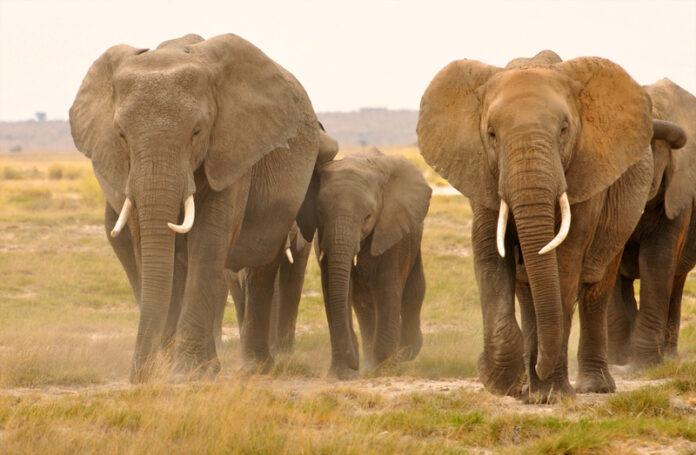
A 52-year-old fisherman in eastern Zambia died after being attacked by a crocodile while fleeing from a herd of elephants, police confirmed. Dean Nyirenda was killed on Wednesday, February 4, when what began as an encounter with elephants turned into a fatal confrontation with one of Africa’s most dangerous predators.
Nyirenda was returning from a fishing trip near the Luangwa River in Mambwe District with his young brother and another companion when the group unexpectedly came across a herd of elephants around 6 a.m. The three men scattered in different directions, with Nyirenda diving into a nearby stream in a desperate attempt to escape the animals.
“That is when he was attacked by a crocodile by biting his right thigh,” said Robertson Mweemba, Eastern Province commanding officer.
According to police, Nyirenda managed to fight off the reptile by striking it repeatedly with a stick he was carrying. He dragged himself from the water as his two companions watched helplessly from a distance. Once the danger from the crocodile passed, they rushed to his aid and carried him from the riverbank to their campsite while he bled heavily from the wound.
“The deceased bled profusely, and he later died due to excessive loss of blood,” Mweemba said.
Wildlife officers and police later visited the scene and inspected Nyirenda’s body. They found deep bite marks on his right thigh, confirming that he died from excessive blood loss caused by the crocodile attack. Police identified Nyirenda as a resident of Nkuku Village in Mambwe District.
The incident underscores the dangerous wildlife encounters that have become increasingly common in Zambia. The southern African nation has a substantial elephant population, with the largest concentration found in South Luangwa National Park and its surrounding valley, which is home to approximately 15,000 elephants.
The Luangwa River, where Nyirenda died, is home to one of the highest concentrations of Nile crocodiles in Africa. These massive apex predators can exceed 20 feet in length and dominate the river, particularly during the dry season when water levels drop and wildlife congregates around remaining water sources. The river is considered one of the most dangerous areas in the country for human-wildlife conflict.
According to Resource Africa, a community-led conservation organization, of the 26 wildlife-related deaths recorded in Zambia’s Eastern Region in 2023, 15 were caused by crocodile attacks. Most of these fatal encounters occurred along the Luangwa River. As water levels dwindle due to droughts, crocodiles congregate in parts of the river that are also frequented by people, putting fishermen who depend on the river for their livelihoods at particular risk.
Clashes between humans and elephants have also claimed numerous lives in recent years. In July 2025, two female tourists were killed by a female elephant with a calf during a walking safari in South Luangwa National Park. The victims were identified as Easton Janet Taylor, 68, from the United Kingdom, and Alison Jean Taylor, 67, from New Zealand. Safari guides fired shots at the charging elephant in an attempt to stop its advance, but the animal was only wounded and both women died at the scene.
The dangers of Zambia’s rivers extend beyond locals. In November 2021, British student Amelie Osborn-Smith, then 18, was attacked by a 10-foot crocodile while white water rafting on the Zambezi River near Victoria Falls. She was sitting on the boat when the crocodile clamped onto her leg and dragged her under the water. Her friends rescued her by punching the crocodile until it released her, and she was airlifted to Medland Hospital in Zambia with severe injuries. Though doctors initially feared she would lose her foot, she survived after emergency surgery. Her father, Brent Osborn-Smith, later spoke publicly about the terrifying ordeal.
Zambian authorities have repeatedly urged both locals and tourists to exercise extreme caution when traveling through the country’s wildlife hotspots. The government has acknowledged the growing problem of human-wildlife conflict as villages and settlements expand into areas traditionally inhabited by elephants, crocodiles, and other dangerous animals.
Wildlife authorities told state media they are considering several measures to reduce these deadly encounters, including building protective fences near wildlife areas and establishing buffer zones between human settlements and animal habitats. However, implementation of such measures has been slow, and conflicts continue to claim lives with alarming regularity.
The Department of National Parks and Wildlife has not yet commented on the specific circumstances of Nyirenda’s death or whether additional safety measures will be implemented in the Kanwa area where the attack occurred.
For fishermen who depend on the Luangwa River for their livelihoods, the risks are constant and often fatal. Nyirenda’s death serves as a grim reminder of the precarious balance between humans and wildlife in Zambia, where residents of rural villages must navigate landscapes shared with some of Africa’s most formidable predators.