


The Department of Justice released 3 million pages of documents related to convicted sex offender Jeffrey Epstein on Friday, January 30, 2026, including thousands of photos and videos that feature prominent political figures and wealthy businessmen who associated with the late financier.
The massive tranche included 2,000 videos and 180,000 images from the DOJ’s investigative files on Epstein and his convicted co-conspirator Ghislaine Maxwell. The release was required under the Epstein Files Transparency Act, which mandated that all documents be made public by December 19, 2025.
Deputy Attorney General Todd Blanche announced at a press briefing that the DOJ’s files contained 6 million pages total, but nearly 3 million pages were being withheld for various reasons. Another 200,000 pages were withheld over legal privileges. The release marked the culmination of a review process that involved 200 lawyers working to prepare the documents.
“Today’s release marks the end of a very comprehensive document review process to ensure transparency to the American people,” Blanche said during the briefing.
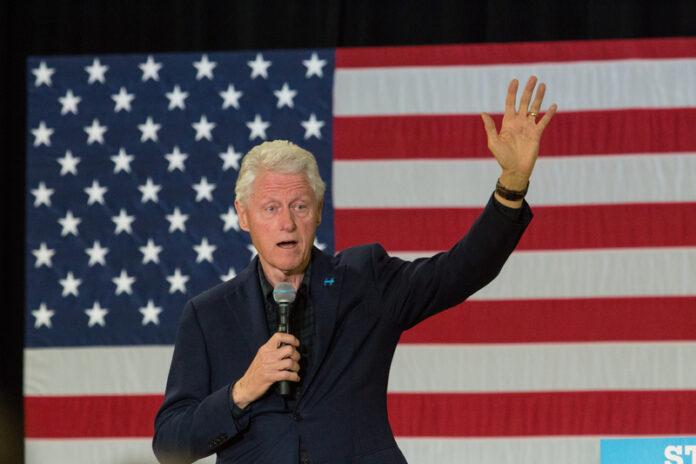
The documents include photos showing former President Bill Clinton with Epstein and Maxwell, adding to longstanding questions about the relationships between the disgraced financier and powerful political figures. Clinton has never been accused of wrongdoing in connection with Epstein, and his spokesman Angel Ureña called for the release of all files related to the former president.
Ureña issued a statement challenging the DOJ’s handling of the release, according to ABC News.
The files also contain video showing Steve Bannon interviewing Epstein. Bannon, who served as chief White House strategist during President Trump’s first administration, conducted the interview at an unknown date. The video shows the two men discussing Epstein’s sex offender classification and other topics.
Among the materials released were photos showing filmmaker Brett Ratner with Epstein.
The release has drawn criticism from multiple quarters. Attorneys representing Epstein survivors reported that names of victims appeared unredacted in the files, despite DOJ assurances that such information would be protected. Lawyers said they began receiving calls from clients whose identities had been exposed in the documents.
A group of Epstein survivors issued a statement condemning the DOJ’s handling of the release, according to PBS.
Blanche addressed concerns about whether the released material would lead to new prosecutions, saying that released material does not necessarily allow prosecutors to bring charges against individuals.
President Trump’s name appears thousands of times throughout the documents that have been released to date. Blanche said the DOJ did not protect Trump in the release when questioned about the matter.
The documents also reference Prince Andrew, Bill Gates, and Elon Musk, though mentions of prominent figures do not imply wrongdoing. British Prime Minister Keir Starmer suggested that the former prince should cooperate with U.S. authorities investigating Epstein’s network of associates.
On Monday, February 2, 2026, President Trump threatened to sue comedian Trevor Noah.
The Epstein case has roiled Washington politics for years. House Oversight Committee chair James Comer issued subpoenas to Bill and Hillary Clinton, demanding they testify before the committee about their knowledge of Epstein. The Clintons refused to testify before the House committee, with Comer threatening contempt of Congress proceedings against them.
Epstein killed himself in a New York jail in 2019 while awaiting trial on federal sex trafficking charges. His death occurred after his arrest on charges of sexually abusing dozens of underage girls at his mansions in New York and Florida.
Maxwell was convicted of sex trafficking in 2021 for her role in recruiting and grooming young women and girls for Epstein to abuse. She is currently serving a 20-year prison sentence. Virginia Giuffre was one of Epstein’s most prominent accusers.
The newly released files shed light on an earlier investigation that found evidence of Epstein abusing underage girls but never led to federal charges. In 2010, Epstein received an 18-month jail sentence after pleading guilty to a state charge of soliciting prostitution from someone under age 18. That deal was negotiated by then-U.S. attorney Alexander Acosta, who later served as labor secretary during Trump’s first administration.
The DOJ’s handling of the document release has faced scrutiny from lawmakers. The department initially missed the December 19, 2025 deadline established by the Epstein Files Transparency Act, citing the volume of material and the need to redact survivors’ identifying information. Documents began appearing online on December 23, 2025, with additional batches released on January 13, 2026 and Friday, January 30, 2026.
The files include correspondence, court records, FBI documents, news clippings, and emails spanning two decades of investigations. Photos from Epstein’s properties show his extensive documentation of social connections with powerful figures in politics, business, and entertainment.
The case has highlighted longstanding questions about how federal prosecutors handled initial allegations against Epstein. The financier cultivated relationships with prominent individuals across multiple industries, traveling frequently on his private aircraft and hosting gatherings at his properties in New York, Florida, and the U.S. Virgin Islands.
Photos released in December 2025 showed Clinton with Epstein and Maxwell in various settings. The context and dates of many photographs remain unclear, as the DOJ provided limited information about when and where images were taken.
The Epstein Files Transparency Act represented a rare bipartisan effort in Congress to force disclosure of investigative materials. Lawmakers from both parties pushed for full transparency about how Epstein evaded serious federal charges for years despite mounting evidence of his crimes.
The DOJ established an email inbox for victims to report redaction errors after lawyers complained that client identities had been exposed. Officials said they coordinated with victims and their attorneys to ensure proper redactions, but acknowledged that mistakes had been made in the massive review process.
The investigation into Epstein’s network of associates continues. The files offer the most comprehensive public look yet at the scope of Epstein’s connections and the federal investigations that spanned from 2006 until his death in 2019.