


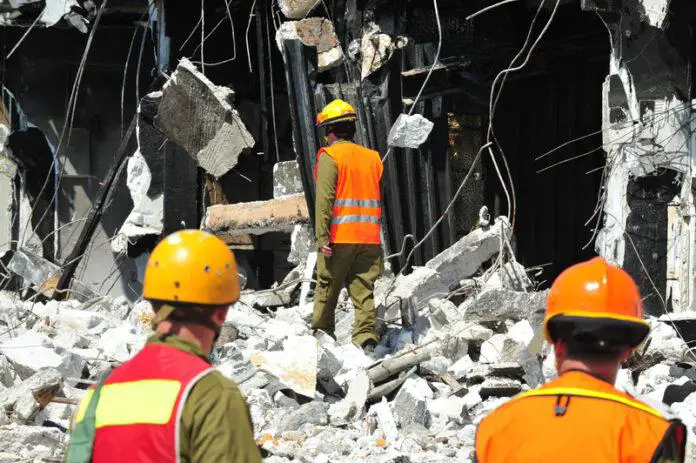
Twelve people have died following the catastrophic collapse of a four-story nursing home in Belo Horizonte, Brazil, that trapped residents under massive piles of rubble in the early morning hours of Thursday, March 5, 2026.
The Casa de Repouso Pró-Vida nursing home crumbled at approximately 1:30 a.m. local time, with 29 people inside the building when disaster struck. The Military Fire Department of Minas Gerais confirmed the tragedy, sharing dramatic videos of the rescue mission as firefighters worked frantically to pull survivors from the wreckage.
Eight people were pulled alive from the debris, while nine others managed to escape on their own or with help from neighbors who rushed to the scene after hearing the thunderous roar of the collapsing structure. Among the deceased were women aged 99 and 96 years old. The body of a 77-year-old man was the last to be recovered on Friday morning around 6 a.m., bringing the grim search to a close after more than 24 hours of continuous effort.
The collapsed structure housed more than just the nursing home. The four-story building also contained a tanning salon and cosmetic clinic on the ground floor, a gym on one of the upper levels, and residential apartments—including the home of the building’s owner, who lived on the second floor with his family. Both the owner and his son were among those killed in the collapse.
More than 40 firefighters participated in the search efforts, working alongside specially trained rescue dogs to comb through mountains of broken walls, iron beams, and dirt. The rescue operation ultimately mobilized 140 military personnel, including a reinforcement team of 30 agents who arrived the night after the collapse. Some of the emergency responders had already been deployed to Juiz de Fora, a city in Minas Gerais state where landslides triggered by torrential rains had killed 70 people just days earlier in what became the wettest February in that city’s recorded history.
What makes this collapse particularly puzzling to investigators is the absence of any obvious trigger. “What is striking is that it wasn’t raining at the time of the accident,” said Elcione Menezes Alves, Undersecretary of Civil Protection and Defense of Belo Horizonte. The area had never been classified as high-risk, and the building had passed a health inspection just two months earlier in January.
Authorities have launched a full investigation into what caused the building to crumble without warning. Preliminary reports suggest the collapse may have resulted from human intervention in the building’s structure. The Undersecretary stated that the hypothesis points to “constructive risk, such as a failure in construction or human intervention.” Investigators are examining whether expansion work undertaken on the property may have compromised the structural integrity of the building.
The nursing home had operated in the building for more than a decade, according to witnesses familiar with the property. A friend of the owner told local media that there were no visible signs of structural problems from the outside, and no apparent indicators that a collapse was imminent.
Fire department spokesman Henrique Barcellos told journalists that the building had all the necessary permits, adding another layer of complexity to the investigation. The city confirmed that the long-term elderly care facility held a valid operating license through 2030 and had current sanitary permits. Authorities must now determine whether those permits were properly issued and if the structure met all required safety standards—particularly given that the Minas Gerais Public Prosecutor’s Office had reportedly sought to close the establishment since 2017 due to irregularities found in previous inspections.
The Civil Defense reported that expansion work had been conducted on the property, though officials cautioned it was too early to establish any definitive correlation between the construction modifications and the collapse. Engineers and building inspectors continue to examine the site for clues about what triggered the catastrophic failure.
The disaster has shaken Belo Horizonte, the capital of Minas Gerais state in southeastern Brazil. The death toll initially stood at eight, with four people reported missing. As rescue teams worked methodically through the debris, those fears were confirmed when the bodies of the remaining victims were recovered one by one throughout Thursday night and into Friday morning.
Among those pulled alive from the wreckage was a two-year-old boy, whose survival offered a rare moment of relief amid the tragedy. The child’s presence in the building highlights the mixed-use nature of the structure, which combined elderly care facilities with residential and commercial spaces under one roof.
The investigation into the cause of the collapse continues, with authorities working to determine whether criminal negligence played a role in the building’s failure. The findings could have significant implications for building safety regulations and enforcement throughout Minas Gerais state and across Brazil.