


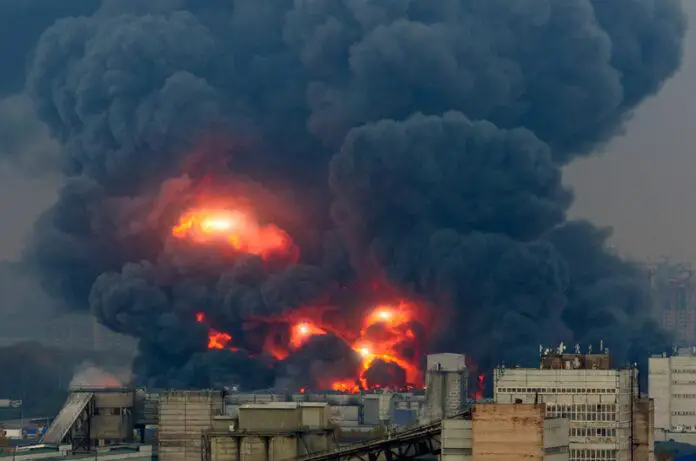
A devastating fire at an auto parts factory in Daejeon, South Korea, claimed 14 lives and injured at least 59 others on Friday afternoon, marking one of the country’s deadliest industrial disasters in recent years.
The blaze erupted at approximately 1:18 p.m. on March 20, 2026 at an Anjeon Industrial facility in the Daedeok district of the central South Korean city, located roughly 100 miles from Seoul. More than 500 firefighters, police officers, and emergency personnel rushed to the scene as thick gray smoke billowed from the three-story complex and desperate workers jumped from windows to escape the flames.
Witnesses reported hearing an explosion before the fire spread with terrifying speed through the factory, which housed approximately 170 people at the time. The Ministry of the Interior and Safety confirmed that 25 of the injured sustained serious wounds, though officials have not yet determined whether any face life-threatening conditions.
Emergency crews initially couldn’t enter the burning structure due to concerns it might collapse. Instead, they deployed unmanned firefighting robots to cool the building and conducted safety inspections before rescue operations could begin late Friday evening.
By Saturday morning, rescuers had recovered 14 bodies from the charred wreckage. Nine victims were discovered together in a mezzanine-level fitness center on the second floor—an unauthorized structure that did not appear on building blueprints or registration documents. Three others were found near a water tank on the second floor, and the final victim was located in a first-floor restroom. All missing workers have been accounted for, according to fire officials.
The severity of the burns made identification nearly impossible through conventional means. Police have identified one victim through fingerprints, while genetic testing is being conducted on the remaining 13 whose remains were too badly damaged for visual recognition.
The presence of highly reactive chemicals at the facility complicated firefighting efforts significantly. Workers recovered more than 100 kilograms (220 pounds) of dangerous sodium from the site before crews could safely deploy water to extinguish the flames. This substance reacts violently and explosively when mixed with water, forcing firefighters to focus on preventing the blaze from spreading to adjacent facilities while carefully isolating the hazardous materials. Factory records show authorities had warned the company last month about excessive sodium metal deposits on the premises—a violation of safety regulations that limit such storage to 10 kilograms.
As of Saturday morning, 28 people remained hospitalized. Four underwent surgery for broken bones and other injuries sustained during their escape. Many workers jumped from the building in a desperate attempt to flee the inferno, while others suffered severe smoke inhalation before rescue teams could reach them.
The massive emergency response deployed approximately 120 vehicles and pieces of equipment to the scene, including aircraft, an unmanned water cannon vehicle, and two specialized firefighting robots designed to access hard-to-reach areas. The sophisticated equipment proved essential in containing a disaster that could have claimed even more lives.
South Korean President Lee Jae Myung called for the full mobilization of personnel and equipment to contain the fire and support rescue operations. He visited the site Saturday afternoon, meeting with relatives of the victims and calling for safety measures to prevent the damaged structure from collapsing during continued search operations. “The government will prepare fundamental measures to prevent such incidents,” he pledged.
The cause of the fire remains under investigation, though the rapid spread and witness accounts of an explosion suggest a catastrophic industrial accident. Investigators believe the building’s sandwich panel construction and an accumulation of cutting oil, grease residue, and sludge in dust collection equipment may have fueled the flames.
This tragedy echoes a similar disaster that struck South Korea less than two years ago. In June 2024, a battery plant fire in Hwaseong, located 28 miles from Seoul, killed 23 workers. That factory floor filled with smoke and flames within 15 seconds of the fire breaking out, with 102 people working in the building at the time. Most victims in that incident died from smoke inhalation while attempting to escape after initially trying to fight the blaze with fire extinguishers. The Aricell factory CEO was later sentenced to 15 years in prison for prioritizing profit over safety.
The recurring nature of these industrial fires has intensified scrutiny of workplace safety standards in South Korea’s manufacturing sector. The country’s rapid industrialization has sometimes come at the cost of worker safety, particularly in facilities handling hazardous materials. Authorities have now launched emergency inspections of similar facilities nationwide.
As families await identification of their loved ones and the investigation continues, the Daejeon community grapples with the aftermath of one of the deadliest factory fires in recent South Korean history. The government has established a joint memorial altar at Daejeon City Hall and allocated 1 billion won ($690,000) in emergency disaster relief funds. The disaster serves as a stark reminder of the dangers facing industrial workers and the critical importance of stringent safety protocols in facilities housing explosive materials.