


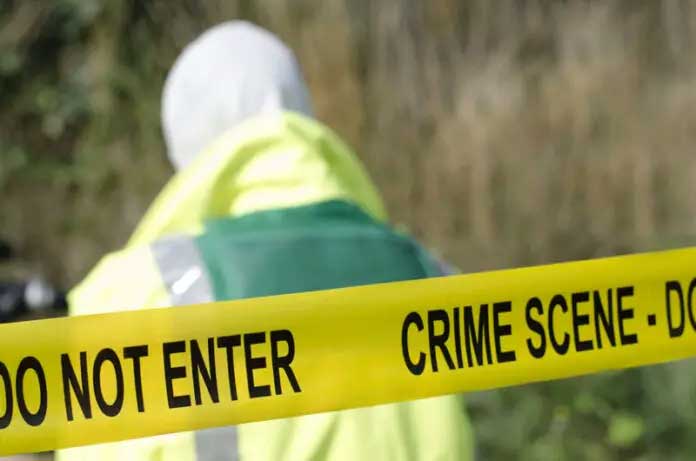
Kenyan authorities unearthed 32 bodies from a mass grave at Makaburini Cemetery in Kericho on Tuesday, March 24, 2026, a grim discovery that has ignited a criminal investigation and sent shockwaves through the Rift Valley region. The remains—25 children, including neonates and fetuses, and seven adults—were stacked in gunny bags, according to government pathologist Dr. Richard Njoroge.
What began as an investigation into 14 suspected corpses quickly spiraled into something far more disturbing. After a whistleblower alerted police on Saturday, March 22, officers obtained a court order to exhume what they believed was a modest burial site. Instead, they found more than double that number, along with six dismembered body parts—four legs and two hands—that forensic teams will analyze separately to determine whether they belong to additional victims.
The stench of decomposing bodies filled the air as homicide detectives, led by Director of Homicide Martin Nyuguto, peeled back layers of earth at the church-owned cemetery. Black polythene sheets shielded the operation from cameras and the anxious crowds gathered behind police tape, watching the macabre scene unfold from nearly 100 meters away.
Striking differences in decomposition between the adult and children’s remains indicate the deaths occurred at different times. The adult bodies showed significantly more advanced decay, suggesting a pattern of burials rather than a single mass disposal event.
Early findings from the Directorate of Criminal Investigations trace at least some of the remains to Nyamira County Referral Hospital. Officials confirmed that 13 unclaimed bodies had been officially released from the facility and transported to Kericho for burial on Friday, March 20—one day before the whistleblower came forward. Five youths told investigators they were hired to dig the grave on Thursday, with burials conducted early Friday morning at the cemetery owned by the National Council of Churches of Kenya.
But investigators now face a troubling question: where did the other 19 bodies come from?
Authorities arrested two individuals in connection with the case. David Araka Makori, a public health officer at Nyamira Teaching and Referral Hospital, and Richard Towett—also known as Ezekiel—the cemetery caretaker, were arraigned before Kericho Principal Magistrate on Monday. Neither took a plea as the investigation continues. A court granted police permission to hold both suspects for 30 days.
Police discovered troubling evidence at Towett’s residence: a photocopy of a purported court order from Nyamira County authorizing the burial of seven unclaimed bodies. Investigators noted glaring inconsistencies in the document, including the absence of a court file number and contradictions over the number of bodies involved.
The National Council of Churches of Kenya has firmly distanced itself from the burials. Reverend Andrew Tum of the Anglican Church in Kericho confirmed the burial was conducted without NCCK approval. “We have no information about the burial of the 14 bodies. Permission was not sought, and we are in the dark like everyone else,” he told local media.
The two-acre cemetery, managed by NCCK since the 1970s, sits adjacent to a Muslim burial ground and an Asian cremation facility in the heart of Kericho town. Notably, Kericho County lacks its own public cemetery, forcing residents to rely heavily on the NCCK-managed facility—a detail that may have made the site vulnerable to exploitation.
Hussein Khalid, the prominent human rights lawyer and CEO of Vocal Africa, emphasized the complexity of the investigation ahead. Autopsies must be conducted on each body to determine cause of death, and the varying states of decomposition suggest investigators face a tangled timeline of deaths and disposals.
Dr. Njoroge indicated that preliminary examinations suggest some bodies originated from medical facilities. “Some of these look like they have come from mortuaries and other hospitals,” he said, adding that definitive answers await completion of the autopsies.
The presence of neonates and fetuses among the remains has added a disturbing dimension to the case, prompting scrutiny of hospital protocols for handling deceased infants and the documentation required for their burial. DNA and toxicology tests will be conducted as investigators work to establish the identities of the deceased and trace the chain of custody for each body.
Detectives are now combing through records from Nyamira County Hospital to verify documentation for the 13 officially released bodies. They are also investigating how the additional remains ended up at the cemetery and whether proper death certificates and burial permits were issued for any of the victims.
Kericho County officials, local police, and administrators have all distanced themselves from the incident. The case has exposed potential gaps in oversight mechanisms for handling unclaimed bodies across county lines—and fueled fears about what other secrets may lie buried in Kenya’s cemeteries.
As forensic experts continue their painstaking work, families across the region anxiously await information that might help identify missing relatives. The investigation is expected to take weeks as authorities analyze remains, conduct DNA testing where possible, and piece together how dozens of bodies—most of them children—came to be secretly interred in a church cemetery without anyone’s knowledge.