


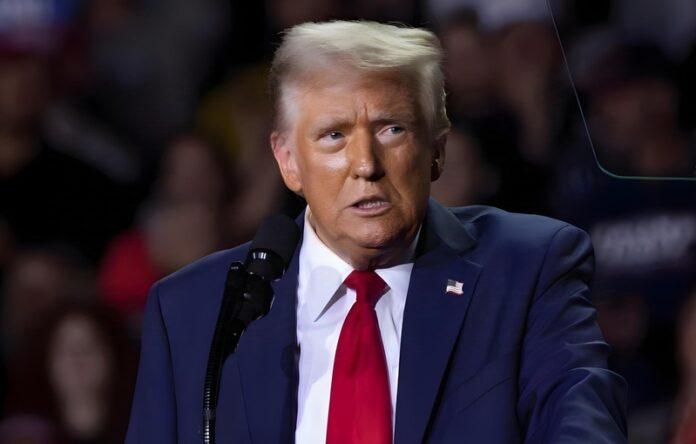
President Donald Trump ordered the destruction of sixteen Iranian mine-laying vessels in the Strait of Hormuz and warned Iran of “military consequences…at a level never seen before” in a dramatic escalation of the twelve-day conflict that has already killed Supreme Leader Ali Khamenei and sent shockwaves through global markets.
The military action, which U.S. Central Command confirmed took place on Tuesday, came as the Pentagon sought to prevent Iranian forces from mining the critical shipping channel through which roughly one-fifth of the world’s oil supply passes. The White House characterized the operation as a preemptive strike against vessels capable of threatening international commerce and freedom of navigation.
White House press secretary Karoline Leavitt confirmed that the U.S. Navy has not yet escorted any tankers through the strait but said the option remains available. “That’s an option the president has said he will absolutely utilize if and when necessary at the appropriate time,” Leavitt told reporters during Tuesday’s briefing.
The confrontation is part of the broader U.S.-Israeli military campaign against Iran that began on February 28, 2026, with Operation Epic Fury. That opening strike killed Ali Khamenei, who had served as Iran’s supreme leader since 1989. His son, Mojtaba Khamenei, was elected as his successor on March 8 by the Assembly of Experts.
Trump initially announced that ten vessels had been destroyed, with “more to follow.” Central Command later confirmed that sixteen minelayers were eliminated near the strait. In a post on Truth Social, the president warned that any mines in the waterway must be “removed, IMMEDIATELY!” or Iran would face severe military consequences.
The Strait of Hormuz has long been a flashpoint in U.S.-Iranian relations, with Tehran periodically threatening to close the narrow waterway during periods of heightened tension. The strait has been effectively closed to commercial traffic since the war began, with shipping volume plunging 95 percent in the first week of March, according to S&P Global Market Intelligence.
Oil prices have swung wildly as traders struggle to interpret the conflict’s trajectory. Brent crude surged above $120 per barrel on Monday before plunging more than 17 percent on Tuesday, eventually settling at $87.80. The volatility continued Wednesday as markets reacted to conflicting signals from Washington about the war’s duration and scope.
The military action comes as the war enters its twelfth day with no clear end in sight. Defense Secretary Pete Hegseth told reporters Tuesday that the conflict would not end until “the enemy is totally and decisively defeated,” while Trump has given mixed signals about the timeline, at one point predicting the war would be over “very soon.”
Hegseth convened briefings with senior military commanders at the Pentagon, describing Tuesday as “the most intense day of strikes inside Iran” since operations began. The U.S. has struck more than 5,000 Iranian targets, including missile launchers, military installations, and naval vessels.
The new supreme leader, Mojtaba Khamenei, inherits leadership of a nation under sustained aerial assault. More hardline than his father, the 56-year-old has deep ties to the Islamic Revolutionary Guard Corps. Trump expressed “disappointment” in the selection, telling Fox News, “I don’t believe he can live in peace.”
NATO Secretary General Mark Rutte said the alliance was consulting with Washington about the situation. European officials have expressed concern that a wider conflict could destabilize the Middle East and trigger a refugee crisis. More than 750,000 people have already been displaced in Lebanon alone following Israeli strikes on Hezbollah strongholds.
Seven U.S. service members have died in the conflict, most killed in Iranian drone and missile attacks on American bases in Kuwait and Saudi Arabia. The Pentagon has acknowledged that more than a dozen troops have been seriously wounded. Iranian state media reports more than 1,200 people killed in Iran, while Lebanese authorities say 580 have died there.
Congressional leaders from both parties received classified briefings on the operation Wednesday morning. Senator Chris Murphy, D-Conn., accused the administration of keeping briefings classified because “Trump can’t defend this war in public.” Other lawmakers have pressed for answers about the administration’s endgame and its justification for launching strikes without a formal declaration of war.