


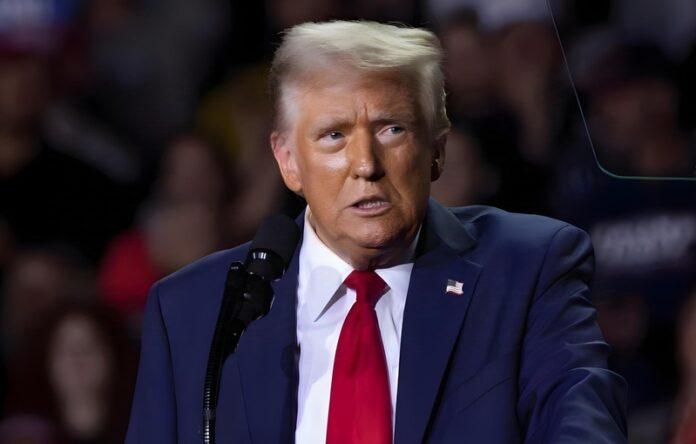
President Donald Trump sparked controversy Sunday after acknowledging that additional U.S. service members will “likely” die in the ongoing military operation against Iran, hours after the military announced three American troops had been killed and five seriously wounded in the conflict that began Saturday.
The president’s comments came in a video posted to Truth Social Sunday afternoon, along with multiple phone interviews with news outlets including NBC News, CNBC, and the Daily Mail, as Iranian counterattacks intensified following the joint U.S.-Israeli strikes that killed Supreme Leader Ayatollah Ali Khamenei.
“And sadly, there will likely be more before it ends,” Trump said in the video. “That’s the way it is. Likely be more, but we’ll do everything possible where that won’t be the case.”
U.S. Central Command announced the deaths in a post on X but withheld the identities of those killed until 24 hours after family notification. The command described the situation as “fluid” and said several others sustained minor shrapnel injuries and concussions. The announcement marked the first American casualties in what Trump has framed as a mission to prevent Iran from obtaining nuclear weapons and long-range missiles.
In phone interviews throughout Sunday, Trump told reporters the military operations were proceeding “ahead of schedule” and predicted the conflict could last “four weeks or so.” He told CNBC’s Joe Kernen that killing 48 Iranian leaders represented significant progress toward the operation’s goals.
The strikes, which began Saturday, have triggered fierce Iranian retaliation across the region. Iran launched counterattacks against U.S. bases in Bahrain and the United Arab Emirates, though the U.S. military denied Iranian claims that missiles struck the USS Abraham Lincoln aircraft carrier, saying they “didn’t even come close.”
Trump claimed in a Truth Social post Sunday that U.S. forces destroyed and sunk nine Iranian naval ships and largely destroyed Iran’s naval headquarters. The White House said Monday that 49 senior Iranian regime leaders have been killed in the operation, with casualties in Iran reaching 201 dead and 747 wounded as of Saturday evening according to the Iranian Red Crescent. At least nine people were killed in Israel from an Iranian strike on Beit Shemesh.
The president’s matter-of-fact acknowledgment of expected casualties drew sharp responses from lawmakers. Democrats criticized Trump for launching strikes without congressional authorization, with Sen. Tim Kaine calling it “an illegal war.” Most Republicans backed the operation, and Speaker Mike Johnson said congressional leaders had been briefed earlier in the week that military action “may become necessary.”
Trump told The Atlantic Sunday that Iran’s new leadership wants to talk and he has agreed to negotiations, though he provided no details about who would participate or what topics would be discussed. Iran announced a three-member interim leadership council Sunday to run the government following Khamenei’s death, comprising President Masoud Pezeshkian, Chief Justice Gholam-Hossein Mohseni-Ejei, and Guardian Council member Ayatollah Alireza Arafi.
When asked if he would stop strikes amid ongoing negotiations, Trump said “I don’t know” and added he would consider it “if they can satisfy us.” He noted that many of Iran’s previous negotiators were killed in the strikes, telling The Atlantic: “Most of those people are gone. Some of the people we were dealing with are gone.”
The president again offered amnesty to Iranian Revolutionary Guard Corps members who lay down their arms, warning those who refuse face “certain death.” He urged Iranian citizens to seize the moment, saying in his video address: “When we are finished, take over your government. It will be yours to take.”
Trump told the New York Post Monday he would not rule out sending ground troops to Iran if necessary, saying “I don’t have the yips with respect to boots on the ground.” He said the campaign has the “capability to go far longer” than the projected four to five weeks if needed. The president insisted operations remain on schedule despite the casualties.
The strikes have disrupted global energy markets, with insurers raising prices for tankers transiting the Strait of Hormuz. Thousands of flights have been cancelled since the conflict began, and Congress aims to vote on a war powers resolution this week as the situation continues to escalate across the Middle East.