


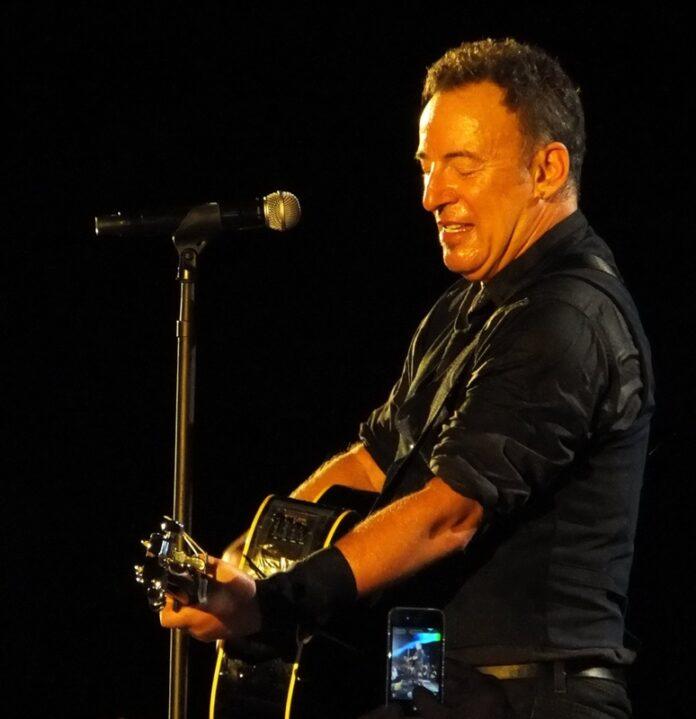
Bruce Springsteen, one of President Trump’s loudest cultural critics, set aside the feud — at least for a night — after gunfire erupted outside the White House Correspondents Dinner, offering a prayer for the president’s safety from a stage in Austin and reigniting a debate that has consumed social media ever since.
The 76-year-old rocker addressed the crowd at the Moody Center in Austin, Texas, on Sunday, April 26, 2026, less than 24 hours after a gunman opened fire near a security checkpoint at the Washington Hilton Hotel just minutes into the annual black-tie gathering. Trump and Vice President JD Vance were hustled off the stage. A Secret Service officer was struck in the chest but saved by a bulletproof vest. The suspect, 31-year-old Cole Tomas Allen of Torrance, California, was taken into custody at the scene.
“We begin tonight with a prayer for our men and women in service overseas, we pray for their safe return,” Springsteen told the audience, according to fan video circulating online. “We also send out a prayer of thanks that our President, nor anyone in the administration, nor anyone attending, was injured at last night’s incident at the [White House] Press Correspondents Dinner.”
A Conciliatory Pivot From The Boss
The remarks marked a striking pivot for the Rock & Roll Hall of Famer, whose Land of Hope and Dreams American tour has doubled as a rolling rebuke of the Trump administration. On the opening night of the tour at Minneapolis’s Target Center on March 31, 2026, Springsteen accused the White House of bringing “death and terror to the streets of Minneapolis.” Weeks earlier, on January 30, he had made a surprise appearance at First Avenue alongside guitarist Tom Morello at a benefit billed as A Concert of Solidarity & Resistance to Defend Minnesota, where he debuted his protest anthem “Streets of Minneapolis.”
On Sunday, the tone was different. Springsteen urged the Austin crowd to choose unity over division, threading a needle that left some fans applauding his statesmanship and others accusing him of going soft on a president he had recently called the head of a “corrupt, incompetent, racist, reckless and treasonous administration.”
“We can disagree. We can be critical of those in power, and we can peacefully fight for our beliefs,” Springsteen continued. “But there is no place in any way, shape, or form for political violence of any kind in our beloved United States.”
A Feud That Burned All Spring
The conciliatory note arrived just weeks after Trump unloaded on Springsteen on Truth Social, branding the singer a “bad, and very boring singer” who “looks like a dried up prune” and urging MAGA supporters to boycott his concerts. Trump wrote that Springsteen “has long had a horrible and incurable case of Trump Derangement Syndrome” and called him “a total loser who spews hate against a President who won a Landslide Election.”
That history made Sunday’s prayer all the more conspicuous. Within hours, clips of the moment spread across platforms, drawing praise from commentators who saw a model of civic restraint and scorn from others who argued Springsteen, alongside Morello and a slate of progressive allies, had spent months stoking the very rhetorical fires he now sought to dampen.
Inside The Hilton Chaos
Investigators say Allen, allegedly armed with a shotgun, a handgun and several knives, left his 10th-floor hotel room and used an interior stairwell to bypass heavily monitored areas before charging through metal detectors outside the ballroom on Saturday, April 25. Video from inside the event showed attendees diving under tables. Authorities have charged Allen with attempting to assassinate the president, and officials say he sent a manifesto to family members minutes before the attack. The Washington Hilton is the same hotel where President Ronald Reagan was shot by John Hinckley Jr. more than 45 years ago.
The incident is the third known assassination attempt against Trump since 2024, following the Butler, Pennsylvania, rally shooting and the West Palm Beach golf course incident. From the James S. Brady Press Briefing Room, Trump hailed law enforcement at a White House press conference, calling their response “incredibly acted upon” and saying he wants the dinner — which he never attended during his first term — rescheduled within 30 days.
Trump also sat for an interview on 60 Minutes that aired Sunday, telling CBS News senior correspondent Norah O’Donnell, “We live in a crazy world.” He acknowledged complicating his Secret Service detail’s job by trying to stay behind to “see what was happening,” a breach of security protocol. He grew visibly angry when O’Donnell read a portion of the alleged manifesto, calling her and fellow journalists “horrible people, horrible people,” and forcefully denying the accusations referenced in the document.
The Debate Springsteen Sparked
For Springsteen’s audience, the question now is whether Sunday’s prayer represents a lasting recalibration or a single, solemn pause in a feud that has defined his current tour. Allies pointed to the singer’s long-running insistence that protest and patriotism are not opposites. Critics, including some Trump supporters online, dismissed the gesture as too little, too late.
What is clear is that a 76-year-old rock star, on a stage 1,500 miles from Washington, briefly reframed a national conversation that had until Saturday night been measured in insults and boycott calls. Whether either side allows that reframing to hold is the next chapter — one Springsteen, by all indications, will keep writing onstage.