


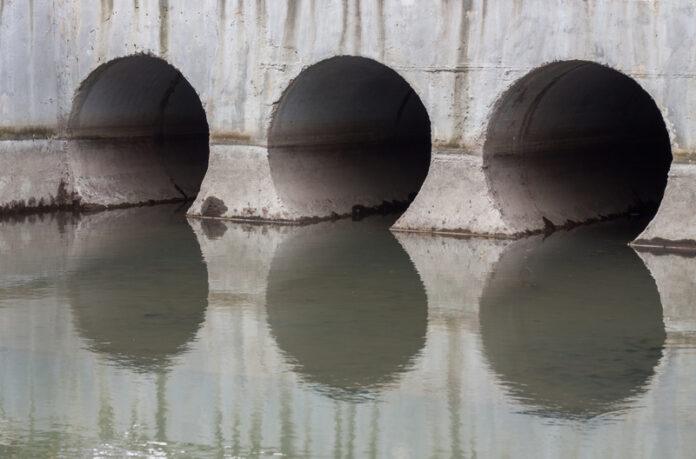
Nearly six years after 14-year-old Noah Donohoe was found dead in a storm drain in north Belfast, an expert witness has told an inquest that the teenager most likely entered the culvert alive — squeezing through widely spaced metal bars before becoming disoriented in near-total darkness as tidal waters rose around him.
Professor Carolyn Roberts, commissioned by the Coroner’s Service, delivered her findings during the 11th week of proceedings at Belfast Coroner’s Court. Her testimony offered the most detailed reconstruction yet of what likely happened to Noah on the evening of June 21, 2020, when the St Malachy’s College pupil left his home on his bicycle around 5:40 p.m. local time and was never seen alive again after 6:11 p.m. on CCTV.
How Noah Likely Entered the Culvert
Roberts visited the site herself and examined extensive material before reaching her conclusions. She told the court that the metal grille at the entrance to the Premier Drive stream culvert behind Northwood Road had bars spaced far enough apart for a teenager — or even a small adult — to climb through without much difficulty.
“In my opinion it is hence likely that the boy climbed into the culvert entrance alive, slipping between the vertical metal bars of the metal grille,” Roberts stated in her report, which was read to the jury.
The Community Rescue Service echoed that finding. Sean McCarry, the organization’s regional commander, previously told the court that during the initial search for Noah, his team noticed the grill on the culvert was unlocked and could be easily opened. One of his volunteers, described as having a slim build, was able to pass between the bars.
600 Meters in Almost Complete Darkness
Once inside, Roberts said, Noah likely walked in a stooped or crouched position for approximately 600 meters — roughly 2,000 feet — through the tunnel, which ran under the M2 motorway, train tracks and Seaview Stadium toward Belfast Lough. The journey would have taken place in near-total darkness and required “some persistence including climbing under hanging obstacles,” according to her report.
Roberts determined that high tide likely reached the culvert between 11:30 p.m. and midnight — five to six hours after Noah’s last sighting that afternoon. At that point, water would have risen to nearly fill the section of tunnel where his body was later recovered, creating conditions for drowning.
“The quadrant would fill with water relatively quickly,” Roberts said, “and in darkness with a complex network of pipes and cold conditions, the boy would be likely to have become confused.” She added that while surviving multiple tidal cycles was theoretically possible, the cold temperatures “would not be conducive to this with a naked body.”
Questions About Safety and the Police Search
The inquest also heard sharp disagreement among experts over whether the culvert should have had a security screen installed when it was refurbished in 2017. Dr. Mark Cooper called the decision not to install one “crucial to this case” and argued the safety assessment was “inadequate.” But Jeremy Benn countered that screens “do not completely remove the risk” and cited data showing that screens themselves had been a contributing cause of more public deaths than open culverts over a ten-year period.
The Police Service of Northern Ireland’s (PSNI) handling of the search has also drawn scrutiny throughout the proceedings. A retired inspector acknowledged that the section of tunnel where Noah was found — 18 feet long and four feet in diameter — took searchers from Tuesday through Saturday to reach, even though an expert estimated a child could complete the journey in about an hour.
Separately, the court learned that Noah’s last known phone location was received by police at 3:18 a.m. on June 22 but wasn’t relayed to search-and-rescue personnel until approximately seven hours later. McCarry told the court that “time equals survivability” and said he would have expected that information immediately.
No Evidence of Third-Party Involvement
Three pathologists, including the one who conducted Noah’s post-mortem examination, agreed that his cause of death was drowning and that there was no evidence of “direct violence” from a third party. A broad area of bruising on his forehead was consistent with contact while alive but did not suggest weapons impact, pathologists said. Toxicologists found no evidence of drugs in Noah’s system, though they acknowledged screening limitations.
Noah’s mother, Fiona Donohoe, described the six days between reporting her son missing and his body being found as a “living nightmare.” She told the court: “He got on his bike and I was able to hug him and tell him I loved him. I phoned and I knew if he wasn’t answering his phone something wasn’t right.”
The inquest proceedings are expected to continue into May 2026.