


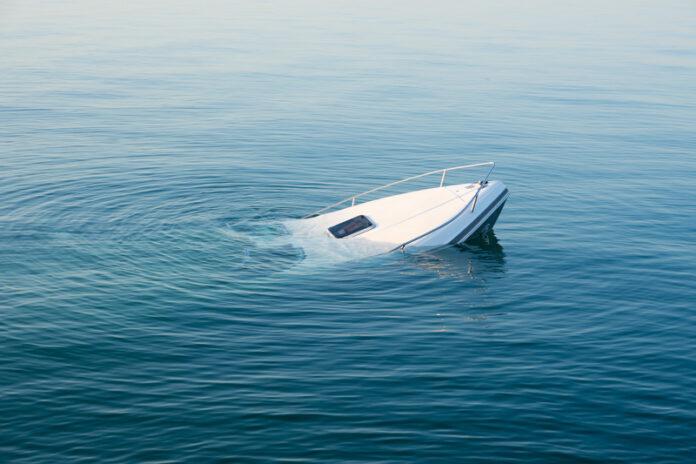
A festive evening cruise on one of central India’s most scenic waterways ended in catastrophe last week when a tourist boat carrying about 43 people capsized in a sudden storm, killing 13 passengers — among them a young mother found still clutching her 4-year-old son, the boy tucked inside her own life jacket in a desperate final act of protection.
The Narmada Queen, operated by the Madhya Pradesh tourism department, went down around 6 p.m. local time on Thursday, April 30, 2026, after a sudden and severe storm with winds reaching 60 to 70 kph battered the vessel. The boat sank in the Bargi Dam reservoir on the Narmada River, roughly 35 kilometers from Jabalpur, according to multiple local outlets.
In all, 13 bodies have been recovered. Authorities confirmed Sunday that all missing passengers have been accounted for, and the search operation has concluded.
A Mother and Son, Holding On
The first wave of bodies surfaced on May 1, a day after the sinking. Among them were 39-year-old Marina Massey and her 4-year-old son, Trishaan, found locked in an embrace. Marina had wrapped the boy inside her own life jacket in a final, futile effort to save him — a sight that left rescue workers shaken.
The Massey family had traveled from Delhi to Jabalpur for a housewarming ceremony. Marina’s husband, Pradeep, and their 14-year-old daughter, Siya, survived. But Marina, Trishaan and Marina’s mother, 62-year-old Madhur Massey, all perished, wiping out three generations in a single evening.
More victims were recovered over the following days. Among them were members of a family from Tamil Nadu: Kamaraj, an ordnance factory employee, his wife, Karukuzhali, and their young son, Tamil Vendhan. A relative, Soubhagya, and her son Mayuran also died. Kamaraj’s body — the last to be found — was pulled from the reservoir on Sunday, May 3, according to accounts from the rescue effort.
Footage Captures the Final Moments
Harrowing video filmed from inside the cabin and circulated by NDTV on social media shows the moment the cruise turned deadly. Passengers, still seated, scream as water rushes through the vessel. Crew members can be seen scrambling to untie bundled life jackets — a search that, by then, was already too late for many on board.
Survivors say the warning signs were ignored long before the boat tipped. “There were no visible safety measures during the journey. Panic broke out when the cruise started sinking, and only then were life jackets handed out,” survivor Julius Massey, Marina’s father, told a local news outlet.
He also accused the boat operator of pressing on through worsening conditions despite urgent pleas from those on board. “We told the boat operator to turn back, but he did not listen. The boat capsized mid-dam. We managed to rescue around 15 to 16 people,” he said.
Modi Mourns, Investigators Move In
The disaster prompted a national outpouring of grief. Prime Minister Narendra Modi, in a statement issued the day after the sinking, called the loss of life in Jabalpur, Madhya Pradesh, “extremely painful” and extended condolences to grieving families. He also announced an ex-gratia payment of 2 lakh rupees to the next of kin of each victim from the Prime Minister’s National Relief Fund.
Officials are now investigating the cause of the capsizing and reviewing the safety protocols that were — or were not — in place aboard the Narmada Queen. The questions are mounting quickly: Why did the operator continue the cruise as the storm closed in, despite a yellow weather alert issued that morning by the Indian Meteorological Department? Were life jackets stored within reach of passengers, or locked away where crew had to hunt for them as water poured in? And how was a vessel run by a state tourism department permitted to sail into clearly deteriorating weather?
Chief Minister Mohan Yadav ordered a high-level inquiry into the incident and dismissed three crew members. The state government also banned the operation of similar vessels pending the investigation’s outcome.
A Reservoir Turned Tragic
The Bargi Dam reservoir, fed by the Narmada River, is one of central India’s popular leisure destinations, drawing families looking for an evening on the water. Cruises like the Narmada Queen — a vessel built in 2006 with a capacity of up to 60 passengers — are marketed as a gentle, picturesque way to experience the river. That image now sits uneasily against the scenes broadcast in recent days: overturned hulls, search teams in inflatable boats, rows of recovered bodies awaiting identification.
For the survivors, the questions about negligence will linger long after the investigation concludes. So will the images: a 4-year-old boy and his mother, wrapped together in a single life jacket, holding each other as the river closed over them.
By Sunday, May 3, authorities confirmed that all 13 victims had been accounted for and the multi-day search operation had concluded. Of the 43 people on board, 28 were rescued — many pulled to safety by local fishermen and farmers who acted as first responders before specialized units from the Army, NDRF and SDRF arrived.