


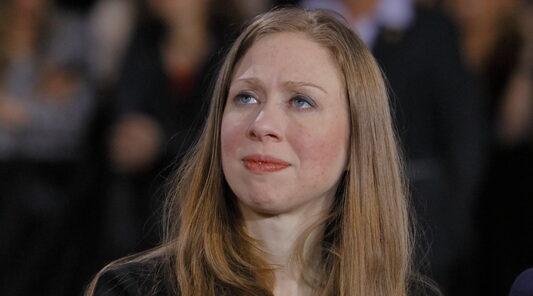
Chelsea Clinton has broken her silence following the death of her longtime friend and Stanford classmate Jason Collins, the NBA trailblazer who became the first openly gay player in the league’s history. Collins died on Tuesday, May 12, 2026, after an eight-month battle with Stage IV glioblastoma. He was 47.
Clinton, 46, took to social media on Wednesday, May 13, to share an emotional tribute alongside a throwback photo of the two friends, whose bond stretched back nearly three decades to their freshman year at Stanford University.
“Heartbroken by the passing of my beloved friend Jason Collins,” Clinton wrote. “He was a trailblazer whose courage changed lives, and a kind, thoughtful friend who could always make me laugh. He will live in my heart forever.”
A Friendship Forged at Stanford
Clinton and Collins met as freshmen at Stanford, and their friendship endured through Collins’ rise as a professional basketball player and Clinton’s own public life. The two remained close enough that when Collins was named one of Time magazine’s 100 most influential people of 2014, Clinton was the one who wrote his endorsement.
That friendship extended to her parents as well. Bill Clinton publicly supported Collins in 2013, when the center became the first openly gay active player in any major North American professional sport. On Wednesday, the former president shared his own tribute, calling Collins “far more than a trailblazer for the NBA” and “a great friend to Chelsea.” He and Hillary Clinton sent condolences to Collins’ husband, Brunson Green, his identical twin brother Jarron Collins, and the rest of the Collins family.
A Career That Changed the Game
Collins built a 13-year NBA career as a physical defensive center after being drafted 18th overall in 2001, ahead of future All-Stars including Zach Randolph, Gerald Wallace, Tony Parker, and Gilbert Arenas. He spent the bulk of his career with the New Jersey Nets, helping the franchise reach back-to-back NBA Finals appearances in 2002 and 2003. Over the course of his career, he also suited up for the Memphis Grizzlies, Minnesota Timberwolves, Atlanta Hawks, Boston Celtics, Washington Wizards, and Brooklyn Nets.
Yet his greatest contribution extended beyond athletic competition. A year prior to stepping away from the game in 2014, Collins made headlines in 2013 by revealing his sexual orientation through a prominent Sports Illustrated feature that began with the memorable statement: “I’m a 34-year-old NBA center. I’m Black, and I’m gay.” Upon joining the Brooklyn Nets in 2014, he achieved a historic milestone as the inaugural openly gay male player to compete in any of America’s four major professional sports organizations.
Clinton recalled the moment Collins shared his decision with her. “When Jason called to talk about his forthcoming Sports Illustrated cover story, ‘The Gay Athlete,’ I realized at some point that I wasn’t surprised we were having the conversation we were,” she wrote in her 2014 Time endorsement.
A Public Battle With Glioblastoma
Collins was diagnosed with a brain tumor in late summer 2025 and announced in September 2025 that he was undergoing treatment. By December 2025, he revealed in a personal essay that he was facing Stage IV glioblastoma, which he described as “one of the deadliest forms of brain cancer.” He wrote that the disease “came on incredibly fast” and pledged to fight it with experimental treatments, including immunotherapy still being studied.
Throughout his eight-month battle, Collins publicly documented portions of his illness, using his platform to raise awareness and back experimental medical research. His family confirmed his death in a statement on May 12, expressing gratitude “for the outpouring of love and prayers over the past eight months.”
Tributes Pour In Across Sports and Politics
Tributes have flooded in from across the worlds of sports, politics, and activism. Tennis legend Billie Jean King, for whose foundation Collins served as a founding advisory board member, called him “our dear friend” who “helped move sports and society forward with strength.” Kelley Robinson, president of the Human Rights Campaign, said simply, “We truly lost a giant today.”
Dallas Mavericks coach Jason Kidd, who coached Collins in Brooklyn, wrote, “This one hurts. Jason Collins was a pioneer. He had courage like you’ve never seen.” Former teammates Kevin Garnett and Paul Pierce also shared remembrances of the trailblazing center, as did actress and activist Cynthia Nixon, who called Collins “a true American hero.”
Collins is survived by his husband, Brunson Green, his twin brother Jarron, and an extended family — along with a legacy that reshaped the conversation about identity in American professional sports.