


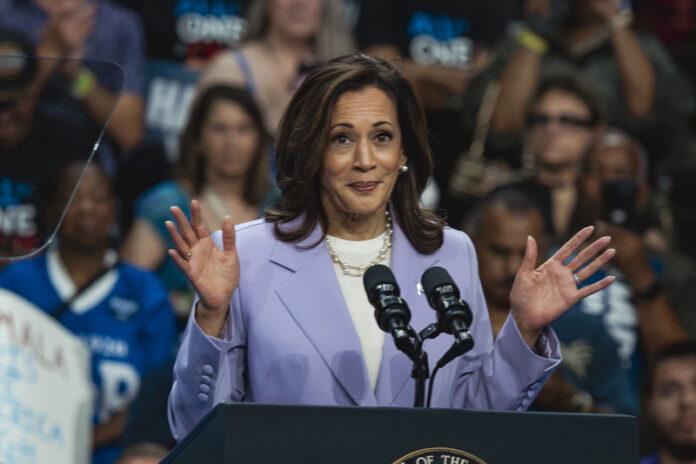
Former Vice President Kamala Harris faces mounting resistance from within Democratic ranks as she weighs another White House campaign, with party insiders and strategists increasingly urging her to step aside despite her public flirtation with a 2028 run.
At the National Action Network Convention in New York on April 10, 2026, Harris told the Rev. Al Sharpton she was actively considering a second White House bid. “Listen, I might. I might. I’m thinking about it,” she said, before reminding the audience of her four years as vice president and her experience in the Situation Room. The crowd erupted, with shouts of “Run again!” filling the room.
One operative working with major Democratic donors captured the prevailing sentiment bluntly: “Why would we do the same thing all over again?” according to reporting published April 11, 2026.
The 2024 Warning Signs She Ignored
Democratic anxiety traces directly to Harris’ 107-day campaign in 2024, which ended with President Trump sweeping every battleground state after President Joe Biden exited the race in late July. The campaign’s shortcomings became evident well before voters cast ballots.
An analysis published on Oct. 10, 2024, warned Harris was hemorrhaging support among working-class, young, and nonwhite voters compared with Biden’s 2020 coalition.
CNN analyst Harry Enten observed at the time that Trump had “more working-class support than any GOP presidential candidate in a generation.” Harris was heading toward the worst Democratic showing among union voters in decades, despite a strong appearance at the Democratic National Convention and a September debate against Trump widely viewed as a win.
Arab American voters, furious over the Biden-Harris administration’s handling of the war in Gaza and Israel’s expanding offensive into Lebanon, delivered particularly devastating numbers. An Arab American Institute poll in mid-September 2024 showed Trump leading Harris 46 percent to 42 percent among likely Arab American voters, a stunning reversal from 2020 when Biden captured nearly 60 percent of that group.
Michigan became a microcosm of the collapse. Rep. Elissa Slotkin acknowledged Harris was “underwater,” while the Uncommitted National Movement drew more than 100,000 voters in the Michigan Democratic primary. The movement refused to endorse her over what organizers called Harris’ continued support for “unconditional weapons” for Prime Minister Benjamin Netanyahu’s government. Hillary Clinton lost Michigan by roughly 10,000 votes in 2016, while Biden carried it by 150,000 in 2020. Harris lost it outright.
A Party Searching for Change
The resistance reflects a broader Democratic appetite for fresh leadership. A consultant working on closely contested congressional races said he would advise candidates to keep Harris far away from the trail this fall.
“Democrats need to make this a change election, and basically anyone with ties to the Biden administration stands for the opposite of change,” the consultant said.
Centrist Democrats have floated an alternative path: With Gov. Gavin Newsom term-limited, allies suggest Harris could run for California governor, a move that would allow her to rebuild a political brand damaged by 2024 without risking another national defeat.
Harris, for her part, is behaving like a candidate. The book tour for “107 Days” has stretched well beyond its title’s runtime. She has begun headlining fundraisers for state parties and has issued a string of endorsements, textbook moves for someone laying groundwork more than two years out from 2028.
A Crowded 2028 Field Awaits
Should Harris proceed, she faces formidable competition. Maryland Gov. Wes Moore, Pennsylvania Gov. Josh Shapiro, Illinois Gov. J.B. Pritzker, California Rep. Ro Khanna, and former Transportation Secretary Pete Buttigieg all appeared at the Sharpton convention, telegraphing early interest in 2028. Rep. Alexandria Ocasio-Cortez looms as a progressive force, while New Jersey Sen. Cory Booker and Moore could erode Harris’ traditional strength with Black voters, a constituency that powers the Democratic primary calendar through delegate-rich Southern states.
The Real Burden Ahead
A Harvard/Harris Poll released in early May 2026 put her at 50 percent support among Democrats, a notable surge. Yet with 56 percent of Democrats telling pollsters they want fresh blood and donor networks already shopping for alternatives, the path back is steep, and getting steeper by the week. On Capitol Hill, the reception has been similarly muted.
Many Democratic lawmakers dodged questions about a Harris 2028 bid or said they preferred to wait and see who else entered the race. And despite her polling strength among Democrats, prediction markets in early May put her odds of actually securing the Democratic nomination at just over nine percent.
Whether Harris ultimately runs, returns to California, or fades into elder-statesman status, the early signals are unmistakable: the party that nominated her in 2024 is in no rush to do it again.