


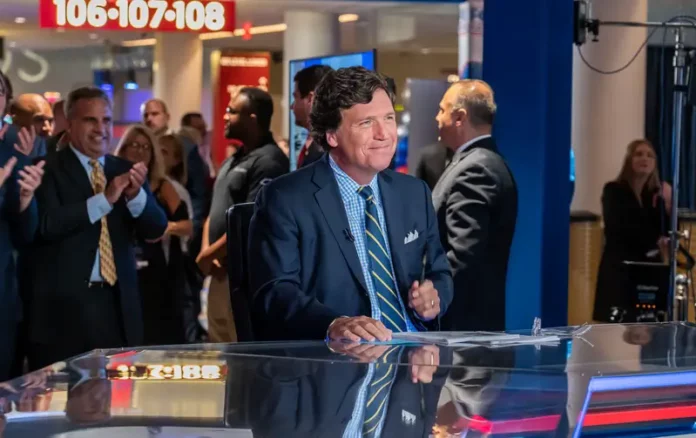
On his April 29, 2026, broadcast, former Fox News host Tucker Carlson delivered what many are calling the most scathing condemnation of President Donald Trump from any former ally, stopping just short of naming the president while leaving no doubt about whom he meant. The tirade centered on what Carlson characterized as a betrayal of working-class Americans in favor of imperial ambitions abroad, particularly the military operation in Iran that began Feb. 28, 2026.
Carlson singled out cities and regions he said the administration had forgotten, naming Baltimore and Gary, Indiana, and accusing the president of harboring open disdain for rural America. A normal leader, he argued, would be asking why Americans are angry, what they are dissatisfied with and how to ease their pain, questions Carlson suggested Trump had no interest in confronting.
Breaking With the President
The rupture between Trump and one of the conservative movement’s most influential media voices represents a stunning shift for Carlson, who once helped energize the president’s base. In his monologue, Carlson accused Trump of holding ordinary Americans in contempt, viewing struggling citizens as living rebukes of his own failures.
“You hate people like that,” Carlson said. “And there may be other reasons you hate them, but you certainly hate them because they are a reminder of how you have failed. You have not done a good job running this country. You don’t even care to try. You’d rather run the world or the empire.”
Trump, who was inaugurated for his second term on Jan. 20, 2025, has not stayed quiet in the face of Carlson’s mounting criticism. The president has branded Carlson a “low-IQ person” on multiple occasions in recent weeks. In one Truth Social post, he called Carlson, along with Megyn Kelly, Candace Owens and Alex Jones, “stupid people” with “low IQs.” In an interview with the New York Post, Trump said Carlson “has absolutely no idea what’s going on.”
Regret Over Supporting Trump
Perhaps the most personal element of Carlson’s recent broadcasts has been his expression of guilt over the role he played in returning Trump to the White House. On an episode the previous week, Carlson described feeling “tormented” about his role in the 2024 election and apologized for endorsing the president — a remarkable admission from a figure who once helped energize Trump’s conservative base.
Carlson said he had wrestled with those feelings in a conversation with his brother, Buckley Carlson, a former Trump speechwriter who appeared as a guest on the show. He acknowledged he had “misled” voters, though he insisted it was not intentional. He urged other former Trump backers to examine their own consciences rather than simply walk away from the movement they helped build.
Carlson stoked the feud further in a May 2 interview with The New York Times, in which he denied ever suggesting Trump could be the Antichrist, only to be read back his own words on air by the interviewer. He also told the Times he regrets supporting Trump and described spending time with the president as like being in “a kind of dreamland, like smoking hash or something.”
War as the Flash Point
Much of Carlson’s anger traces back to the Iran war, a conflict the broadcaster has criticized for weeks. Carlson called the war the biggest thing “they” have done and argued bluntly that it has failed to meet its goals.
Long an advocate of a noninterventionist foreign policy and a persistent critic of U.S. involvement in the Middle East, Carlson accused the administration of pivoting from prosecuting the war to attacking those who oppose it. He took particular aim at Fox News host Mark Levin, a vocal supporter of the Iran campaign, whom Carlson accused of seeking to censor critics of the war and of the Israeli government’s role in pressuring Trump to launch the military operation.
Wider Fractures in the GOP
Carlson’s break from Trump is widely viewed as the harshest public rebuke from any former Trump ally — and it does not stand alone. Former Rep. Marjorie Taylor Greene also appeared on “The Tucker Carlson Show” this week, telling the host that loyalists who “fought for him when no one else would” had been pushed out of Trump’s inner circle. In a separate “60 Minutes” interview last December, Greene said Republicans in Congress are “terrified to step outta line and get a nasty Truth Social post on them.” She has also said some of her colleagues privately mocked Trump before he won the 2024 GOP primary, only to become his loudest champions once he clinched the nomination.
Together, the dual public defections from Carlson and Greene reflect deepening cracks inside a Republican Party that has, until recently, marched in tight formation behind Trump and Vice President JD Vance. The growing dissent over the Iran war, domestic policy and the administration’s posture toward working-class voters appears to be reshaping the political landscape heading deeper into 2026.
For Carlson, the message delivered this week was unmistakable. After years as one of Trump’s most influential media champions, the broadcaster has issued a verdict that no allied figure has dared utter so plainly: the president, in his telling, has failed the very Americans who put him back in power.