


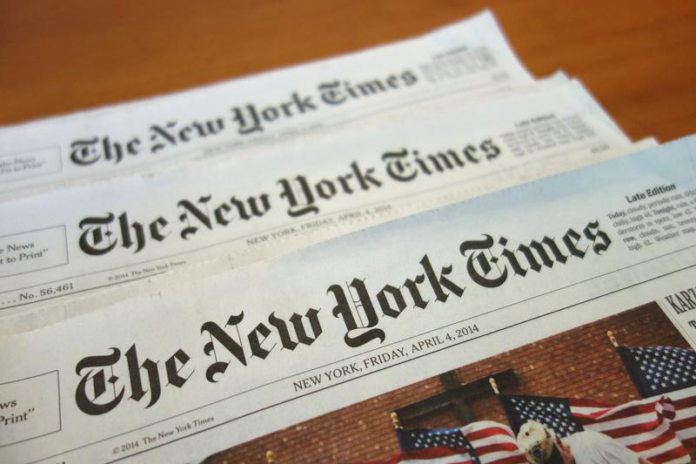
The White House is in full damage-control mode after a stunning New York Times report published Wednesday, June 10, 2026, pulled back the curtain on a secret meeting inside President Donald Trump’s inner circle — one designed to shield him from the fallout of the so-called “Epstein files.” And now, the very staffers who attended that closed-door huddle are finding themselves squarely in the spotlight.
According to the report, the meeting took place just 10 days after the Justice Department and FBI quietly released a memo in July 2025 declaring there was no Jeffrey Epstein client list. Rather than letting the matter rest, the president’s top advisers reportedly gathered in a secure West Wing bunker — the kind of room typically reserved for national security emergencies — to figure out how to keep Trump’s MAGA base from spiraling.
Inside the West Wing Bunker
Vice President JD Vance reportedly presided over the high-stakes sit-down. Joining him were White House Chief of Staff Susie Wiles, Communications Director Steven Cheung, Press Secretary Karoline Leavitt, and then-Deputy Attorney General Todd Blanche. FBI Director Kash Patel was also in the room, while then-Attorney General Pam Bondi dialed in by phone.
The group, the report says, hatched a plan to roll out an “empty gesture of transparency” — something splashy enough to soothe Trump’s supporters and convince them the president shared their concerns, even though he plainly didn’t. The strategy was as much theater as it was politics, and behind the scenes, panic was the dominant mood.
The bombshell is actually an excerpt from “Regime Change: Inside the Imperial Presidency of Donald Trump,” the forthcoming book from veteran reporters Maggie Haberman and Jonathan Swan. And it’s packed with the kind of granular detail that has Washington buzzing: infighting between former FBI Deputy Director Dan Bongino, Bondi, Patel, and Wiles as the team scrambled to manage an increasingly frustrated Trump, whom Epstein once described as his “closest friend.”
Critics Pounce on Blanche
The fallout was immediate. Political commentator Tom Joseph didn’t mince words on X, writing, “All of this effort to protect Trump… Because he’s guilty. He did it. Over and over again. With Epstein. It’s a conspiracy to cover up Trump’s sexual assault crimes against minor girls.”
Bill Kristol, director of Defending Democracy, took specific aim at Blanche — Trump’s former personal attorney whom the president promoted to attorney general. Kristol argued that Blanche’s role in the bunker meeting represented a clear conflict of interest, casting him as someone who had been “acting in Trump’s interest — not in the interest of the survivors, not in the interest of the law or of the truth.”
That criticism lands at a particularly awkward moment for the administration, which has spent months trying to project unity even as MAGA devotees, frustrated by the handling of the Epstein matter, peeled away from the White House in growing numbers. The Epstein crisis has been one of the rare flashpoints to genuinely split Trump’s coalition.
The White House Pushes Back
White House spokeswoman Abigail Jackson defended the president in a statement, doubling down on Trump’s insistence that he has nothing to hide. “By releasing thousands of pages of documents, cooperating with the House Oversight Committee’s subpoena request, signing the Epstein Files Transparency Act and calling for more investigations into Epstein’ Democrat friends, President Trump has done more for Epstein’ victims than anyone before him,” she said.
Still, the optics of the bunker meeting are tough to spin. National security spaces aren’t typically commandeered for political messaging strategy, and the optics of the vice president — along with the country’s top law enforcement officials at the time — convening there has raised eyebrows even among Washington veterans accustomed to the administration’s unorthodox approach to internal operations.
A Familiar Pattern of Loyalty Tests
The reporting also reignites longstanding questions about how Trump’s circle handles inconvenient narratives. Members of the administration have long entertained — and at times openly promoted — conspiracy theories that Epstein, who died by suicide in a Manhattan jail cell in 2019 while awaiting trial on sex-trafficking charges, was actually murdered by powerful associates. According to the report, Patel and, at times, Vance were among those officials who flirted with such theories.
It’s not the first time the administration’s tight-knit inner workings have spilled into public view. The White House has weathered staff shake-ups tied to loyalty disputes before, and outside influences have repeatedly shaped personnel decisions in ways that surprised even seasoned aides.
Whether the latest revelations spark formal investigations or simply add to the pile of unanswered questions surrounding the Epstein saga remains to be seen. But for now, Wiles, Vance, Leavitt, Cheung, Blanche, Patel, and Bondi are all left answering for a meeting they almost certainly hoped would stay buried — and a strategy that, by every available measure, failed to do what it was designed to do.