


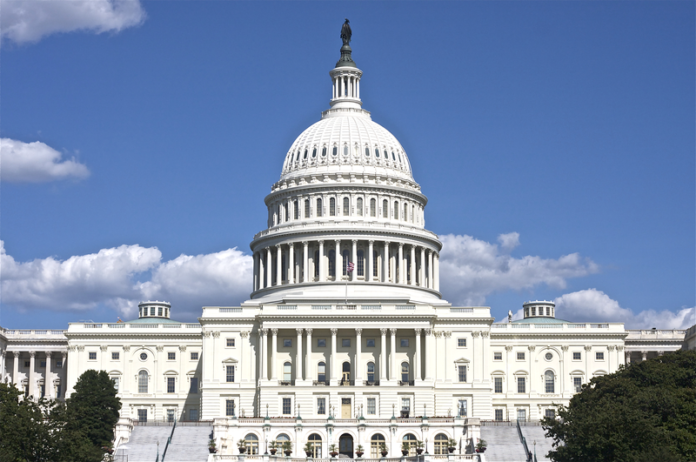
Former Sen. Bob Packwood, the Oregon Republican whose decades of legislative clout were ultimately eclipsed by a sweeping sexual misconduct scandal that drove him from Capitol Hill, died Saturday, June 8, 2026. He was 93.
Packwood served nearly 27 years in the Senate before resigning in 1995, when the Senate Ethics Committee unanimously voted to recommend his expulsion for sexual misconduct, abuse of office and obstruction. The vote capped a 33-month investigation that produced 10,145 pages of documentation and reshaped how Congress confronted harassment by its own members.
According to the committee’s findings, Packwood made unwanted sexual advances toward at least 17 women during his time in the Senate and altered evidence in an attempt to mislead investigators. Among the most damaging material were Packwood’s own taped diaries, which the panel obtained under subpoena. In one entry, he joked that he was performing his “Christian duty” by having sex with a staff member.
A Rare Forced Exit From the Senate
The committee’s unanimous vote in September 1995 marked the first time the panel had voted to remove a sitting senator since 1981 — a rare and tense moment for an institution that has historically been reluctant to police its own. Packwood announced his resignation the next day on the Senate floor.
“I am aware of the dishonor that has befallen me,” he said. “It is my duty to resign.”
The Ethics Committee’s recommendation was based on the documentation it had compiled, not on additional allegations that surfaced later — including one involving unwanted sexual advances toward a 17-year-old minor who had served as an intern in Packwood’s office.
An Architect of the 1986 Tax Overhaul
Before his downfall, Packwood was one of the most consequential policy figures in the Senate. As chair of the Senate Finance Committee, he played a central role in the Reagan-era tax overhaul signed into law in 1986. Packwood was initially skeptical of the sprawling rewrite, but eventually helped broker the final product in partnership with then-House Ways and Means Chair Dan Rostenkowski, D-Ill.
The legislation, declared dead by lobbyists and lawmakers at multiple points during a stop-and-start negotiation, ultimately dropped the highest personal income tax rate while raising the top capital gains tax rate. It remains a touchstone for tax reform debates four decades later.
Packwood’s perch on the Finance Committee is mirrored today by Sen. Ron Wyden, the Oregon Democrat who replaced him in the Senate and now serves as the panel’s top Democrat.
Health Care Champion Turned Opponent
Long before President Barack Obama signed the Affordable Care Act in 2010, Packwood championed a similar concept as the lead Senate sponsor of President Richard M. Nixon’s 1974 health care proposal, which would have required employers to offer health insurance to their workers. However, as resistance within the Republican Party intensified in the early 1990s, Packwood changed his position and ultimately opposed the legislation he had once backed.
The flip exemplified Packwood’s pragmatic — critics said opportunistic — approach to legislating. He was also an early Republican supporter of legalized abortion, introducing legislation to protect abortion rights following the Supreme Court’s Roe v. Wade decision in January 1973.
From Portland to Capitol Hill
Before President Barack Obama enacted the Affordable Care Act in 2010, Packwood had supported a comparable approach as the chief Senate sponsor of President Richard M. Nixon’s 1974 health care proposal, which sought to require employers to provide health insurance coverage for their employees. Yet growing opposition within the Republican Party during the early 1990s prompted Packwood to abandon that position and eventually oppose the measure he had previously championed.
Over the next nearly three decades, he built a reputation as a deft legislator and a fierce protector of Oregon’s timber and trade interests. By the early 1990s, however, mounting press reports about his behavior toward female staffers, lobbyists and constituents triggered the ethics inquiry that would end his career.
His resignation in 1995 became a watershed for Congress, frequently invoked in the years that followed as lawmakers wrestled with how to handle accusations of harassment against their colleagues. The release of his own taped diaries, in particular, set a precedent for the kinds of personal records the Ethics Committee could compel under subpoena.
Packwood is survived by his wife, two children, two stepchildren and three grandchildren.