


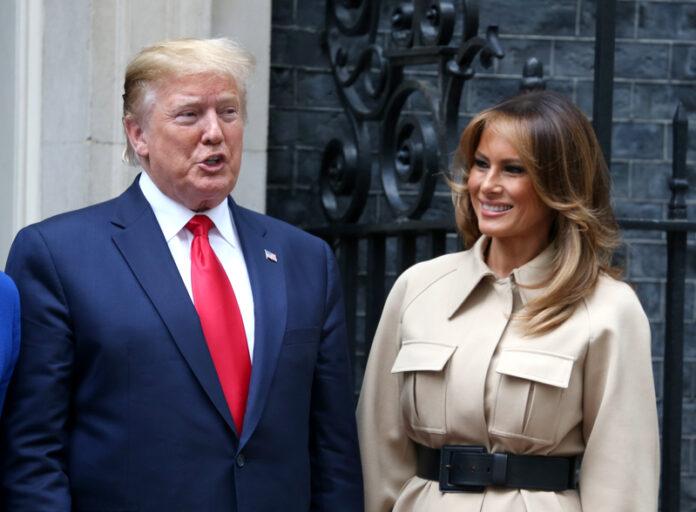
One of the most scrutinized marriages in American politics remains shielded from legal discovery after a federal judge on May 22, 2026, dismissed what could have been the most aggressive public excavation yet of First Lady Melania Trump’s relationship with President Donald Trump.
Author Michael Wolff had hoped to use subpoena power to probe the Trumps’ long-documented social ties to the late Jeffrey Epstein and test claims that the marriage amounts to what critics and biographers have described as something closer to a corporate arrangement than a romance. But Judge Mary Kay Vyskocil, a Trump appointee in federal court in Manhattan, shut down that effort with a 45-page ruling that accused Wolff of “textbook bad-faith forum shopping.”
The decision ends, at least for now, Wolff’s bid to force the first couple into a discovery process that he claimed could reveal where Melania Trump actually lives, alleging she does not reside with Donald Trump in Washington or at Mar-a-Lago.
A Lawsuit Built on a Threat
Wolff, who has written four books about President Donald Trump, filed his preemptive lawsuit in October 2025 under New York state’s anti-SLAPP statute after the first lady’s attorney, Alejandro Brito, sent him a letter threatening a lawsuit if he did not retract statements that allegedly inflicted “overwhelming reputational and financial harm.”
The statements at issue involved Wolff telling interviewers that Donald Trump first slept with Melania on Epstein’s private jet, a claim that placed the first lady inside Epstein’s social orbit without alleging she took part in his crimes. Epstein, the financier who killed himself in a Manhattan jail in August 2019 while awaiting trial on sex trafficking charges, has been a persistent irritant for the president since he reclaimed the White House on January 20, 2025.
In April 2026, Melania Trump made a rare on-camera statement at the White House to deny any affiliation with Epstein. The address came after she was revealed in Justice Department files to have had communications connected to Ghislaine Maxwell, Epstein’s convicted accomplice.
“The lies linking me with the disgraceful Jeffrey Epstein need to end today,” she said, reading from prepared remarks and dismissing what she called “unfounded and baseless lies.” She insisted that overlapping social circles in New York City and Palm Beach, Florida, explained any photographs or anecdotes placing her near Epstein.
A Preemptive Strike That Failed
Rather than wait to be sued, Wolff went first, filing in New York state court and asking a judge to declare in advance that his statements were not defamatory. Brito then had the case transferred to federal court and moved to dismiss it or shift it to a federal court in Florida, where Melania Trump’s separate defamation suit is pending.
Vyskocil ruled that the two “have a real dispute,” but said “they must litigate it according to the same procedures as everyone else.” The judge said federal court had jurisdiction but declined to exercise it, dismissing the case “to be litigated like any other.”
“Plaintiff asks for a declaration that, if the first lady sues him, he deserves to win,” Vyskocil wrote. “That is not how the federal courts work.”
The judge called Wolff’s anti-SLAPP lawsuit a “contorted” attempt to short-circuit the first lady’s defamation threat and described the filing as an exercise in “tactical gamesmanship,” writing that the court “will not be conscripted to oversee an abusively presented spat.”
The Marriage Question Won’t Go Away
Wolff cast his lawsuit in sweeping First Amendment terms, accusing the Trump family of creating a climate of fear that prevents people from freely exercising their First Amendment rights. He alleged the Trumps and their allies use costly litigation to extract forced confessions and apologies from critics.
Buried inside Wolff’s filings was a claim with implications well beyond Epstein: that the lawsuit could have exposed the architecture of what one description in the case called a “sham marriage, trophy marriage” maintained for political utility. The assertion fed directly into a years-long parlor game in political media about whether the Trump marriage is maintained primarily for political purposes.
Wolff, who interviewed Epstein extensively before the financier’s death and was himself revealed in Justice Department files to have had extensive communications with him, had signaled that discovery in his case could probe the Trumps’ ties to Epstein directly. The administration’s handling of the case files has drawn scrutiny from across the political spectrum.
Nick Clemens, a spokesperson for the first lady, said in a statement that Melania Trump “is proud to continue standing up to, and fighting against, those who spread malicious and defamatory falsehoods as they desperately try to get undeserved attention and money from their unlawful conduct.”
The dismissal clears the runway for Melania Trump’s separate billion-dollar defamation suit in Florida to proceed without Wolff’s preemptive shield. But it leaves the underlying questions — about Epstein, about the first lady’s whereabouts, about one of the most scrutinized marriages in American public life — exactly where they were before the gavel fell: unresolved and circling.