


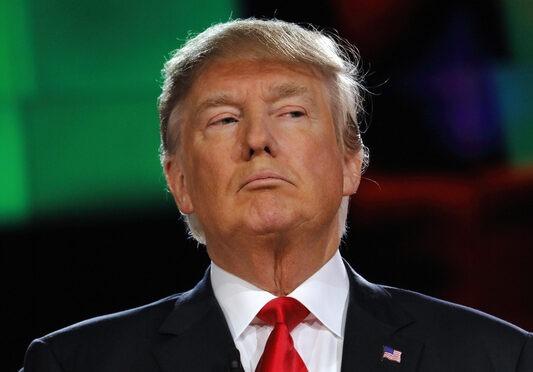
President Donald Trump threw Washington into chaos Wednesday morning when he abruptly pulled the plug on a scheduled signing ceremony for a sweeping bipartisan housing affordability bill, declaring he would withhold his signature until Congress first delivered a controversial voter identification measure he has made a top legislative priority.
The announcement hit shortly after 10:00 a.m. ET — with less than two hours remaining before Trump was due at the Capitol to sign the legislation into law. A podium and American flags had already been arranged inside Statuary Hall, and House Republican leaders were on stage promoting the bill when the president’s post landed on Truth Social. Trump posted on Wednesday morning that he was canceling the housing bill signing until Congress passes the SAVE AMERICA ACT, which he called a national emergency.
A Rare Bipartisan Win Left in Limbo
The legislation — the 21st Century ROAD to Housing Act — cleared both chambers by commanding margins, with the Senate approving it 85-5 and the House following with a 358-32 vote Tuesday. Democrats voted uniformly in favor. The bill tackles a housing crisis that has seen prices and rents climb sharply in recent years, with an estimated shortage of millions of homes keeping upward pressure on costs.
Among its central provisions, the bill would streamline environmental reviews for homebuilders, encourage zoning reforms, expand federal subsidies for new construction, and ban large institutional investors from purchasing certain single-family homes. Speaker Mike Johnson (R-La.) and Majority Leader John Thune (R-S.D.) had both announced the noon signing ceremony at the Capitol.
Rep. French Hill (R-Ark.), who helped shepherd the bill as chair of the House Financial Services Committee, noted the contradiction in Trump’s reversal. The president had cited housing as a priority in his State of the Union address, Hill said, adding that Congress had now delivered on it.
Trump’s Demands and the SAVE Act Standoff
The SAVE America Act would require voters to produce documentary proof of citizenship when registering and show photo identification at the polls. It would also compel states to hand over voter registration records to the Department of Homeland Security, mandate monthly purges of voter rolls, and impose bans on universal mail-in voting, transgender athletes in women’s sports, and gender-affirming care for minors.
The House passed the SAVE Act in February by a narrow 218-214 margin, with all but one Democrat voting against it. The Senate began debating the measure in mid-March, but it has stalled well short of the 60 votes needed to overcome the chamber’s filibuster threshold.
This marks at least the third time Trump has attempted to use unrelated legislation as leverage. In March, he pressured Republicans to reject any spending agreement with Democrats to end a partial shutdown of the Department of Homeland Security. Earlier this month, he pushed Senate Republicans to attach the measure to a budget reconciliation package — an effort the Senate rejected. Johnson said Wednesday that his conference has now passed the SAVE Act three times and plans to tuck it into a third reconciliation bill.
Senators Push Back in Tense Meeting
Later Wednesday, Trump traveled to Capitol Hill for a closed-door lunch with Senate Republicans — an invitation extended by Sen. Rick Scott (R-Fla.) rather than through the usual leadership channels. The meeting was intended in part to build support for the SAVE Act, but it quickly became contentious. Sen. Bill Cassidy (R-La.) confronted Trump over a separate matter involving an Iran memorandum of understanding, and the exchange escalated sharply. Sen. Ted Cruz (R-Texas) characterized the exchange as a “spirited discussion,” while Sen. Jim Justice (R-W.V.) described it as passionate, adding that both Cassidy and Trump expressed their views without holding back.
Sen. Elizabeth Warren (D-Mass.), one of the housing bill’s primary architects, reacted with frustration. She told CNBC that Trump’s refusal to sign the bill represents complete indifference to the cost squeeze on American families and that he could have claimed a victory lap but instead wanted nothing to do with it.
The Bill Could Still Become Law
Despite the drama, the housing bill is not necessarily dead. Under the Constitution, legislation passed by Congress becomes law automatically if the president neither signs nor vetoes it within 10 days while Congress remains in session. The bill has not yet been officially signed by Johnson and Thune, meaning it may not have formally been presented to Trump. Some Republican-backed bills from earlier in the current Congress have been held back from formal submission to the White House by more than a month. Given that both chambers approved the bill by margins wide enough to easily override a veto, congressional Republicans are weighing their options.
Wednesday’s episode marked the second time in a week that Trump caught members of his own party off guard with a last-minute reversal. Last Thursday, he used a morning Truth Social post to cancel a confirmation hearing for Jay Clayton, his nominee for director of national intelligence, in favor of retaining Bill Pulte — a presidential loyalist with no intelligence background — in the acting role.