


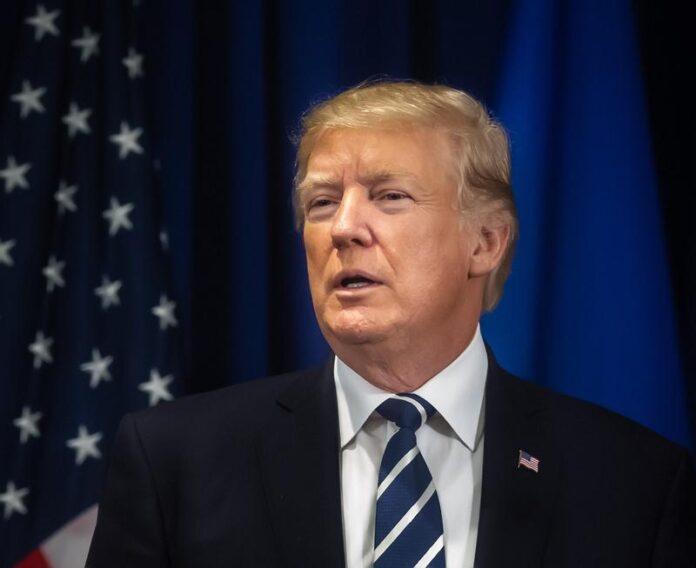
Sen. Mark R. Warner, D-Va., delivered a scathing condemnation on June 2, 2026, of President Donald Trump’s decision to name Federal Housing Finance Agency Director Bill Pulte as acting director of national intelligence, calling the appointment an affront to the thousands of intelligence professionals who serve to keep the country safe.
The Virginia Democrat, who serves as vice chairman of the Senate Intelligence Committee, used an open committee hearing in Washington to challenge the president’s announcement that Pulte would simultaneously lead both the FHFA and the Office of the Director of National Intelligence. Warner argued that elevating a housing regulator with no national security credentials to oversee the nation’s 18-agency Intelligence Community threatens the integrity of American intelligence operations.
“I thought I’d seen it all. I thought I couldn’t be shocked anymore,” Warner said. “The fact that President Trump announced today that Bill Pulte, the head of the Federal Housing Finance Agency, will also serve as Director of National Intelligence frankly stuns me.”
A Post Built for National Security Veterans
Warner reminded colleagues that Congress established the Office of the Director of National Intelligence in the aftermath of the September 11 attacks to serve as the central coordinator of a restructured intelligence system. Lawmakers mandated that the position be held by someone with extensive national security experience, a requirement designed to ensure that the leader of the Intelligence Community brings deep operational expertise.
Pulte falls far short of that standard, Warner argued, methodically listing the nominee’s deficiencies: no military service, no congressional experience, no diplomatic background and no law enforcement career. “Mr. Pulte has none of that. Zero,” Warner said.
The hearing where Warner spoke was originally scheduled to consider two other intelligence nominations — Dr. L. Roger Mason to serve as Director of the National Reconnaissance Office and Michael J. Vance to serve as Assistant Secretary of State for Intelligence and Research. But Trump’s announcement earlier that day dominated the session.
Warner Cites FHFA Conduct as Disqualifying
Warner’s most serious allegation centered on Pulte’s record at the Federal Housing Finance Agency, where the senator accused him of weaponizing private information against the president’s political opponents. Warner pointed specifically to actions targeting Lisa Cook and Sen. Adam Schiff, arguing that granting such an official control over the country’s classified holdings would be reckless.
“It is an insult to the thousands of people in the Intelligence Community who serve to keep our nation safe and have the ultimate responsibility to be willing to speak truth to power,” Warner said, characterizing the move as both a political act and an institutional affront.
The vice chairman also expressed alarm about the implications for congressional oversight and public trust in key intelligence authorities, including Section 702 of the Foreign Intelligence Surveillance Act. That surveillance tool has repeatedly sparked tension between Capitol Hill and the intelligence agencies during periodic reauthorization fights, and Warner suggested that installing a politically aligned figure atop ODNI could further strain that already delicate relationship.
Acting Title, Permanent Questions
Pulte will serve as acting director of national intelligence rather than as a Senate-confirmed permanent appointee, and Trump has separately ruled out Pulte for the permanent role. The designation suggests the arrangement is meant as temporary, though acting officials possess the full authorities of the office, including access to highly compartmented information and the ability to set intelligence priorities across the federal government.
That formal distinction did not temper Warner’s criticism. The senator vowed to use every available mechanism to fight the appointment, signaling that committee Democrats plan to challenge it through hearings, written demands and procedural options, even though the minority’s ability to block an acting designation remains constrained.
The dual-hat structure is itself uncommon. ODNI coordinates intelligence collection and analysis across agencies that together employ more than 100,000 personnel, while the FHFA oversees Fannie Mae and Freddie Mac at a time of housing market strain. Critics inside and outside the committee have questioned whether a single person can effectively manage both responsibilities at once.
Video of Warner’s remarks was released by his office. The White House has not explained how Pulte will divide his time between the two portfolios or when a permanent DNI nominee might be submitted to the Senate. For now, the housing chief leads the intelligence structure that Congress created following Sept. 11 — a development Warner described as one he could scarcely have imagined.