


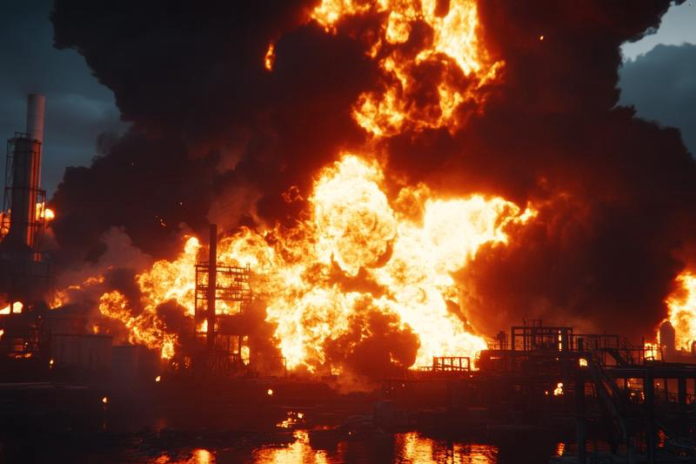
A methane gas explosion tore through a coal mine on the outskirts of Quetta in southwestern Pakistan on Thursday, July 30, killing 34 miners, authorities said Friday, after an overnight rescue effort failed to find survivors. The blast struck in the Sorange area, a remote stretch some 50 kilometers (31 miles) east of the Balochistan provincial capital, and was likely triggered by a buildup of methane deep underground.
Rescuers pulled 32 bodies from the shaft and were continuing efforts to extract the final two victims, according to a Provincial Disaster Management Authority announcement. The recovery unfolded over more than 12 hours, with crews inching forward through a collapsed and gas-choked mine where the odds of finding anyone alive had already vanished.
Mine inspector Ghani Baloch told officials that the initial count suggested 42 miners were present during the blast. Muhammad Atif, the chief inspector of mines in the province, put the figure at 36 miners underground at the moment of the blast. Abdul Ghani Baloch, a senior government mining official in the region, said two mines sitting close to each other were both damaged by the force of the explosion.
A Grim Recovery Underground
The scale of the disaster came into focus gradually. Rescue teams first recovered the bodies of seven miners before locating 25 more, according to provincial officials and the disaster agency. As the night wore on, an official with the Provincial Disaster Management Authority described a search operation running against fading hope.
“We have recovered 29 bodies so far. Our rescuers have located three more bodies inside the mine and are trying to recover them,” the official said early Friday, adding that the chances of finding any survivors were very low.
The nature of the accident left rescuers little room to work. Abdul Ghani Baloch explained that methane explosions are especially lethal because they strip the air of oxygen, forcing crews to advance with extreme caution as they hunt for the trapped.
Abdul Ghani Baloch said that survival prospects fade rapidly following methane blasts due to oxygen depletion, and that rescue teams were moving carefully through the mine. He warned that the death toll was likely to rise as the operation pressed on.
Authorities began handing the recovered bodies to their families for burial even as the search continued, while relatives of the missing waited near the pit head for word.
Compensation and a Promised Investigation
Balochistan’s Minister for Mines and Minerals Shoaib Nosherwani extended his sympathies to bereaved families and declared financial assistance totaling 500,000 Pakistani rupees, roughly $1,800, for the family of each miner killed. He said rescue personnel had been operating under extremely difficult conditions and pledged that the government would conduct a thorough investigation into what caused the explosion.
Nosherwani also said the province would review safety measures at coal mines across Balochistan in an effort to prevent similar catastrophes. Officials described the promised inquiry as covering both the immediate cause of the blast and the broader question of how the mines are regulated.
The Pakistan Central Mines Labour Federation went further, asserting that carelessness may have played a role in the tragedy. The union issued a statement urging strict enforcement of mining safety rules and firm action against companies that violate mine safety laws.
A Recurring Toll in Balochistan
Deadly accidents are common in Pakistan’s coal mining industry, and nowhere more so than in Balochistan, where numerous mines lack proper ventilation, gas-monitoring equipment, and essential safety infrastructure. Labour groups and mine workers have long accused mine owners of ignoring safety standards and failing to supply proper protective equipment, complaints that have surfaced again in the wake of this explosion.
Yet the industry remains a lifeline. Thousands of workers rely on the coal sector for income in Balochistan, Pakistan’s largest but least-developed province, a region marked by widespread poverty and joblessness. The hazardous conditions and meager wages have done little to slow the flow of workers into the pits, a reality that has repeatedly turned methane pockets into mass casualties.
For the families gathered at Sorange, the promised review and the compensation offered scant comfort. The union’s demand for accountability underscored a grievance that has trailed the province’s coal fields for years: that each disaster brings pledges of reform, and that the mines keep claiming lives all the same.