


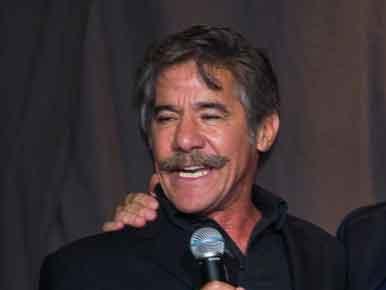
Long before President Donald Trump began floating third-term scenarios in public, veteran broadcaster Geraldo Rivera had already sounded the alarm. In a Dec. 17, 2024 post on X, Rivera warned that Trump and his allies would “soon start chattering about revoking/amending the 22d Amendment, which limits presidents to two four year terms.” Rivera — once a close Trump friend who split with him following 2020 election fraud claims — posed a pointed question: “Trump in 2028?”
That warning has gained traction as Trump’s statements have zigzagged between acknowledging constitutional barriers and entertaining ways around them. The president told reporters on Oct. 29, 2025, aboard Air Force One heading to Gyeongju, South Korea, that while his polling stood at record highs, the language was unambiguous: he could not seek reelection. He called the restriction “too bad” but said the Republican Party had plenty of strong candidates.
Yet just two days earlier, on Oct. 27, 2025, Trump had struck a different chord while flying from Kuala Lumpur, Malaysia, to Tokyo, Japan. He told journalists he would love another run in 2028, citing what he described as his strongest polling numbers ever.
A Vice Presidential End Run?
The mixed signals accelerated after an NBC News interview that aired March 30, 2026. Anchor Kristen Welker outlined a scenario: Vice President JD Vance or another Trump ally runs in 2028 with Trump as vice president, wins, then resigns to hand the presidency back. Trump called it one option and said he was serious.
He later dismissed that same workaround during his South Korea trip, calling it “too cute” and predicting voters would reject the scheme. Trump was a guest at an evening reception given by President Lee Jae Myung of South Korea at the Gyeongju Hilton during that visit. House Speaker Mike Johnson told reporters the day before that he saw no path for a third Trump term after speaking directly with the president.
Still, Trump has kept the door ajar. He displayed red “Trump 2028” hats during a meeting with Democratic leaders amid federal government shutdown negotiations — a 43-day impasse the White House blamed on Democrats.
Bannon and the Amendment Path
Former White House strategist Steve Bannon, who holds no official post in the administration, told The Economist in October 2025 that a third term was coming and Americans should “get accommodated with that.” Bannon said a plan existed and would be unveiled when the time was right.
Rivera’s original post had sketched the amendment route in detail. He wrote that Trump “just needs 38 of 50 state governments to agree to convene. (3/4ths) Trump won 30 in 2024.” That arithmetic, Rivera noted, left Trump eight states short of the threshold needed to amend the Constitution.
The Vance-Rubio Ticket
Vance revealed during an appearance on the “Pod Force One with Miranda Devine” podcast that Trump had broached a Vance-Rubio 2028 ticket roughly six months earlier at one of their weekly White House lunches. Vance called the discussion premature and said he had joked about it with Secretary of State Marco Rubio afterward. He added that if they did their jobs well, the political pieces would fall into place.
Asked whether Trump’s refusal to name a preferred 2028 leader might create friction with Rubio, Vance brushed off the notion. He described Rubio as his closest ally within the administration and said no tension would arise.
Legal experts say the 22nd Amendment presents a real barrier. According to law professor Ilya Somin, who spoke with ABC News, the Constitution’s prohibition on electing any individual to the presidency more than twice applies most naturally to Trump’s situation, though he noted the matter has some unresolved aspects. Some scholars point out that the word “elected” might theoretically permit someone to serve without winning a third election — a reading that would still require approval from courts, Congress and voters considering Trump’s record and age. He would turn 82 on Inauguration Day 2029, surpassing every president sworn in before him.
No organized push to repeal or amend the 22nd Amendment has emerged since Rivera’s December 2024 warning. His forecast that Trump and his circle would begin advocating for constitutional change has not yet materialized into a formal campaign. Whether the estranged friend’s prediction will prove accurate or overblown, it set the terms of a debate that continues to simmer: “Trump in 2028?”