


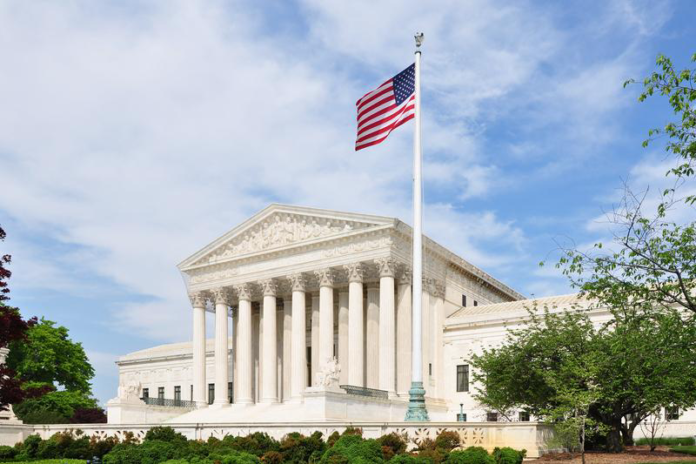
The Supreme Court handed President Donald Trump sweeping authority to fire the heads of approximately two dozen independent federal agencies on Monday, June 29, 2026, overturning a 91-year-old precedent that had long shielded regulators from presidential removal — while simultaneously ruling, in a second decision issued the same morning, that Trump cannot touch governors of the Federal Reserve.
On paper, the pair of rulings looked like a split decision. In practice, both outcomes served the same beneficiary.
A 91-Year Precedent Falls
The first and more consequential ruling came in Trump v. Slaughter, in which the court voted 6-3 to strike down the federal law protecting members of the Federal Trade Commission from dismissal unless they were found to be inefficient, negligent in their duties, or guilty of official misconduct. In doing so, the majority overruled Humphrey’s Executor v. United States, the 1935 decision that had established the constitutional foundation for independent multi-member agencies across the executive branch. Chief Justice John Roberts, writing for the majority in a 36-page opinion, declared, “We hold that such protection from removal is contrary to the separation of powers enshrined in the Constitution.”
The decision reaches well beyond the FTC. Approximately two dozen multi-member agencies that Congress designed to operate with some insulation from the White House now face a fundamentally altered legal landscape. Roberts grounded the ruling in the unitary executive theory — the argument that the Constitution vests all executive power in the president alone, and that any law limiting his ability to remove subordinates who exercise that power violates the separation of powers.
The FTC, created more than a century ago, includes five commissioners, with a statutory requirement that prevents any single political party from holding more than three seats. Each serves a seven-year term after presidential nomination and Senate confirmation. During his first term, Trump himself selected Rebecca Slaughter for a Democratic commissioner position, and President Joe Biden renominated her in 2023. In March 2025, Trump removed both Slaughter and fellow Democratic commissioner Alvaro Bedoya before their terms expired, sending Slaughter a letter stating her continued service was “inconsistent with my Administration’s priorities” — language that cited none of the legal grounds required by statute.
Slaughter sued. U.S. District Judge Loren AliKhan ordered the administration to reinstate her. A divided appeals panel — Judges Patricia Millett and Nina Pillard writing for the majority — declined to pause that order, concluding only the Supreme Court could overturn Humphrey’s Executor. The administration appealed, the Supreme Court froze AliKhan’s order and scheduled oral arguments for December 2025. Monday’s ruling made the firing permanent.
The Federal Reserve Exception
Minutes after issuing the Slaughter opinion, the court released its ruling in Trump v. Cook — and reached what looked, on the surface, like the opposite conclusion. By a 5-4 vote, the justices blocked Trump’s attempt to fire Federal Reserve Board Governor Lisa Cook, whom Trump had targeted over what sources described as made-up claims of mortgage fraud. Roberts, joined this time by the three liberal justices and Justice Brett Kavanaugh, held that for-cause removal protections for Federal Reserve governors remain constitutionally valid.
Roberts constructed the distinction around a historical analogy: the Federal Reserve, he argued, descends in principle from the First and Second Banks of the United States, institutions created and dissolved in the early 19th century that were not part of the executive branch and did not perform monetary regulation in any modern sense. The logic required treating monetary policy as categorically different from the regulatory functions of agencies like the FTC — a distinction critics found strained, given that Congress created the FTC just one year after the Federal Reserve and equipped both with identical for-cause removal protections from the start.
Kavanaugh, the sole conservative justice who sided with Roberts in both decisions, offered a more candid explanation in a concurrence. Allowing the president to fire Federal Reserve governors at will, he wrote, would expose the central bank to political pressure and jeopardize American monetary policy, risking economic turmoil domestically and globally. The message was transparent: the independence of the institution managing interest rates and global dollar stability was worth preserving in a way that consumer protection and labor regulation were not.
Sotomayor’s Sweeping Dissent
Justice Sonia Sotomayor wrote a 49-page dissent in Trump v. Slaughter, joined by Justices Elena Kagan and Ketanji Brown Jackson. She argued that the majority had discarded a democratic framework built over generations in favor of a theory of executive dominance with no genuine precedent. Dozens of independent commissions, she warned, would now effectively become arms of whoever occupies the White House, concentrating regulatory authority over vast sectors of American life in a single office.
The practical consequences were already visible before Monday’s ruling. Since the start of his second term, Trump had fired or attempted to fire at least 20 board or commission members across the government. Among them: Cathy Harris of the Merit Systems Protection Board, a three-person panel designed to be bipartisan, and Susan Tsui Grundmann, whose term at the Federal Labor Relations Authority had expired in January 2026. Each firing tested the boundaries that Humphrey’s Executor had drawn. Those boundaries no longer exist.
Power, Corporations, and the Court
Since the 1880s, Congress has periodically created independent agencies led by bipartisan expert boards precisely to insulate certain regulatory decisions from partisan pressure. That structural choice — ratified by the Supreme Court in 1935 — reflected a judgment that some functions of government required continuity and expertise more than they required presidential alignment. The Roberts court has now rejected that judgment for nearly every agency except the one whose decisions most directly move financial markets.
Solicitor General D. John Sauer had argued before the court that Humphrey’s Executor tempted Congress to build a “headless fourth branch” shielded from democratic accountability. Roberts adopted much of that framing. But the twin rulings draw a clear line: the president may now fire the regulators who police corporate conduct, protect consumers, and oversee labor relations — but the institution that sets the price of money for Wall Street retains its independence intact.