


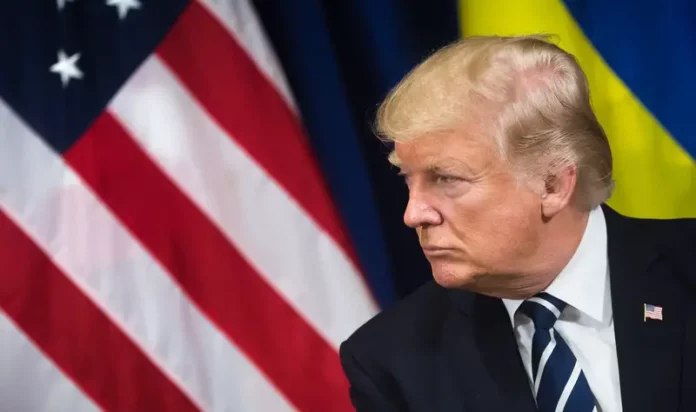
On Wednesday, July 22, President Donald Trump made his way to Dover Air Force Base in Delaware for the dignified transfer of four U.S. service members killed in the war in Iran, and his halting remarks to the families of the fallen quickly drew scrutiny. Asked by reporters what he would tell the grieving relatives, the 80-year-old president delivered a disjointed message before boarding his new Qatari-gifted Air Force One.
“All I’m going to say is we love you, we love your child, and that’s what they are to them, they’re their children,” Trump said. He then added that there were no games involved, that the fallen were their parents’ children, and that all a grieving family can do is throw out its heart.
The ceremony marked the third dignified transfer Trump has attended since the war began in late February. His third such trip came after the Washington-Tehran memorandum of understanding fell apart, plunging the two nations back into open conflict across the Middle East.
Four Soldiers Honored at Dover
On Friday, three American soldiers were killed in an Iranian strike on a U.S. base in Jordan. Among them were Pvt. Isabella Gonzales, 19, of Carrollton, Texas, and First Lt. Tyler James Feehan, 25, of Ewa Beach, Hawaii. The Pentagon identified a third soldier killed in that strike as Sgt. Angel S. Rampersad, 28, of Ozone Park, New York.
A fourth soldier, Sgt. Michael Emmanuel Swinton, 30, of North Carolina, was killed Sunday in Iraq. All four of those killed were assigned to air defense units. At the ceremony, Trump and Defense Secretary Pete Hegseth saluted as an Army carry team moved a transfer case containing the remains of Feehan.
Before departing, Trump told reporters the transfer was one of the hardest duties of the presidency but one that has to be done. He also went further, defending the war by claiming that the fallen soldiers had endorsed his goals. Trump asserted that all of them said very strongly that Iran cannot be allowed to have a nuclear weapon, adding that they won’t have one.
Speaking for the Dead
It is not verifiable whether the fallen troops made any such statements. The claim drew immediate criticism, with observers noting that military service requires troops to follow orders and deploy wherever they are sent, regardless of personal opinion. To claim that soldiers who are no longer alive fully agreed with the war was described as insulting to their memory, since Trump has no way of knowing how they felt.
It was not the first time Trump has invoked the fallen to justify the conflict. On April 1, in a primetime address, he spoke about two dignified transfers he attended in March, saying the loved ones of those killed had begged him to finish the job. His comments Wednesday also came after he posted on social media a comparison of American deaths in the Iran war with the toll of prior conflicts, in what appeared to be an effort to downplay the fatalities.
At an event later Wednesday in Marietta, Georgia, Trump introduced Feehan’s family, saying he had given them a ride from Dover aboard Air Force One after the ceremony.
Escalation Across the Middle East
On the 11th straight evening since the collapse of the memorandum, U.S. airstrikes against Iran continued on Tuesday. The U.S. claims to have carried out strikes at unspecified locations inside Iran. In response, Iran has fired at U.S. bases across the region, including in Iraq and Jordan, putting American troops on the front lines. Iran’s Islamic Revolutionary Guard Corps, which serves as Tehran’s military wing, has additionally reported attacks on two tankers in the Strait of Hormuz.
Since fighting erupted in February, 18 American soldiers have lost their lives, and over 500 have sustained injuries. Members of the military have publicly criticized the U.S. government for minimizing the severity of combat injuries and misrepresenting details about certain attacks.
Despite the mounting death toll, Trump’s rhetoric has hardened. On the 11th night of strikes, he warned on social media that from that point forward, any Iranian attack on a ship in the Strait of Hormuz would prompt the United States to bomb and destroy a bridge or power plant, including targets in or near Tehran.
The escalating conflict has rippled through American life, sending gas prices climbing as shipping companies grapple with rising oil costs. Republicans are increasingly anxious about the political fallout heading into the November midterm elections. One GOP operative working on those races told Politico that the party is preparing for the bottom to fall out, warning that Republicans are running out of time to improve their fortunes before voters head to the polls. The White House has been contacted for comment.