


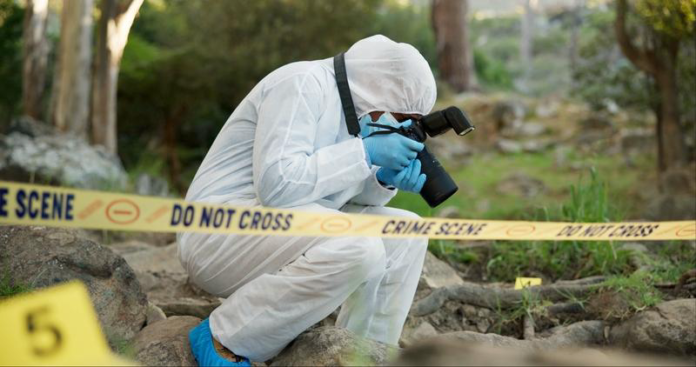
Forensic investigators sifting the earth at Ireland’s most notorious former mother and baby home have recovered the remains of another 22 infants, deepening the grim tally at a Tuam site where up to 800 children are feared to lie in unmarked ground. The discovery, announced July 22, brings the total number of bodies exhumed to 99 since the painstaking dig began in July 2025.
The newly found remains lay in coffins on the south-western edge of the site in Tuam, County Galway, in an area identified in old documents as a “burial ground.” The concentration of infants in that small patch has convinced investigators there is far worse still buried beneath.
“To find such a high number this early in the excavation of this space specifically, indicates to us there are more in the area,” said Dr. Niamh McCullagh, a forensic expert working on the excavation.
The Painstaking Work of Identification
Remains are transported to a newly built mortuary and laboratory in Toghermore, Tuam, where experts clean, dry and analyze them. ODAIT, the agency overseeing the excavation, employs radiology and 3D scanning technology to determine details about the children’s lives and deaths, including age and sex. According to ODAIT, this forensic information could help narrow down potential matches and link skeletal remains to specific names — offering surviving relatives their only chance at justice. Records indicate an average of two infant deaths per week at the home, many from malnutrition and diseases that were curable even then. McCullagh said the discovery represents more than just numbers — the apparent burial ground and densely packed remains are highly significant, and the team anticipates finding additional bodies.
A Secret Buried for Decades
The horror at Tuam began to surface in the most unlikely way. In the 1970s, two boys stealing apples from an orchard climbed the stone wall surrounding the abandoned Bon Secours Mother and Baby Home while fleeing the owner. Their feet struck the ground with a hollow sound. One of them, Franny Hopkins, and his friend Barry Sweeney cleared away undergrowth and lifted a concrete slab.
“There was just a jumble of bones,” Hopkins recalled. Hopkins said the boys had discovered a mass unmarked grave inside a former septic tank, located in a town whose name comes from the Irish word for burial place. For forty years, the discovery remained largely unknown beyond the ruined walls of the home. Catherine Corless, a homemaker interested in local history, brought the truth to light. While initially planning to write an article for the local historical society, she ended up investigating the fate of missing children. She could not find any cemetery plot for the infants who had perished there. “I thought I was doing a nice story about orphans and all that, and the more I dug, the worse it was getting,” she said. Her research ultimately pointed to the remains of almost 800 infants and young children.
A System Built on Shame
Ireland’s mother and baby homes opened in the 1920s, after the country won independence from Britain, and most were run by Catholic nuns. In Tuam, the home was established in a former workhouse built in the 1840s for the poor, where many famine victims had died. British troops occupied the buildings during the Irish Civil War of 1922-23, and six members of an anti-treaty Irish Republican Army faction were executed there in 1923. Two years later, in 1925, the gray three-story complex reopened as a home for expectant mothers and orphans, operated for County Galway by the Bon Secours Sisters.
Conditions were primitive. The buildings had inadequate heating, with plumbing installed only in the kitchen and maternity areas. Large communal sleeping quarters housed upward of 200 children and 100 mothers at a time. Women banished by their families were effectively imprisoned, laboring for as long as a year before expulsion — the majority of them forced to part with their children permanently. The disgrace attached to pregnancy outside marriage ran so deep that many women were brought there in secret. Peter Mulryan, who grew up in the home, learned only decades later that his mother had been in her sixth month of pregnancy when she was transported by bicycle from her home under cover of darkness.
There was no accountability for the men who fathered the children, whether through romantic encounter, rape or incest. Children from the home were shunned at school. Today the Tuam grave has forced a reckoning reaching the highest levels of government in Dublin and the Vatican, as Ireland and the Catholic Church confront a legacy of ostracizing unmarried women and tearing them from their children. For relatives whose family histories are bound up with the site, each recovered body is a step toward answers long denied.