


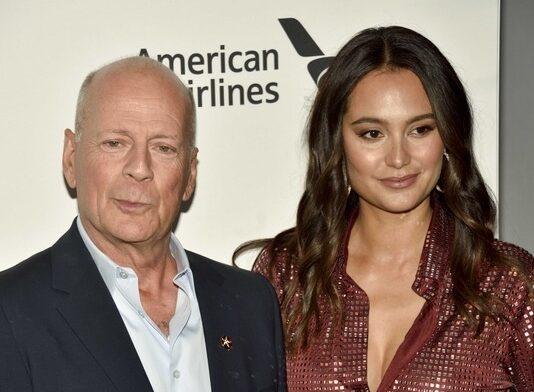
Emma Heming Willis marked her 50th birthday in June, but the milestone arrived without the ease she once imagined it would. In a “Making Space” podcast episode released Wednesday, Aug. 5, Heming Willis discussed her feelings of guilt as she navigates finding happiness while her husband battles frontotemporal dementia.
Heming Willis, a former model and entrepreneur, told “Today” co-host Hoda Kotb, who leads the podcast, that she had approached the birthday with a mix of anticipation and reluctance. She had looked forward to entering her 50s, she said, after a decade that had tested her. But the weight of her circumstances made celebrating feel complicated.
The actor, who is 71, has largely withdrawn from public life. His family first disclosed in 2022 that he had been diagnosed with aphasia, a disorder that affects communication. In February 2023, they announced that his condition had progressed to frontotemporal dementia, a neurological disease that causes deterioration in the brain’s frontal and temporal regions. Those regions are generally tied to personality, behavior and language.
A Reluctant Milestone
Heming Willis said she was not sure she wanted to mark the occasion at all. A friend, she recalled, kept encouraging her not to let the moment pass unnoticed.
“I really was looking forward to 50 because my 40s felt like a little bit of a doozy,” she said, adding that she was ready to embrace the new decade.
After sitting with the decision, she decided she did not want to look back and regret skipping the day. She kept her wishes simple, telling her loved ones she wanted tacos and a margarita. Heming Willis said her family and friends gathered for a lovely, intimate evening at her home in June, which happened to fall on the same night as the Knicks final—a coincidence she noted since most guests were fans of the team.
Heming Willis said she wrestles constantly with guilt and acknowledged the tension caregivers face between living their own lives and feeling they should devote every moment to their loved one.
Learning to Let Light In
Heming Willis said conversations with other caregivers have reshaped how she thinks about joy. Laughter and happiness, she has come to believe, do not diminish her love for her husband. Life remains hard and heavy, she acknowledged, but she has learned to allow small openings for lightness without punishing herself for them. Her people, she added, want her to experience life fully.
She is now Willis’s primary caregiver, though he resides separately from her and their daughters Mabel, 14, and Evelyn, 12, with a team providing round-the-clock care. Willis, whose credits include “Die Hard” and “Pulp Fiction,” became one of Hollywood’s most recognizable leading men before retiring from acting.
Advocating for Caregivers
Heming Willis has increasingly used her platform to discuss caregiving challenges. In her book, “The Unexpected Journey: Finding Strength, Hope, and Yourself on the Caregiving Path,” published in September, she calls for stronger support systems in the United States for people navigating the same path.
She has been open about how unprepared she felt at the outset. She knew little about caregiving before she became a caregiver, she has said, and little about frontotemporal dementia until the diagnosis forced her to learn quickly. The experience, she has described, involves stabilizing one crisis only to face the next.
Heming Willis has also recalled the disorientation that followed Willis’s diagnosis of primary progressive aphasia, saying she was handed a pamphlet and sent on her way with no guidance about available resources. She has described leaving the doctor’s office stunned at how little support was offered, wondering how the family was expected to move forward with nothing more than a follow-up appointment months later.
Frontotemporal dementia is a rare and progressive condition that often brings changes in personality, behavior or language. For Heming Willis, the diagnosis has meant reshaping her understanding of celebration itself — not as something to be earned or apologized for, but as a form of survival. She said she was glad, in the end, that she chose to mark the day.