


Derrick Parker, the former New York City police detective who built the NYPD’s rap intelligence unit from the ground up and became one of the most recognizable figures at the intersection of law enforcement and hip-hop culture, died July 24, 2026, at a hospital in Nassau County, New York. He was 65.
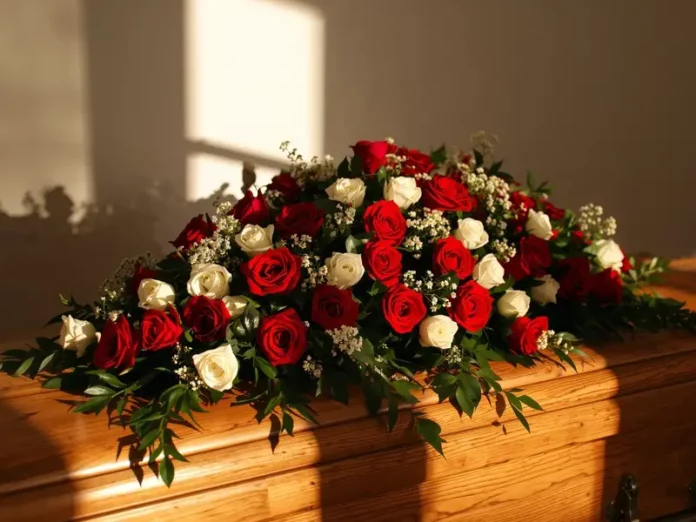
Ralph Parker, Derrick’s brother, confirmed the death was unexpected. No cause was disclosed. A funeral will take place Thursday at the J. Foster Phillips Funeral Home in Jamaica, New York.
Parker spent more than 20 years with the NYPD, but it was his role leading the department’s rap intelligence unit during the 1990s that defined his public identity. He monitored high-profile artists and their entourages as they moved through New York City, working to keep both law enforcement and nightclub management informed about who was going where — all in an effort to head off confrontations between rival groups before they turned violent. As he explained in a 2024 interview, law enforcement couldn’t monitor everyone, but he believed they needed to track certain high-risk individuals when they entered the city, particularly those already under surveillance.
A Unit He Built, a Legacy That Outlasted Him
Parker was, by his own description, a one-man intelligence operation within the NYPD when he started — a department unto himself focused entirely on the rap world. His work proved durable enough that a version of what he created still operates within the department today under the name the Enterprise Operations Unit (EOU). Though the EOU is formally focused on all music genres, its practical emphasis has remained centered on hip-hop. Parker retired from the force in 2002.
Before landing in the rap unit, Parker had worked as a narcotics detective — a background that shaped his view of the genre’s orbit. He noticed that the people surrounding rappers at night were often the same figures he encountered during his day job on the narcotics beat. That observation, he said, drove his decision to start gathering intelligence on the hip-hop world. He consistently framed the surveillance as coming from a place of concern for the artists themselves, not hostility toward them.
Beyond the rap unit, Parker also served as a homicide and cold case detective, collaborating with the U.S. Marshals Service, the Bureau of Alcohol, Tobacco, Firearms and Explosives (ATF), the Drug Enforcement Administration (DEA) and the FBI. He shared his strategies for reducing violence in the music industry with law enforcement counterparts in Miami and Atlanta.
Tupac, Biggie, and Jam Master Jay
Parker chronicled his career in the book "Notorious C.O.P.: The Inside Story of the Tupac, Biggie and Jam Master Jay Investigations from the NYPD’s First ‘Hip-Hop Cop.'” The volume traced his involvement in investigations surrounding three of the genre’s most notorious unsolved killings: Tupac Shakur; Christopher Wallace, who recorded as the Notorious B.I.G.; and Jason Mizell, known as Jam Master Jay, the DJ for Run-DMC. When Mizell’s murder case finally went to trial decades after the 2002 killing, Parker appeared as a witness. He had also speculated publicly — and correctly, as it turned out — about the identities of Jam Master Jay’s killers years before any arrests were made. Prosecutors, according to reporting on the case, were not pleased by his intervention on behalf of a witness in that proceeding.
Parker also played a role in the 1999 investigation into a shooting at Club New York, an incident that drew in music mogul Sean “Diddy” Combs, who was charged but later acquitted, and pop star Jennifer Lopez, who was briefly detained and released. Parker said his policing style with celebrities was deliberately restrained, and he described himself as understanding rather than punitive toward those who faced legal troubles.
Candid About the Job’s Darker Edges
Parker was not shy about the methods his unit employed, even when those methods reflected poorly on the department. He acknowledged in interviews that if the NYPD wanted to prevent a rap concert from happening, officers would approach club owners with implicit threats of regulatory raids from city agencies. He also admitted to placing an informant inside a rapper’s entourage. And he recounted being ordered by then-Mayor Rudy Giuliani to find any pretext to arrest any member of a rap group that had recorded a song about Giuliani being shot — an order he said he carried out.
Those admissions came alongside a genuine and well-documented love for the culture he was surveilling. Parker had been a devoted hip-hop and R&B fan long before he was policing its participants. He had even briefly pursued a singing career and, before the intelligence work began in earnest, spent time hanging out with artists at industry conferences and nightclubs.
Active Until the End
After leaving the NYPD, Parker applied the same logic he had developed in the rap unit to post-retirement work in security for large events and executive protection — tracking who would be where to prevent conflicts before they started. He also became a recurring media voice on major cases, including Sean Combs’ sex-trafficking trial and, more recently, a high-profile wedding at Madison Square Garden. In the days before his death, according to reporting on his final weeks, he had been following a murder case out of Las Vegas. Parker had expressed hope of writing a second book about his experiences.
Reporter Shawn Setaro, who interviewed Parker extensively over roughly seven years and had been working with him on a planned narrative podcast series about hip-hop and policing, described his relationship with Parker as always complicated. Setaro noted that Parker never wavered in his conviction that his surveillance work had ultimately benefited the music and the culture he cared about — a belief, Setaro wrote, that kept Parker remarkably accessible to journalists until the very end.