


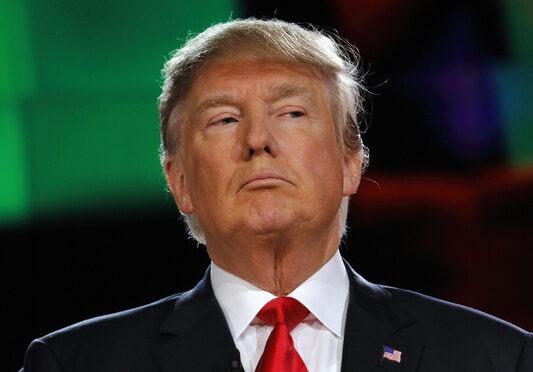
The jeers started the moment Rep. Ralph Norman, R-S.C., mentioned the president. Standing onstage with his family on Tuesday evening, August 25, 2026, hours after losing South Carolina’s Republican Senate primary runoff, the 73-year-old congressman acknowledged that President Donald Trump had inserted himself into the contest and had every right to do so. His own supporters answered with a wall of boos.
Norman did not back away from the subject. He told the room Trump’s policies were good, then offered the line that summed up an evening of Republican-on-Republican frustration. “I never understood why he got in this race,” Norman said, adding that he would accept the outcome and that something good would eventually come of it.
He told the crowd he had never written a concession speech, because he did not believe a loss was in the cards. It was. Sen. Darline Graham, R-S.C., 62, took 52.5 percent of the vote to Norman’s 47.6 percent, a margin of five percentage points.
From Appointment to Nomination
Graham entered the Senate through tragedy. Her brother, Sen. Lindsey Graham, died suddenly in July 2026 of an aortic dissection at age 71. South Carolina Gov. Henry McMaster appointed Darline Graham to serve out the remainder of her brother’s term, and Trump encouraged her to run for a full six-year term when the two met in the Oval Office after her brother’s death, praising her as a spectacular person and a true American Patriot. She launched her campaign shortly afterward, despite having no experience in elected office.
She marked the win in Columbia, South Carolina, with a speech that made clear whom she credited for it. “South Carolina truly is Trump Country,” Graham told supporters. At 8:44 p.m. on election night, Trump went on Truth Social to declare her the winner himself and to remind his followers that she had run with his endorsement.
The Money That Moved the Race
Norman walked through the financial disparity point by point. Some $8 million in outside spending had been aimed at his campaign, he said, far more than he could hope to counter. His own money, he told the crowd, had come from South Carolina donors and from his personal account, while his opponent’s had arrived from outside political action committees (PACs) — an observation, he said, rather than a complaint.
MAGA Inc., the super PAC aligned with Trump, steered $827,000 to Graham’s bid, federal campaign finance filings show. Corporate chief executives, lobbyists and well-known Republican donors also sent money to her fledgling operation. Trump stumped for her in person, telling a rally crowd that he had recruited her into the contest and had to make certain she entered because nobody would be better. GOP strategists had forecast a lopsided loss for her.
A Debate Stumble on National Security
Her lack of experience showed during the runoff debate, where a question about Taiwan and the South China Sea drew an admission that national security was not her area and that she was not that informed on the subject. The audience booed. Pressed Monday on how she was catching up, Graham said the topic had never come up from anyone she met while traveling the state.
The comparison with her late brother was unavoidable. Lindsey Graham, known as the “Trump whisperer,” often expressed an interest in foreign policy. Norman, for his part, called Taiwan a definite ally during the campaign and credited Trump with enabling the island to defend itself against China.
Norman’s Exit and the November Matchup
Tuesday’s defeat was Norman’s second of the year. He finished third in South Carolina’s Republican gubernatorial primary on June 23. And in the 2024 Republican presidential primary, Norman endorsed former South Carolina Gov. Nikki Haley over Trump.
Still, he closed by pledging to back the nominee, saying he would support Graham as best he could. The moment did not land cleanly. Norman tripped over her name, drawing laughter, and his wife, Elaine Norman, appeared to shout out from the podium a jab about not knowing the winner’s last name. He also said his next chapter would not be in the political arena. Footage of the speech was carried on C-SPAN.
Graham now advances to a general election in November 2026 against Democrat Annie Andrews, a Charleston pediatrician. The nonpartisan Cook Political Report rates the contest as solidly Republican, and the last time South Carolina sent a Democrat to the Senate was in 1998. Norman, meanwhile, told his supporters that Democrats got what they wanted out of the runoff result — a parting shot from a candidate whose own crowd had already made clear where it placed the blame. The White House was contacted for comment.