


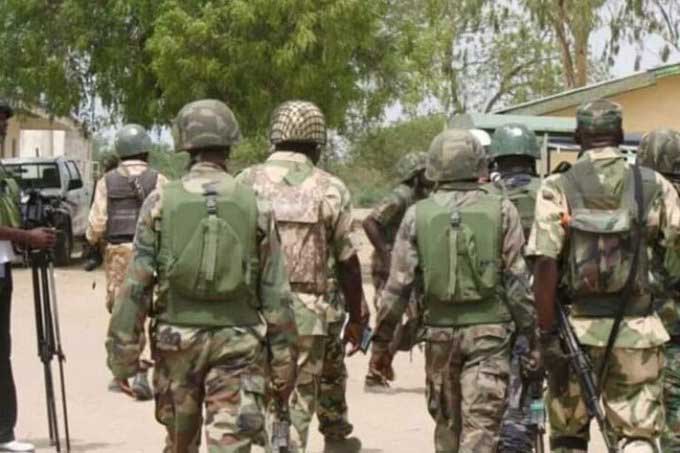
Twelve Virunga National Park rangers were among 17 people killed in a Saturday morning ambush in the Democratic Republic of the Congo in late April 2020, according to the Congolese Institute for the Conservation of Nature (ICCN). Three other people were wounded, one critically.
The rangers, aged 23 to 40, were on their way back to headquarters when they came upon a civilian vehicle under attack and stopped to defend it, the institute said. A driver and four civilians also died.
The rangers instead came under “a ferociously violent and sustained ambush,” the institute said. It blamed the Democratic Forces for the Liberation of Rwanda (FDLR-FOCA), a Congolese rebel group, and vowed to bring those responsible to justice under the law.
The Deadliest Attack on Africa’s Rangers
The Game Rangers Association of Africa’s chief executive, Andrew Campbell, said the attack had killed more rangers than any other single incident on the continent. “Congo is the most volatile area in terms of ranger deaths in Africa,” Campbell said, calling Virunga the epicenter.
Virunga sits in one of the most dangerous parts of Congo. Dozens of armed groups operate in and around the park, many of them financing themselves by plundering and smuggling its resources, and hundreds of rangers have died defending it.
Established in 1925 and stretching some 3,000 square miles, Virunga was the first national park created in Africa and joined the World Heritage List in 1979 for its unusual range of rare and endemic species. Volcanoes, glaciers, rain forest and wetlands fall inside its boundaries, along with hundreds of species — hippos, elephants, chimpanzees and a quarter of the world’s endangered mountain gorillas.
A Park Shut to Visitors by the Pandemic
When the ambush happened, the park was closed to visitors over fears that tourists could pass the novel coronavirus to the great apes. Gorillas, whose DNA is 97 percent shared with humans, can catch human illnesses such as the flu. Visitors were normally kept at a minimum distance of 22 feet, and the International Union for the Conservation of Nature argued those measures were especially important because gorillas may be susceptible to Covid-19.
The shutdown gutted the park’s finances. Congo sealed its border in late March 2020, and about 40 percent of Virunga’s revenue vanished overnight with the arrival of Covid-19. Tourists ordinarily paid $400 for a single gorilla trekking permit. Most of the country’s coronavirus cases at that point were concentrated in the capital, Kinshasa.
Emmanuel de Merode, the park’s director and an award-winning Belgian conservationist, said the blow to Virunga’s finances and the local economy was already extremely serious. Limiting human contact was the best way to shield the gorillas, he said, but it carried heavy consequences for tourism, park operations and nearby communities. About 70 percent of Congo’s population was already living in extreme poverty on less than $1.90 a day, per 2018 World Bank statistics, and de Merode warned that pandemic-driven food price increases could fuel poaching by local armed groups.
In May 2020, Earth Alliance — which actor Leonardo DiCaprio founded together with Emerson Collective and Global Wildlife Conservation — joined the European Commission to launch the Virunga Fund with $2 million in seed money. DiCaprio said in a press statement that the park urgently needed funds to protect the mountain gorillas, support rangers and the families of those killed in the line of duty, and deliver disease prevention.
Attacks and Closures Before 2020
The violence was not new. In 2014, de Merode was shot four times by unknown assailants and survived. In May 2018, assailants struck a party of two British tourists, along with their driver and the park rangers escorting them, as the group traveled from Goma up to the park; a female ranger died, while the two visitors and the driver were seized and held captive for 48 hours before their release.
The Congolese government then closed Virunga to all tourism until at least the end of 2018 and sharply limited access, after years of illegal occupation by rebel groups that had killed many dozens of park workers. The closure ran eight months. Gorilla Doctors, the veterinary group that monitors habituated apes, could enter only under full military escort, working out of the Bukima patrol post to check on four groups — Rugendo, Humba, Munyaga and Kyakamwe — while continuing its work with Grauer’s gorillas in Kahuzi Biega National Park, across Lake Kivu in South Kivu province.
UNESCO Condemns a New Ambush
Rangers were ambushed again on the morning of Sunday, January 10, 2021, while patrolling near Kabuendo. Six rangers were killed and one injured. UNESCO condemned the killings in the firmest terms, honored the dead and sent condolences to their families and colleagues. The agency linked the ambush to the April 24, 2020 attack on civilians and a July 28, 2020 attack on the Armed Forces of the Democratic Republic of the Congo, and said attacks on park staff had amplified in recent years.
UNESCO said its World Heritage Centre had worked for two decades to improve protection for guards and staff, reinforce infrastructure and support affected communities, with financing from the United Nations Foundation, the governments of Italy, Belgium and Spain, and the Rapid Response Facility. To counter what it described as deepening violence, the agency said it was launching a project to rebuild income-earning activities for communities around the World Heritage property, backed by the International Alliance for the Protection of Heritage in Conflict Areas.