


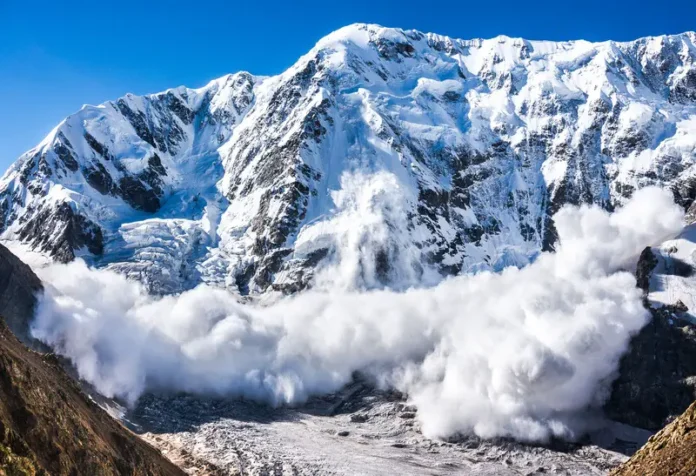
Rescue crews recovered the remains of two more victims from Mount Himlung in north-central Nepal on Monday, Sept. 28, 2026, raising the death toll from a weekend avalanche to at least four. Twelve people remain missing.
The cascade of snow and ice tore down the 23,380-foot peak on Sunday, Sept. 27, catching Nepali workers who were preparing base camp for arriving climbers. Two bodies were found that same day. Ten people were rescued and brought down the mountain by helicopter.
Search Continues on Mount Himlung
Crews were still combing the slope a day after the collapse. “The search operation is continuing, with the team working for another 3–4 hours, conditions permitting,” the Nepal National Mountain Guide Association (NNMGA) search and rescue team said in an update on Monday, Sept. 28. The association also offered condolences to the families of those killed.
The disaster struck at the opening of the post-monsoon stretch, when clearer skies draw trekkers and climbers to the Himalayas. Elsewhere in the country, landslides and flooding have been reported in the Manang district after intense rainfall, and other parts of Nepal are under dangerous weather alerts.
A Season Already Scarred by Disaster
The avalanche lands on a country still digging out from catastrophic floods in August that killed more than 1,450 people and destroyed key highways. Those floods were triggered by a glacial mountain collapse along the Nepal-Tibet border in the north.
The damage reaches far beyond the flood zone. Tourism accounts for nearly 8 percent of Nepal’s gross domestic product and employs more than one million people. Nepal logged more than 1.15 million tourists last year, nearly a third of them during the September-November season — the window that is now supposed to be filling hotels, trekking lodges and airport taxi queues.
Cancellations Pile up in Kathmandu
Instead, the bookings have evaporated. Pushpraj Rimal, 42, a tour planner and taxi driver in Kathmandu who works on commission for hotels and trekking companies in the capital and in Pokhara, the lakeside town in the Annapurna range that serves as a base for Himalayan trekkers, described a business at a standstill. “It is still a lockdown kind of situation,” he told Al Jazeera.
Rimal said he rented two cars for two months but has done only about a quarter of the business a season normally brings, with no commissions coming from hotels or trek organizers. He had promised his children, Hema, 14, and Rahul, 12, a tablet for Dussain, a prominent Hindu festival that usually falls in October. That promise, he said, is one he will have to break for the first time.
Seeta Nepali, 61, and her husband, Ramakant Nepali, 68, sell homemade buttermilk along the highway linking Kathmandu to Pokhara and Chitwan. She said the couple earned nothing for 11 days after the flood because the road was blocked, and that even after it reopened only government vehicles were allowed through. Some tourists have returned, she said, but sales are running at roughly a quarter of normal.
Foreign travelers have been checking advisories issued by their embassies in Nepal before deciding whether to come. Alexa, a British national who goes by a single name, had booked cabs from Kathmandu airport to Pokhara in July along with hotels, trekking and camps for a first trip to Nepal with five friends, including a stop in the hill town of Dhulikhel. The group learned of the disaster on Aug. 26 and canceled everything. Tapas Kumar, a traveler from India, said his son, who is based in the U.S., urged the family to call off the trip; they compromised by dropping Pokhara and spending all seven days in Kathmandu.
On Mount Himlung, the work went on. The association said its team remains committed to continuing the search and rescue operation until the mission is completed.