


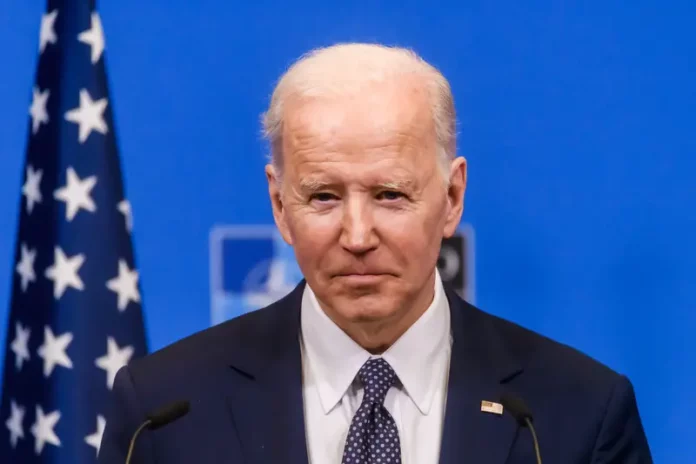
Former President Joe Biden has lost his effort to keep sealed the audio recordings and transcripts of the interviews he gave the ghostwriter who helped produce his memoirs, after a federal appeals court declined late on July 20, 2026, to block their disclosure. The 2-1 outcome came from a divided panel of three judges at the D.C. Circuit, the federal appellate court that sits in Washington, and was reported the next day. At stake is material collected during a criminal investigation that ended without charges.
Release was not immediate, however. The panel put its own decision on hold until August 3 so that Biden could consider another appeal. In the majority’s view, the public has a substantial stake in hearing the material, and the redactions already made to the recordings would keep much of what is personal in them out of view.
A Divided Panel in Washington
An unsigned opinion from Chief Judge Sri Srinivasan and Judge Gregory Katsas carried the day. “We conclude that any remaining incursion on personal privacy from disclosure of the now-redacted materials likely does not outweigh the public interest in disclosure,” the ruling says.
Someone who is investigated but never charged normally has a strong privacy interest in avoiding public identification as a target, the two judges acknowledged. Here, they wrote, the Justice Department had already made known the special counsel’s appointment and what he was looking into, and the report that followed described at length how Biden had been examined over the alleged retention and disclosure of classified material. Because the tapes would help the public understand and evaluate the special counsel’s reasoning, the majority found, disclosure is likely to serve that interest.
The two judges in the majority were named to the bench by opposing sides. Then-President Barack Obama, the Democrat who picked Biden as his running mate and vice president, put Srinivasan on the court. Katsas owes his seat to President Donald Trump, who lost to Biden in 2020 before retaking the White House in 2024.
Pan Dissents on Privacy Grounds
The dissent came from Judge Florence Pan, whom Biden nominated. “In my view, Biden has shown a substantial privacy interest,” Pan wrote. She pointed out that the conversations took place inside Biden’s home and that the recordings ended up with the government by way of a criminal investigation that produced no indictment.
Pan also flagged what the majority’s order would mean in practice. Refusing an injunction while the appeal is still pending, she argued, amounted to deciding in favor of immediate disclosure and paved the way for the premature release of conversations that everyone agrees were private — an outcome, she wrote, that would render the case moot.
How the Tapes Reached the Government
The interviews were conducted at Biden’s residence during 2016 and 2017, in the years before he won the presidency, by Mark Zwonitzer, the writer who worked with him on the 2007 memoir “Promises to Keep” and the 2017 memoir “Promise Me, Dad.” Biden’s attorneys say he spoke candidly about personal subjects in those sittings and believed the recordings would remain strictly between the two men.
Special Counsel Robert Hur is how the tapes reached the government. He was examining Biden’s handling of classified documents dating from his tenure as a Delaware senator and from his vice presidency, which concluded in 2017, and he filed no charges. The ghostwriter sessions featured heavily in his 2024 report, which described them as sluggish and portrayed Biden as unable to pin down when events occurred and, at points, struggling with entries he had written in his own notebooks.
Soon after that report became public, the conservative think tank the Heritage Foundation filed a public records request for the underlying material Hur had relied on, and congressional Republicans pressed for it as well. Biden turned to the courts, seeking an injunction to stop Trump’s Justice Department from turning the recordings over to the think tank and to members of Congress. The department’s earlier position had been that the recordings were not subject to public records law.
U.S. District Judge Dabney Friedrich, appointed by Trump, ruled in June that the public interest outweighed whatever privacy interest Biden still had in the material, and he appealed. On July 10 the D.C. Circuit panel issued a brief administrative injunction that blocked any release for 10 days and was set to lapse at 11:59 p.m. on July 20. The judges cautioned at the time that the freeze was purely procedural — time to review the emergency motion, not a signal about the eventual outcome.
Biden’s Team Alleges Political Payback
The recordings were made for a book roughly 10 years ago and cover ground that includes the former president’s late son, according to Biden spokesperson T.J. Ducklo, who said they went to the Justice Department only on the express understanding that they would stay private. Walking away from that assurance, Ducklo said, means the administration is using the department as a tool of political revenge. Biden disagrees with the ruling, he added, but respects the courts and the part an independent judiciary plays in a healthy democracy.
The Supreme Court never got the case. Biden dropped the suit, and on July 27 the Oversight Project, an arm of the Heritage Foundation, published the material — roughly three hours of audio along with 117 pages of heavily redacted transcripts. Biden can be heard in a 2017 session discussing classified material from his vice presidency, including a handwritten memorandum on Afghanistan policy, and at points struggling to fix dates and details. Ducklo called the release politically motivated and repeated that the conversations had been given to the Justice Department on the express condition that they stay private.
A new Biden memoir, “Promise Me, America,” is due out after the November midterm elections.