


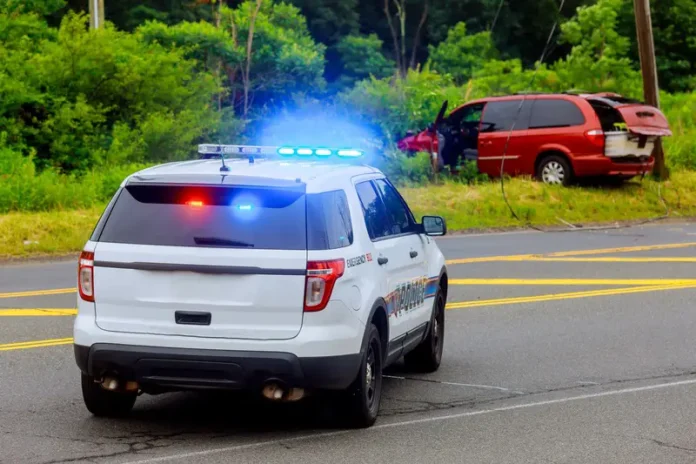
A knife attack at a 17th-century Benedictine abbey in southeastern Poland killed a priest and wounded four other people on Thursday, September 24, 2026, and police arrested a 31-year-old Ukrainian man at the scene.
Police in the Podkarpackie, or Subcarpathian, region said they were alerted at about 9:30 a.m. (0730 GMT) that a Ukrainian national was attacking men with a knife inside the grounds of the Benedictine Sisters’ abbey, which stands on Benedyktyńska Street in the town of Jarosław. Five people were stabbed in all — four men and one woman. Every wounded victim was hospitalized, some with serious injuries, police said.
Three of those attacked were priests and two were laypeople. One of the clergymen, Fr. Stanisław Zbojnowicz, later died of his wounds. Prosecutors said four victims remained in the hospital, two of them in critical, life-threatening condition. A second priest, Fr. Marek Pieńkowski, was reported to be in serious condition; earlier accounts that he too had died were corrected by authorities. Spokespeople for the police and prosecutors confirmed that one of the victims had died but would not identify the person.
How the Attack Unfolded
According to prosecutors, the man walked first into a kitchen inside the abbey complex and picked up a knife there. The earliest encounters with victims happened in that part of the building, and Polish outlets said a priest was knifed in the café next door. He then pushed into the church itself, where confessions were being heard and worshippers were arriving for a 10 a.m. Mass, and attacked two more priests.
Witnesses described a blade some 80 centimeters long and said people took cover inside confessionals as the assault unfolded. The priest who died tried to halt the attacker and threw himself at him, according to those accounts. One woman who had come for Mass told Polish television station TVN that the assailant, whom she put at about 30 years old, struck a priest in the neck artery and that the priest fell to the ground. Sister Barbara Dendor, the Benedictine superior, said the man was a stranger to everyone in the community.
Questions About the Suspect
Prosecutors said the suspect had arrived from Germany overnight and was making his way east toward the Korczowa crossing into Ukraine. For reasons that remain unexplained, he never crossed, turning instead to the abbey. Investigators have not said whether he holds refugee status or was simply passing through the country, and no motive has been offered.
Jarosław Mayor Marcin Nazarewicz treated terrorism as the probable explanation in the first hours, and security was stepped up at municipal facilities. Schools in the town were advised to keep children indoors. Prosecutors have stopped short of treating the case as terrorism, and they have pointed to no evidence of an ideological or religious motive. Prosecutors from the regional and district offices traveled to the site, and images from the scene showed fire engines and officers outside the monastery, whose entrance had been sealed off.
Political Reaction in Warsaw and Kyiv
The case turned political within hours, though the first responses from the government and the opposition were strikingly similar in demanding a fast investigation and a harsh sentence. Prime Minister Donald Tusk wrote on X that the killer was in the hands of Polish police and that the perpetrator was a Ukrainian citizen. “He will be punished with the full severity of Polish law,” Tusk wrote, adding that he shared the grief of the victims’ relatives after the brutal attack.
Jarosław Kaczyński, leader of the opposition Law and Justice (PiS) party, pressed for a full accounting of the case, including the circumstances of the suspect’s stay in Poland and whether he had previously drawn the attention of the authorities. In Kyiv, Ukrainian President Volodymyr Zelensky condemned the killing at the Benedictine Sisters’ abbey and said it had been committed by a Ukrainian citizen. “We are shaken by this evil,” Zelensky wrote on social media.
A Rare Crime in a Devout Country
Violence of this kind is unusual in Poland, one of the most Catholic countries in Europe, where stabbings are extremely rare and rarer still at religious sites. The abbey stands roughly 30 kilometers (19 miles) from the Ukrainian border, in a region shaped by the war next door. A close ally of Ukraine, Poland has given shelter to hundreds of thousands of people who fled Russia’s invasion, and frictions have surfaced in recent months.
Poland belongs to both NATO and the European Union and sits on the alliance’s eastern flank, and it serves as the main transit point for Western military and humanitarian support bound for Kyiv. Polish officials have said sabotage orchestrated by Russia is increasing in the country during a fifth year of war next door, and earlier in September Tusk cautioned that Poland could feel the consequences if Russia escalates its strikes on Ukraine over the weeks ahead.
The most basic question — why — remains unanswered. As of Thursday afternoon, September 24, the man in custody had not yet been questioned, and blood samples had been taken to test him for alcohol and drugs. A police spokeswoman, Anna Długosz, said officers were interviewing witnesses at the scene, examining the site and working to piece together exactly what had happened.