


Authorities in Western Australia have issued a rare catch-and-kill order for a great white shark after 63-year-old swimmer Greg O’Neill was mauled to death in full view of beachgoers at Sorrento Beach in Perth on Friday, September 18, 2026.
O’Neill was swimming with a friend off the beach, in Perth’s northern suburbs, when the shark struck. Emergency services were alerted at about 10:30 a.m. local time, and the attack happened roughly 164 feet from shore.
Search crews scoured the water by boat and helicopter after the late-morning attack. Officers declined to say whether any possible remains had turned up, but police said in a statement they were confident the swimmer had died as a result of the attack. As of Saturday, September 19, his body had not been recovered.
Horror in the Water at Sorrento
Beach walker Jacqui Rapaic told Australian Broadcasting Corp. that two men went into the water and only one came back, and that she could see “a pool of blood.” Another witness described watching the shark maul the man and throw him around in the surf. O’Neill’s friend reached the sand alive and was left traumatized.
A witness identified only as Darrel told Nine Network television that he felt for the victim’s friend, who had apologized for failing to save him; Darrel said he told the man there was nothing he could have done. Ingrid Mitchell, a witness who swims at the beach daily, told the same broadcaster that it was hard to take in watching someone be mauled in front of her.
Ryan Rowe, who lives in the area, said in an interview with The West Australian that he arrived at the scene shortly after the attack, where a bystander informed him that a shark had bitten someone. He said he could not believe how much blood had come out of a human body.
A Rare Order to Kill a Great White
Western Australia Fisheries Minister Jackie Jarvis said water police spotted the shark on the morning of Saturday, September 19, and positively identified it as the animal involved in the attack. She authorized fisheries officers to destroy the shark if it could be captured, pointing to the exceptional circumstances of the attack and the hazard the animal posed.
The order is believed to be the first issued in the state in 10 years, Jarvis said, stressing that it was not a widespread cull. She added that officials would expand the use of drones and tagging to better protect beachgoers.
In Australia, the great white is a protected species, and orders to hunt and kill one are both unusual and divisive. The practice carries a bitter history in Western Australia: a state-sanctioned cull in 2014, ordered after a series of attacks, drew months of mass protest.
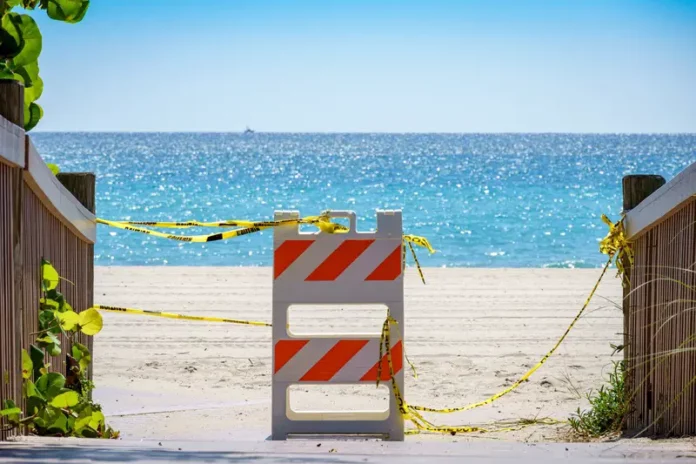
Members of the public reported seeing a shark about 8 feet 2 inches long around the time of the attack, and drones later picked up a large great white gliding near the surface off Sorrento Beach, though it was not confirmed whether that animal was responsible. Joondalup authorities closed every beach in their area as a precaution and said the closures would hold until at least midday on Sunday, September 20.
Second Attack in a Week
The death at Sorrento was the second shark attack in Western Australia in a matter of days. On Monday, September 14, a 56-year-old man was bitten while surfing off Glenfield Beach near Geraldton, 270 miles north of Perth. Another surfer pulled him clear of the water. He survived, but part of his leg was gone and the shark had taken a chunk out of his board.
O’Neill’s death was the third fatal shark attack in Western Australia this year, and at least the fifth in Australia. A 12-year-old boy died after being bitten while swimming in Sydney Harbour in January 2026, while three divers were killed by sharks in unrelated attacks over May and June 2026 — two in Western Australia and one in Queensland.
A Deadly Year in Australian Waters
Also in June 2026, 34-year-old schoolteacher Leah Stewart was mauled by a great white during a morning swim at Coogee Beach in Sydney. She survived and later recalled swinging a left hook at the animal before it dragged her underwater.
Despite the run of incidents, fatal attacks remain uncommon. Since 2000, the country has recorded an average of two to three shark deaths a year, according to the Australian Shark Incident Database, a collaboration involving Flinders University, the New South Wales state government and Taronga Conservation Society Australia. Separately, the International Shark Attack File, maintained by the University of Florida, has counted more than 1,280 shark incidents in Australian waters since 1791, over 250 of them fatal. About 180 shark species live off Australia’s coasts, and four of them — tiger sharks, great whites, bull sharks and oceanic whitetips — account for most deadly attacks.
O’Neill, described as a devoted father and a grandfather-to-be, left a family that said in a statement it was deeply shocked and devastated by the tragedy. “Greg loved the ocean and was known as a passionate swimmer, sports lover, dedicated worker and an all-round generous, witty guy,” his family said. On Saturday, September 19, relatives visited the beach, where locals have been laying flowers. The attack has reignited debate across Australia over how to keep beachgoers safe.