


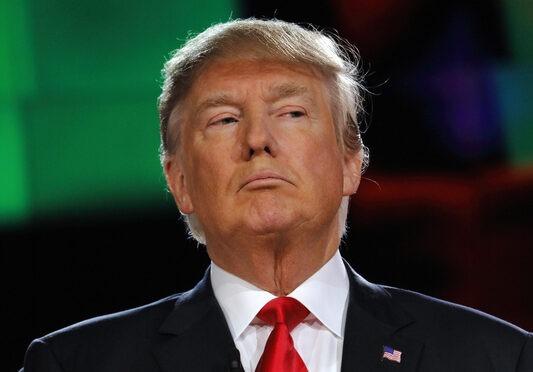
President Donald Trump turned his fire on the three justices he put on the Supreme Court, unloading on Amy Coney Barrett, Neil Gorsuch and Brett Kavanaugh in a lengthy Truth Social post on Tuesday, September 15, 2026, a day after the court refused to let his administration impose new restrictions on mail-in ballots before the November midterms.
“These are not the people I interviewed to serve on the United States Supreme Court, they are merely a shell of their original selves,” Trump wrote of the three justices he nominated.
He continued: “This Supreme Court is bullied and cajoled by the Radical Left into making decisions that have set America back at least a hundred years.” Trump also wrote that “certain Justices are petrified of these crazed and depraved Democrats, and are totally unable to show the courage necessary to save our America.”
A Three-Sentence Order From the Court
The justices on Monday, September 14, refused to let the U.S. Postal Service put the ballot measure into effect, turning down the Justice Department’s bid to lift an injunction from U.S. District Judge Indira Talwani in Boston while lawsuits brought by states and voting rights groups move ahead. The administration “is unlikely to succeed on the merits of its challenge,” the court said in a three-sentence, unsigned order that offered little further explanation.
Justice Samuel Alito, joined by Justice Clarence Thomas, dissented. No other member of the court, which holds a 6-3 conservative majority, dissented publicly. “The Postal Service has broad authority to regulate the mail,” Alito wrote. The two dissenters also argued that responsibility for the rule’s late timing rested in part with the states that sued and with the courts that handled the cases.
Kavanaugh, in a concurring opinion, wrote that at this interim stage there was at least a fair prospect the final rule fell within the Postal Service’s statutory authority. Enforcing it for the 2026 elections, though, would run up against the Administrative Procedure Act’s ban on arbitrary and capricious agency action, he wrote, since the officials who run elections at the state and local level lack the time to put it in place reasonably before ballots are cast.
Alito and Thomas were appointed by Presidents George W. Bush and George H.W. Bush, respectively, and were already on the bench before Trump’s first term — a distinction the president highlighted in his post.
How the Ballot Rule Reached the Justices
The fight traces back to an executive order Trump signed in March, which pressed the Postal Service to write tougher standards for absentee and mail-in voting in the name of curbing fraud. The agency finalized the regulations on August 26. States would have had to turn over lists of everyone due to receive a mail ballot and switch to outgoing and return envelopes approved by the agency and stamped with unique barcodes. Ballots that fell short of those standards, or that were addressed to voters missing from the lists, could have been withheld.
The administration called the plan a modest adjustment to postal regulations. The procedure the justices blocked would have given the Postal Service unprecedented power to withhold potentially millions of mail ballots. Critics warned that thousands of legitimate ballots could go undelivered and that chaos would follow as states prepared their mailings, and even some Republican election officials cautioned that the result could be mass disenfranchisement.
A total of 24 states went to court to block the order, with California leading one of the challenges. Talwani blocked the rule on September 4, concluding that it likely ran afoul of the Constitution, which leaves the administration of elections to the states, and that compliance would be impossible with the midterms so close. In a separate case on Sunday, September 13, Carl Nichols, a federal district judge in the nation’s capital, likewise struck the rule down.
The American Civil Liberties Union’s voting rights project director said the Constitution assigns the power to set the rules for federal elections to states and Congress rather than to the president or the Postal Service, and she said the administration keeps probing the outer edges of its authority. California Gov. Gavin Newsom hailed the outcome as a win for democracy and for voters’ constitutional rights.
Mail Voting and the Midterm Math
Eight states conduct their elections entirely by mail, and all 50 allow the practice in some form. Curbing mail voting would stand to benefit Republicans, because Democratic voters lean on mail ballots far more heavily, surveys have found. Trump has long made false claims of widespread fraud in American elections, even as he votes by mail himself.
The president’s frustration with his own appointees is not new. He has publicly complained before when they have broken with him in major cases, often asserting that the justices are eager to look independent-minded to their friends and colleagues. In February, six justices — Gorsuch and Barrett among them — invalidated his 10 percent baseline tariff and the levies imposed on China, Mexico and Canada over fentanyl, a ruling that left companies owed upward of $100 billion in refunds. The president has since rebuilt most of his “reciprocal” tariff regime under different legal authorities.
The court’s ruling lands as Republicans fight to hold on to Congress. On September 15, Vice President JD Vance delivered a pep talk to House Republicans on Capitol Hill, urging lawmakers in safe seats to help colleagues in tougher races and coaching them to pin the country’s problems on Democrats. That night, the House voted 220-204 to pass a war powers resolution directing Trump to end U.S. hostilities in Iran, with a record seven Republicans joining every Democrat. Voters head to the polls on November 3.