


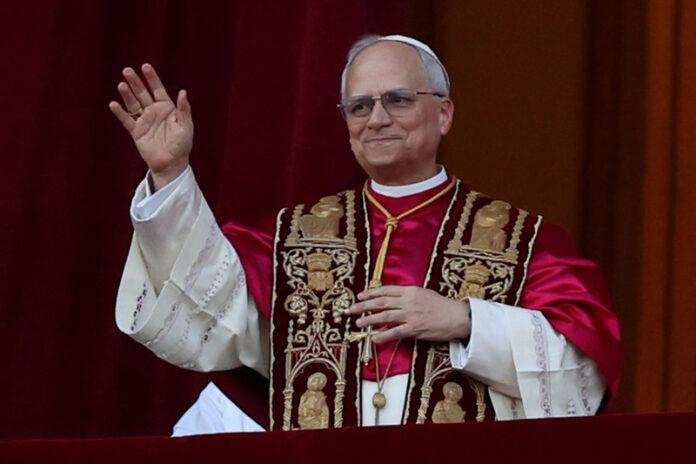
The registered voter at a New Lenox, Ill., address now holds a job that comes with a sovereign state of his own.
Pope Leo XIV has become the first pope in Catholic Church history to cast a ballot in a U.S. election, submitting a mail-in ballot ahead of November’s midterm elections. The Holy See press office confirmed the vote Friday, Oct. 30, 2026. The Chicago-born pontiff, formerly Cardinal Robert Prevost, is registered at a New Lenox address in Will County, Ill.
“The Holy Father expresses his belief in the right and the duty of citizens to participate in democratic processes,” the Vatican said. The statement said Leo has exercised his right to vote as a U.S. citizen whenever he was eligible, and that he did the same during his years of residence in Peru.
The Will County clerk’s office said through its chief of staff that the ballot request came in on Oct. 3.
A Ballot Days Before Surgery
The request came just days before the pope’s lung cancer surgery. He was discharged four days after the operation, on Oct. 17, and has been resuming his activities at the Vatican, where his doctors have said no further treatment is necessary. On their advice, he canceled a planned trip to Assisi. On Wednesday, Oct. 21, he waved to the crowd as he arrived in St. Peter’s Square for his weekly general audience, his first since the surgery.
His brother, John Prevost, was in Rome accompanying parishioners from St. Jude’s, an Augustinian-run parish in New Lenox. John Prevost, the pope’s older brother, worships at the church, and Leo spoke there in 2024, back when he was a cardinal.
What the Records Don’t Show
Records held by the Illinois State Board of Elections count five primary elections since 2000. He took Democratic primary ballots in 2008 and 2010, when he lived in strongly Democratic Cook County. Once he moved to Will County, a more conservative suburb, he chose Republican ballots in 2012, 2014 and 2016.
That split is less revealing than it sounds in a state with closed primaries. In Illinois, voters have to pick a party to get a primary ballot but face no such step in November, and the state’s files don’t reveal whom he backed.
Apart from 2020 and 2022, he has voted in every general election since 2000.
A Bill That Stalled in Committee
Leo is the first pope from the United States, and his election to the papacy raised unfamiliar questions about his national status — among them whether he would continue paying U.S. taxes while leading the Catholic Church. A 2025 bill proposed in the U.S. House would have shielded the citizenship of any American elected supreme pontiff and granted him tax-exempt status. It stalled in committee.
He remains a U.S. citizen and also holds Peruvian citizenship. Leo has mostly lived outside the United States since the 1980s, including nearly two decades as a missionary and then a bishop in Peru. Unique among world leaders, the pope serves at once as the universal spiritual head of the Catholic Church and as head of the Holy See, a distinct sovereign entity under international law.
The arithmetic of the milestone is its own curiosity. The United States was established in 1776 — more than 17 centuries after the founding of the Church.
Leo is moving ahead with a trip to South America next month that will take him to Uruguay, Argentina and Peru, the country where he spent much of his ministry. The Vatican confirmed the journey after a post-surgery checkup.
At a general audience in St. Peter’s Square on Sept. 2, the pope told the faithful to set aside passivity and indifference toward current events. Believers, he said, cannot stay “unengaged spectators” and must let themselves be challenged and get involved.