


Smoke seeped into a hotel room inside a Taiyuan high-rise through gaps in the walls, and the smoke detector never sounded.
The fire broke out at 4:59 p.m. local time on Sunday, Nov. 8, 2026, in the Haosheng International Apartment building in the Yingze district of Taiyuan, the busy central downtown of the capital of Shanxi province in northern China. Fourteen people died. Another 38 were taken to hospitals, and rescuers brought out 60 people trapped inside the 40-story mixed-use tower.
The first official count was far lower. “A total of 38 people were sent to hospitals for treatment, among whom five have died,” Xinhua News Agency reported that evening. By the morning of Monday, Nov. 9, the state news agency put the death toll at 14.
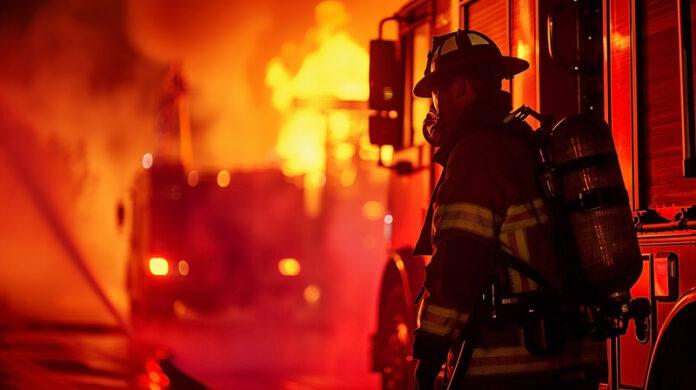
Firefighters put out the visible flames by about 7 p.m., roughly two hours after the fire began, and search-and-rescue operations ended at 8:30 p.m. The response drew 243 firefighters, 41 firefighting vehicles from 13 stations and 24 ambulances, along with police officers and health professionals.
“All-out efforts are being made to treat the injured, follow-up work is under way and the cause of the fire remains under investigation,” the district government said.
Smoke From the Sprinkler Heads
A survivor identified by his surname, Lan, who was staying in the hotel, got no warning at all. He suddenly smelled smoke, then saw it working through gaps in the walls, he told Jiemian News, a Shanghai-based state-run outlet. By then, intense heat had risen through the building and he could no longer get downstairs.
Lan followed the exit signs, looking for a room with a terrace. On the way he ran into six other people trying to escape. The seven of them waited about 40 minutes on a terrace before firefighters reached them with an aerial ladder.
The hotel room had smoke detectors and emergency lighting, Lan said in a separate state-media interview. The detector did not sound an alarm. When the fire sprinkler heads opened, smoke came out of them instead of water.
The Blaze Climbed to the Hotel
The blaze seems to have begun near the fourth floor of a shorter annex, then climbed to the hotel on the eighth and ninth floors. Videos showed people calling for help from windows as thick black smoke rose from the tower.
The building was not only apartments. The complex housed several hotels, short-term rental apartments, smaller venues and tutoring centers. That mix of businesses and facilities under one roof, combined with the constant movement of people through it, can complicate evacuation in an emergency.
Officials have not said how many people were in the building’s businesses when the fire started. The victims have not been publicly identified.
A Company Fined Before the Fire
Chinese authorities placed the managers of the building’s owner and the head of its property management company under “control measures,” restricting their movement. They did not clarify the legal status of those involved or give any detail about potential responsibilities.
The property management company had already been penalized once over safety: it was previously fined for fire-protection deficiencies. The cause of the blaze remains under investigation, and authorities said the findings will be published once the inquiry concludes.
The municipal government also announced a citywide campaign of inspections and elimination of safety risks, with particular attention to fire prevention and sectors considered higher risk.
The Campaign That Followed Hong Kong
China launched a national campaign against fire hazards in high-rise buildings in November 2025, after a blaze engulfed several tower blocks in Hong Kong and killed 168 people. Twelve more died a month later when an apartment building burned in Guangdong province in the south. In July 2026, a shoe factory fire in eastern China killed at least 28 people.
In Taiyuan, 25 people were still hospitalized as of Monday, Nov. 9. Xinhua said nine of them were critical and four seriously hurt.
In late March 2026, another building fire in Taiyuan killed three people and injured 23.