


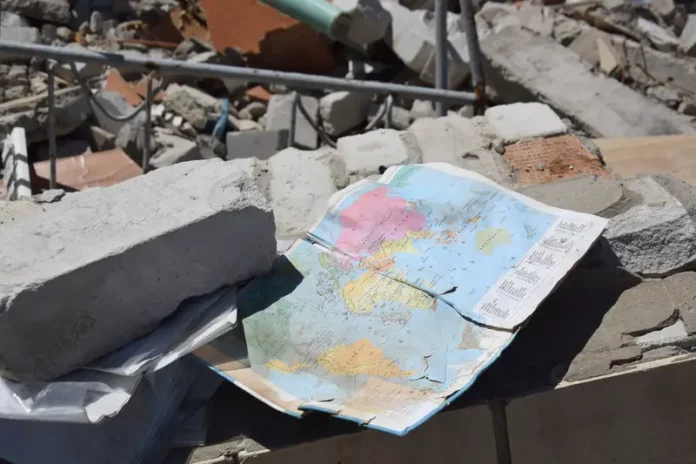
Rescue crews are still digging through the rubble of a farming village northeast of Yemen’s capital, and the number of dead there keeps climbing.
The toll from airstrikes that hit homes in al-Shariya, outside Sanaa, on Saturday, Nov. 7, 2026, now stands at 44, mostly women and children, according to Houthi health officials. The dead include 21 children and 10 women, according to Anees al-Asbahi, spokesperson for the Houthi-run Health Ministry. Another 40 people were wounded, among them eight children and nine women.
Rescue teams were still searching for the missing, al-Asbahi said, raising fears that the toll will rise again. He blamed Saudi Arabia for the strikes. The Houthi account could not be independently verified.
Still Buried Under the Houses
Civilians remained trapped under the wreckage of the houses, al-Asbahi told Al-Masirah TV, the Houthi-run channel, and later strikes targeted the emergency workers trying to pull survivors out.
Video released by the channel showed hospital staff carrying the limp bodies of several young children from ambulances. One girl’s head had been cleaved open.
The first count, given Saturday, Nov. 7, was at least 27 dead and 36 wounded, mostly women and children. The village, a farming community under Houthi control, sits roughly 10 miles (15 kilometers) northeast of Sanaa. The strikes rank among the deadliest of the latest violence in Yemen’s long-running civil war.
Blame Traded Over a Market Strike
A day earlier, on Friday, Nov. 6, an airstrike on a market in southern Yemen killed at least 30 people, Houthi officials said. The Houthis and the Saudi-backed Yemeni military traded blame for that attack.
In a statement later on Saturday, Nov. 7, Houthi military spokesperson Brig. Gen. Yahya Saree said the group had struck Saudi Arabia in retaliation for both the market bombing and the al-Shariya strikes.
Yemen’s war has worsened sharply since a truce reached in 2022 fell apart over the summer, when the Houthis launched new offensives. The Iranian-backed Houthis hold Sanaa, the north and the west of the country; their Saudi-backed opponents are based in the south and east.
Saudi Arabia began its air campaign against the Houthis in late March 2015, after the group pushed President Abd Rabbu Mansour Hadi out of Sanaa and into exile in Riyadh. On June 7, 2015, Saudi-led airstrikes on the headquarters of Yemen’s armed forces in the capital killed at least 44 people, a week before peace talks were due to open in Geneva.
Debris Falls on an Aramco Tower
The Saudi-led coalition said Monday, Nov. 9, that it had destroyed three Houthi facilities: a plant building parts for ballistic missiles, a chemical facility making solid rocket fuel and an electronics shop that assembled missile systems. It gave no locations and no further detail.
Saudi Arabia’s Energy Ministry reported an attack the same day on the east-west pipeline in the Medina region, describing the resulting fire as limited and quickly extinguished. Nobody was hurt, and operations were not affected. The ministry did not identify who was behind it, and the Houthis, who have repeatedly targeted Saudi infrastructure, did not immediately comment.
One day before the pipeline fire, debris from missiles shot down over Riyadh tore into several floors of a Saudi Aramco office tower in the capital’s financial district. The Houthis claimed responsibility for that attack on the Saudi capital.
Damascus and Tehran Push Back
Syria has not deployed forces to Yemen to fight the Houthis and has no immediate plan to do so, Syrian Foreign Minister Asaad al-Shibani said at a news conference in Damascus on Monday, Nov. 9.
The Associated Press has reported that Damascus is readying an initial 600 special forces troops to deploy along Saudi Arabia’s border with Yemen. Al-Shibani did not address those reports directly. He said “any military operation outside our borders would certainly be announced and discussed publicly.”
On Sunday, Nov. 8, U.S. Secretary of State Marco Rubio called Iran’s demands for ending the war “outrageous and ridiculous” and “really not realistic.” Tehran wants the U.S. to end its blockade of Iranian ports, lift sanctions, release frozen assets and pay compensation for war damage.
Iran’s foreign ministry spokesperson, Esmail Baghaei, dismissed that characterization Monday, Nov. 9, saying it was the U.S. strikes carried out during peace talks in June 2025 and February 2026 that were “illogical and ridiculous,” not his country’s demands.