


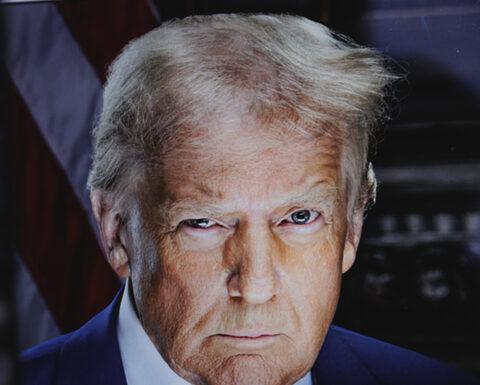
President Donald Trump marked the first White House Christmas party of his second term with remarks that raised eyebrows about his tenure in office, telling guests he would be in the position for a “long period of time.” The 79-year-old president addressed attendees at the festive gathering, which showcased holiday decorations arranged by First Lady Melania Trump.
Speaking to the crowd on Dec. 1, 2025, Trump discussed what he described as the “honor” of serving as president. “We’re going to do a great job, and you know, we have a little more than three years left,” he told party guests, before adding that “three years with Trump is an eternity, that’s a long period of time.” The president smiled as the crowd erupted in cheers, repeating, “A long time.”
Trump’s communications adviser, Margo Martin, 30, shared video clips of the event on X on Monday. The footage captured the president’s comments about his remaining time in office, which runs until January 2029 when his second term concludes. At that point, Trump will be 82 years old, making him 12 years older than when he first entered the White House at age 70 in 2017.
The president holds the distinction of being the oldest person ever inaugurated as U.S. president. His age and health have become subjects of ongoing scrutiny throughout his second term, with questions arising about both his physical condition and cognitive abilities. These concerns have intensified as critics point to speeches and public appearances where Trump has displayed what some characterize as rambling tendencies and mental lapses.
Last month, Trump underwent an MRI scan that became a topic of public discussion after the White House initially declined to explain its purpose. The administration eventually released a memo stating that advanced imaging was performed because men in his age group benefit from comprehensive evaluations of cardiovascular and abdominal health. The scan examined Trump’s heart and abdomen, with results indicating excellent cardiovascular health according to White House statements.
Trump has also dealt with a visible recurring bruise on his right hand that has drawn attention. The White House attributed this condition to frequent handshaking combined with his use of aspirin. The president’s health monitoring reflects standard protocols for someone in his age bracket serving in one of the world’s most demanding positions.
Data examining Trump’s public schedule shows he has scaled back his official appearances by 39 percent during the first 10 months of his second term compared to the same period during his first presidency. The president has also begun his workdays considerably later than he did previously, according to scheduling reports. These changes in routine have fueled ongoing discussions about his stamina and capacity to maintain the rigorous demands of the presidency.
The Christmas party also served as a venue where Trump honored National Guard members involved in a recent incident near the White House. On November 26, two National Guard members were shot blocks from the presidential residence. Sarah Beckstrom, 20, died from her injuries, while Andrew Wolfe, 24, remains critically injured. Trump paid tribute to both individuals, describing them as exceptional service members.
During his remarks about the National Guard members, Trump displayed the meandering speaking style that has become a hallmark of his public addresses. The president honored those who serve near the executive mansion, expressing condolences to Beckstrom’s family and noting Wolfe’s ongoing recovery from his critical injuries.
The White House Christmas celebration represented a blend of traditional holiday festivities and political messaging, as Trump used the platform to discuss both his remaining tenure and recent events affecting those who serve near the executive mansion. The decorations prepared by the first lady provided a festive backdrop for an event that combined seasonal celebration with presidential commentary on his administration’s trajectory.
As Trump continues his second term, questions about his longevity in office persist not because of constitutional concerns—he cannot seek a third term—but rather due to ongoing public interest in his health and capacity to fulfill the role’s demanding requirements. His comments at the Christmas party about serving for a “long time” may have been intended as reassurance to supporters about his commitment to completing his term, though they also served to highlight the very questions surrounding his age and fitness that have become routine features of political discourse during his presidency.